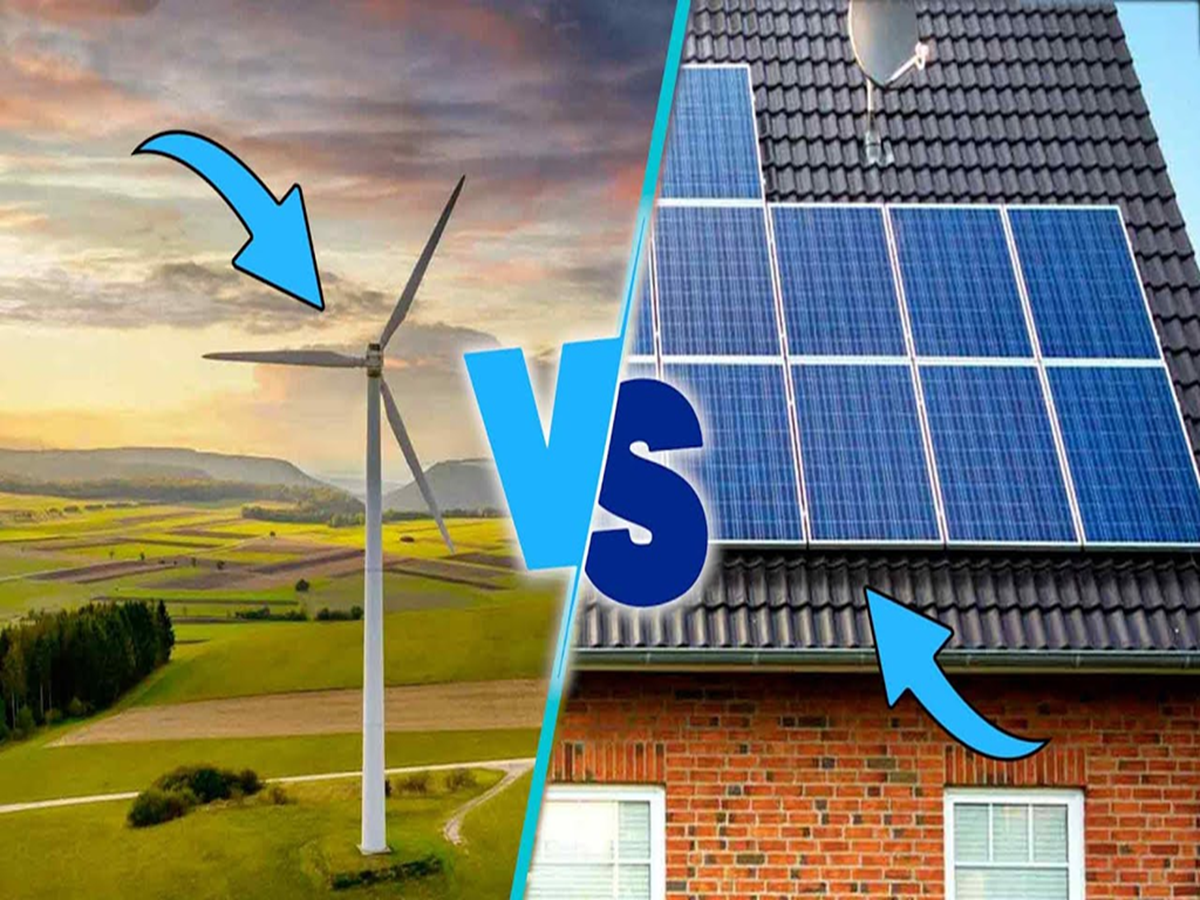
Wind vs. Solar Energy: Both wind and solar are considered clean sources of energy, but which is cleaner and more efficient? Let's compare the two in this article.
Wind Vs Solar Energy: Which Source Is More Efficient?
Wind Vs Solar Energy: Both wind and solar are major sources of renewable energy. Both are unlimited and do not produce any greenhouse gases while generating electricity. They do not cause pollution, which can help prevent global warming. Cost-wise, in most places, solar and wind energy are cheaper than fossil fuels. In this respect, both are more beneficial than oil and coal. But which source is more efficient, solar or wind? Today, we will compare the two and learn about their advantages and disadvantages.
Wind Vs Solar Energy: Which is more efficient?
When it comes to efficiency, wind energy leads the way. Wind turbines convert about half of the wind passing through them into electricity, achieving an efficiency of approximately 50 percent. Solar panels lag behind in this regard. Solar panels have an efficiency of 20-25 percent. This means they can convert only about 25 percent of the sunlight falling on them into electricity.
What are the advantages and disadvantages of wind energy?
Benefits
- In addition to efficiency, wind energy also excels in availability. Turbines are now available that can generate electricity even from very slow winds. As wind speed increases, electricity production also increases. Wind turbines continue to generate electricity even during nighttime winds. Unlike solar panels, they operate exclusively during the day.
- Wind turbines have grown in size over the past few years. According to the World Economic Forum, wind turbines have become approximately 60 percent taller. This is necessary because winds become stronger as ground elevation increases. Buildings and trees on the ground can affect wind flow, but at higher altitudes, this is not a problem. Therefore, taller turbines generate more electricity.
Loss
A major disadvantage of wind energy is that you can't install turbines everywhere. Although small turbines are now available for installation on homes, their use is still limited. Wind turbines require free space. Furthermore, they generate a lot of noise, which is why they are installed away from residential areas. This is why they haven't reached every household like solar panels. The cost of wind turbines is also preventing them from becoming popular. Larger wind turbines will require a significant amount of money.
What are the advantages and disadvantages of solar energy?
Loss
- As we discussed above, solar panels have low efficiency and don't work at night. Their efficiency also decreases during the rainy season when clouds gather. Therefore, they aren't a completely reliable source of energy.
- Another disadvantage is that solar panels are made from silicon and other rare metals, which require mining. Mining has negative climate impacts. Considering this, it's not as clean an energy source as wind energy.
Benefits
Despite the low efficiency of solar panels, more people are using them. The biggest reason for this is their ease of installation and maintenance. Solar panels are easy to install and don't require much space. You can easily install them on your balcony or rooftop. Furthermore, they are much cheaper than wind turbines. Once installed, the panels require little maintenance and will continue to convert sunlight into electricity for many years. They are also noise-free and require very little open space.