Business
Emergency Fund Planning: How Much of Your Monthly Salary Should You Save for Financial Emergencies?
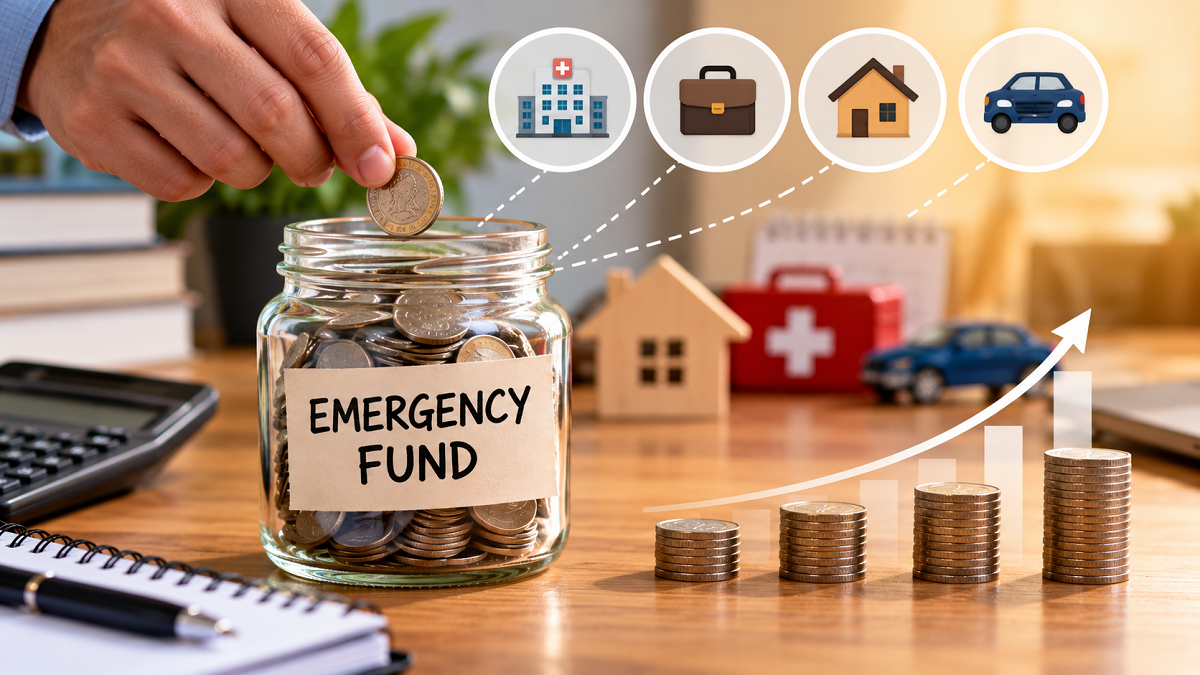
Financial emergencies rarely come with a warning. An unexpected hospital bill, sudden job loss, urgent home repairs or a temporary reduction in income can disrupt even a carefully planned household budget. Without sufficient savings, people may have to depend on personal loans or credit cards to manage essential expenses.
This is why building an emergency fund is an important part of personal financial planning. It provides a financial cushion during difficult situations and helps individuals avoid withdrawing money from long-term investments.
But how much should you save every month? Is saving 10% of your salary enough, or should you aim for a larger amount? The answer depends on your income, regular expenses, family responsibilities and financial stability.
Here is a practical guide to building an emergency fund without putting unnecessary pressure on your monthly budget.
How Much Money Should You Keep in an Emergency Fund?
Financial planners commonly recommend maintaining emergency savings equal to three to six months of essential living expenses.
However, there is no single amount that works for everyone. Your ideal emergency fund should reflect your lifestyle, employment situation and financial obligations.
For example, someone living alone with a stable job may initially aim to save enough money to cover three months of necessary expenses.
A person supporting a family, paying a home loan or managing several financial commitments may benefit from maintaining at least six months of essential expenses.
People with irregular earnings, including freelancers, self-employed professionals and contract workers, may consider building a larger reserve covering six to twelve months of expenses.
The objective is to ensure that important payments can continue even when regular income is temporarily interrupted.
How to Calculate Your Emergency Savings Target
Before deciding how much to save, calculate the amount your household needs every month for unavoidable expenses.
These may include rent, home loan EMIs, groceries, electricity bills, school fees, insurance premiums, medicines, transportation and other essential payments.
Expenses such as luxury shopping, expensive entertainment and optional subscriptions generally do not need to be included in your basic emergency budget.
Consider an example where a household spends ₹20,000 every month on essential needs.
| Emergency Fund Coverage | Savings Required |
|---|---|
| 3 Months | ₹60,000 |
| 4 Months | ₹80,000 |
| 6 Months | ₹1,20,000 |
| 9 Months | ₹1,80,000 |
| 12 Months | ₹2,40,000 |
These figures are illustrative. Your actual target should be based on your own monthly expenses rather than someone else's salary or lifestyle.
What Percentage of Your Salary Should You Save Every Month?
For many salaried individuals, setting aside 10% to 15% of monthly take-home income can be a practical starting point for building an emergency fund.
However, this is a flexible guideline, not a mandatory financial rule.
If your income is limited or your essential expenses are high, you can begin with a smaller amount and increase your contribution as your financial situation improves.
Similarly, individuals who can comfortably save more may reach their target sooner.
The most important factor is consistency.
Rather than waiting until the end of the month to save whatever remains, consider transferring a fixed amount to a separate savings account shortly after receiving your salary.
This approach can make saving a regular financial habit.
Emergency Fund Example: How Much Can You Save With a ₹30,000 Salary?
Suppose your monthly take-home salary is ₹30,000.
If you allocate 10% of your salary toward emergency savings, you would save ₹3,000 every month.
Increasing the contribution to 15% would raise your monthly savings to ₹4,500.
Here is how different saving percentages could work:
| Monthly Salary | Savings Percentage | Monthly Savings | Savings in 12 Months |
|---|---|---|---|
| ₹30,000 | 5% | ₹1,500 | ₹18,000 |
| ₹30,000 | 10% | ₹3,000 | ₹36,000 |
| ₹30,000 | 15% | ₹4,500 | ₹54,000 |
| ₹30,000 | 20% | ₹6,000 | ₹72,000 |
The calculations exclude interest and assume regular contributions throughout the year.
If your essential monthly expenses are ₹18,000, a six-month emergency fund would require ₹1,08,000.
Saving ₹4,500 every month would allow you to reach that target in approximately 24 months, excluding any interest earned.
You could reduce the time required by adding annual bonuses, incentives or other surplus income to the fund.
Where Should You Keep Your Emergency Savings?
An emergency fund should prioritize safety and accessibility rather than high investment returns.
The money must be available when you need it, especially during situations that require immediate payments.
Savings Bank Account
A separate savings account is one of the simplest options for emergency savings.
It allows relatively quick access to funds through digital banking, ATMs or other banking facilities.
Keeping emergency savings separate from your regular spending account can also help prevent unnecessary withdrawals.
Fixed Deposits
Bank fixed deposits may be suitable for holding part of your emergency reserve.
However, before choosing an FD, check whether premature withdrawal is permitted, how quickly the money can be accessed and whether penalties apply.
A fixed deposit should not prevent you from accessing funds when an urgent expense arises.
Liquid Mutual Funds
Liquid mutual funds are another option for managing short-term savings.
However, unlike bank deposits, mutual funds are subject to market-related risks, and their returns are not guaranteed.
Redemptions may also take time depending on the scheme and applicable rules.
For this reason, it is sensible to maintain an immediately accessible cash reserve even if part of your emergency savings is invested elsewhere.
When Should You Use Your Emergency Fund?
An emergency fund is intended to cover unexpected and necessary expenses that cannot reasonably be postponed.
Examples include sudden medical treatment, essential household payments following job loss, urgent vehicle repairs needed for work or necessary repairs to your home.
It can also provide temporary support when business income declines or salary payments are delayed.
However, using emergency savings for shopping, holidays, luxury purchases or speculative investments can weaken your financial protection.
Before withdrawing money, consider whether the expense is genuinely urgent and unavoidable.
If the purchase can wait until you have saved separately for it, your emergency reserve should ideally remain untouched.
What Should You Do After Using Your Emergency Savings?
Using your emergency fund during a genuine crisis is exactly what it is designed for.
However, once your financial situation becomes stable, rebuilding the fund should become a priority.
Start by reviewing how much money remains and calculating the amount required to restore your target balance.
You can then resume regular monthly contributions.
If necessary, temporarily reduce discretionary spending or direct additional income toward rebuilding your savings.
You do not need to restore the entire amount immediately. Consistent contributions can gradually rebuild your financial safety net.
Common Mistakes to Avoid While Building an Emergency Fund
One common mistake is calculating emergency savings based on total salary rather than essential monthly expenses. The fund should primarily reflect the amount required to maintain necessary payments during a financial disruption.
Another mistake is keeping all emergency savings in investments that may fluctuate significantly in value or cannot be accessed quickly.
Some individuals also combine emergency savings with their everyday spending money, making it easier to use the reserve for non-essential purchases.
Finally, failing to review the emergency fund regularly can leave you underprepared. As household expenses increase, your savings target may also need to rise.
Final Thoughts: Start Small and Build Financial Security Gradually
An emergency fund can help protect your household finances when unexpected problems arise.
For many salaried individuals, saving 10% to 15% of monthly take-home income is a reasonable starting point, while maintaining three to six months of essential expenses is a commonly used target.
People with uncertain income or greater financial responsibilities may benefit from a larger reserve.
The right strategy is to calculate your essential expenses, choose a realistic savings target, keep the money accessible and contribute regularly.
Even a modest monthly contribution can make a meaningful difference over time. Building an emergency fund is not about becoming wealthy overnight; it is about being financially prepared when life does not go according to plan.
Disclaimer: This article provides general financial information. Emergency fund requirements and suitable savings options vary according to individual circumstances, financial obligations and risk preferences.