Business
New Mobile Calling Rules From November 1, 2026: Unknown Callers' Names May Appear Without Truecaller
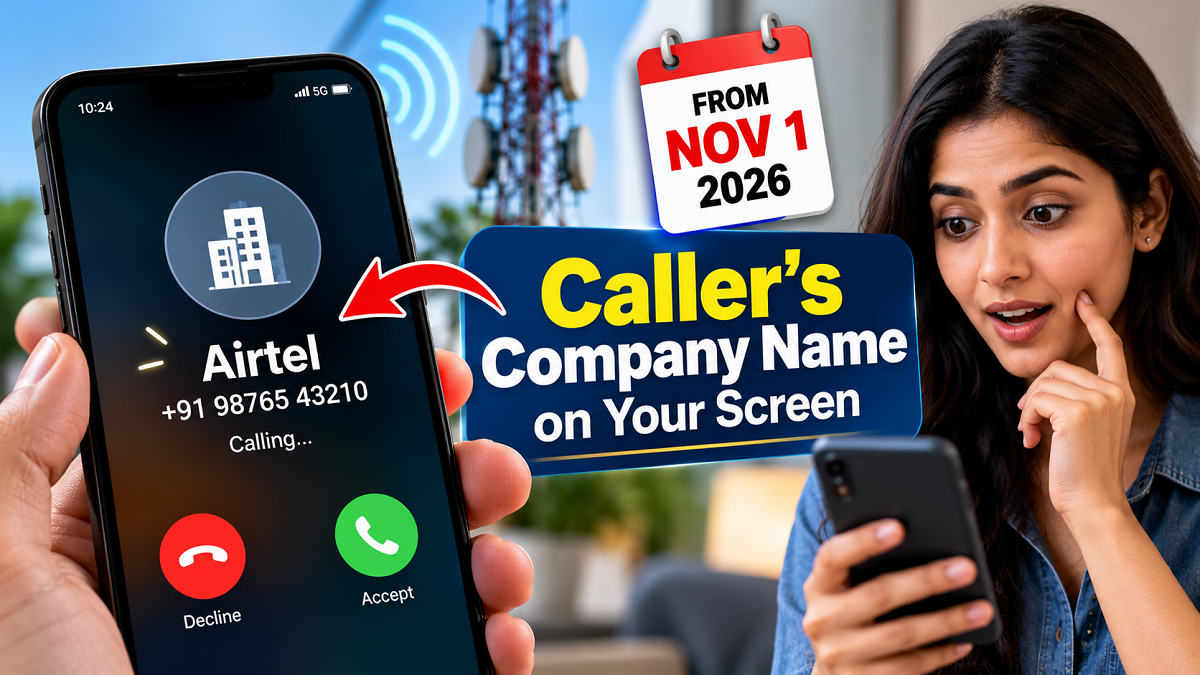
Mobile Calling Rules 2026: Receiving calls from unknown numbers could become easier to manage as India prepares to introduce a caller identification service known as Calling Name Presentation (CNAP). According to the reported directions from the Department of Telecommunications (DoT), telecom operators have been asked to implement the service from November 1, 2026.
The proposed system is designed to display the name associated with a caller's mobile number directly on the recipient's phone screen. This could help users identify unfamiliar callers before answering, potentially reducing their dependence on third-party caller identification applications.
The development comes amid growing concerns about spam calls, impersonation and mobile-related financial scams.
However, the exact availability of CNAP may depend on telecom network readiness, device compatibility and implementation arrangements.
What Is Calling Name Presentation (CNAP)?
Calling Name Presentation, commonly known as CNAP, is a telecom-based caller identification system.
Under the proposed arrangement, an incoming call would display the caller's phone number along with a name obtained from the telecom operator's subscriber records.
Currently, many smartphone users depend on saved contacts or third-party applications to identify unknown callers.
CNAP aims to introduce a caller-name display mechanism through telecom networks themselves.
For example, when an unfamiliar domestic number calls, the recipient may be able to see the name associated with that number in the operator's records.
This additional information could help users decide whether they want to answer the call.
CNAP Rules 2026: Important Details
| Particular | Reported Details |
|---|---|
| Service Name | Calling Name Presentation (CNAP) |
| Reported Implementation Date | November 1, 2026 |
| Authority | Department of Telecommunications (DoT) |
| Main Purpose | Display caller names with incoming phone numbers |
| Activation | Intended to work automatically where supported |
| Initial Network Focus | 4G and newer wireless networks |
| Business Calls | Verified business names may be supported |
| Primary Benefit | Better identification of unfamiliar callers |
The November 1 date is based on the supplied report. Users should check subsequent official announcements for confirmation of the rollout schedule and coverage.
How Will the CNAP Feature Work?
The reported CNAP system would use telecom subscriber information to identify callers.
When someone calls your mobile number, the receiving network may provide the name associated with the caller's connection.
However, the name displayed can depend on whether the caller is already saved in your contacts.
If the Number Is Saved in Your Contacts
If you have saved someone's number as "Office Manager" or "Rahul Sharma," your phone would generally continue to display the name saved in your contact list.
If the Number Is Not Saved
For an unfamiliar domestic number, the CNAP system is intended to display the name associated with the caller in the telecom operator's subscriber records.
This could make it easier to recognize calls from people or organizations whose numbers are not saved on your phone.
If the Call Comes From Another Country
The supplied report indicates that certain international calls may display an "International Call" identification alongside the number.
The exact treatment of international calls will depend on the final technical and regulatory implementation.
Will Users Need to Activate CNAP Manually?
According to the reported plan, CNAP is intended to be available automatically on supported telecom networks and devices.
This means users may not need to download a separate application or submit an individual request to enable basic caller-name display.
However, automatic availability should not be confused with guaranteed support on every mobile phone.
Older devices, unsupported networks and other technical limitations could affect how the feature works.
Telecom operators are expected to provide more detailed instructions as implementation progresses.
Will CNAP Replace Truecaller?
One of the biggest questions surrounding CNAP is whether users will still need third-party caller identification applications such as Truecaller.
CNAP could reduce the need for external applications when users simply want to identify an unfamiliar incoming caller.
However, CNAP and third-party caller identification services are not necessarily identical.
Some third-party applications provide additional capabilities, such as community-based spam identification, call categorization and other features.
CNAP primarily focuses on presenting a caller's name through telecom network information.
Therefore, it would be premature to say that CNAP will completely replace all existing caller identification applications.
Can CNAP Help Reduce Spam and Fraud Calls?
The proposed service could give mobile users more information before they answer an unfamiliar call.
This may help people recognize certain unwanted or unexpected calls and make more informed decisions.
For example, if an unknown number calls repeatedly, a displayed name may provide additional context about the caller.
However, CNAP does not guarantee that every displayed caller name is genuine or that a call is safe.
Fraudsters may still use impersonation, misleading identities, unauthorized connections or other techniques to deceive people.
Users should never assume that a caller is trustworthy simply because a recognizable name appears on the screen.
Important Safety Rules for Mobile Users
Even after CNAP becomes available, basic precautions will remain essential.
Never disclose OTPs, UPI PINs, banking passwords or ATM PINs during an unexpected phone call.
If someone claims to represent your bank, telecom operator or a government department, verify the claim through an official communication channel.
Avoid installing applications or sharing your screen merely because a caller asks you to do so.
Be especially cautious when someone threatens immediate account suspension, financial penalties or legal action unless you follow their instructions.
Caller identification can provide useful information, but it cannot replace independent verification.
Will Companies Be Able to Display Their Business Names?
The reported CNAP framework may also provide a mechanism for businesses and organizations to display verified business identities.
Companies using eligible telecom connections, including certain bulk connections, could potentially request that their registered business names or trademarks appear during outgoing calls.
Such names would be subject to the applicable verification process.
The supplied report suggests that business identity verification may involve records available through the GST system.
If implemented effectively, this arrangement could help customers recognize calls from legitimate businesses.
However, companies should not assume that they can display any name of their choice without meeting the relevant requirements.
When Might the Caller's Name Not Appear?
CNAP may not work for every incoming call.
One reported exception involves Calling Line Identification Restriction (CLIR), a facility that can restrict the presentation of caller identity in permitted circumstances.
Where such restrictions apply, the caller's name may not be displayed.
Technical limitations, unsupported devices and network-related issues could also affect availability.
Additionally, international calls and other special categories may be handled differently under the final implementation framework.
Will CNAP Work on 4G and 5G Smartphones?
The supplied information indicates that the initial implementation is focused on 4G and newer wireless network technologies.
This suggests that users with compatible 4G and 5G connections may be among those able to access the service.
Nevertheless, network support alone may not determine whether CNAP works correctly.
Device software, operator compatibility and other technical requirements could also matter.
Users should wait for official guidance from their telecom provider before assuming that the feature will be available on a particular handset.
Why Is India Introducing Caller Name Identification?
Unwanted calls and telephone-based financial scams have become significant concerns for mobile users.
Fraudsters frequently impersonate bank employees, delivery representatives, customer-care executives and officials from government agencies.
By providing additional caller identification information, CNAP aims to make incoming calls more transparent.
The system may also help people distinguish between known contacts, unfamiliar individuals and certain business callers.
Still, the effectiveness of the service will depend on accurate subscriber records, reliable implementation and appropriate privacy protections.
What Should Mobile Users Do Before November 1?
Users do not need to take any special action solely because the reported implementation date is approaching.
They can continue keeping their smartphones updated, reviewing their telecom provider's announcements and following basic call-security precautions.
It is also advisable to avoid unofficial applications or websites claiming to activate CNAP before the service becomes available through authorized channels.
Any instructions regarding compatibility, activation or availability should be checked against official telecom operator communications.
Final Update
India's proposed Calling Name Presentation service could change how mobile users identify incoming calls.
According to the supplied report, the DoT has directed telecom operators toward implementation from November 1, 2026, with the objective of displaying caller names alongside phone numbers.
The service could help users recognize unfamiliar callers without relying entirely on third-party identification applications.
However, a displayed name is not proof that a caller is legitimate. Mobile users should continue verifying suspicious calls independently and avoid sharing sensitive personal or financial information.
Note: The reported implementation date and technical details should be verified against the latest official DoT and telecom operator notifications before being presented as fully confirmed nationwide arrangements.