ASTROLOGY
South-Facing House Vastu Tips: Is a Southern Entrance Really Unlucky? Know Door Placement and Traditional Remedies
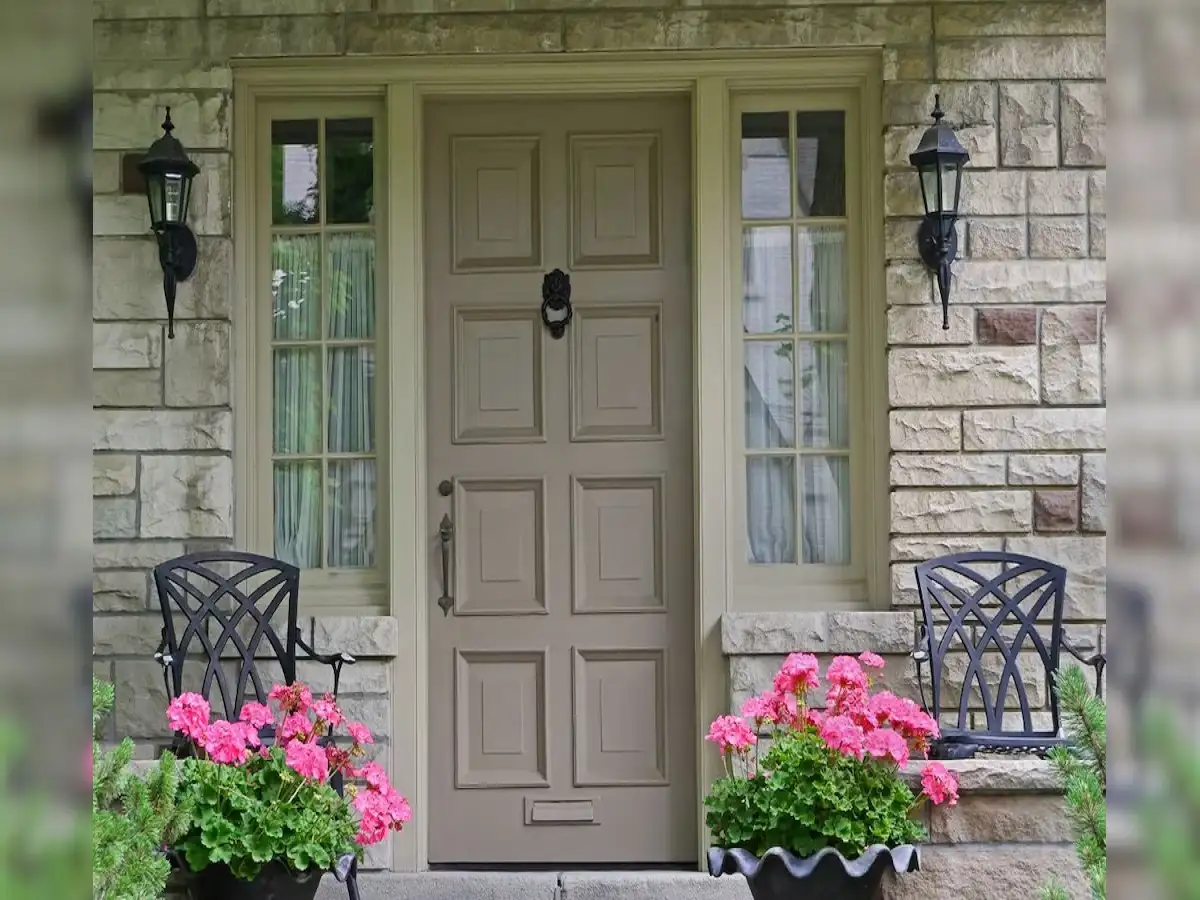
Vastu Shastra Tips for South-Facing Homes: When purchasing a property or planning the construction of a new house, many people consider the direction of the main entrance an important factor. Among the four principal directions, south-facing properties are often surrounded by misconceptions, with some homebuyers believing that such houses bring financial difficulties, negative energy or misfortune.
However, traditional Vastu Shastra does not necessarily classify the southern direction as entirely unfavourable. Instead, greater importance is given to the precise location of the entrance, internal layout, room placement and overall architectural arrangement.
Ancient Indian architectural texts, including the Samarangana Sutradhara, discuss various principles concerning building design and spatial organisation.
According to traditional interpretations, a south-facing house can also be considered favourable when its entrance and interior spaces are appropriately positioned.
Is a South-Facing Main Door Considered Inauspicious?
A common misconception among property buyers is that every house with a southern entrance is unsuitable for residential purposes.
Traditional Vastu systems divide the southern boundary of a property into several smaller sections known as Padas. Each section is associated with different symbolic interpretations.
Therefore, the exact location of the main entrance along the southern wall is considered more significant than the direction alone.
Entrance Positions Considered Favourable
Certain Vastu traditions consider selected portions near the central and southeastern sections of the southern wall suitable for constructing the main entrance.
In some Vastu systems, sections identified as S3 and S4 are considered favourable for entrance placement.
These positions are traditionally associated with prosperity, confidence, professional development and social recognition.
Entrance Positions Traditionally Avoided
The southwestern corner and certain adjoining sections are generally considered less favourable for the main entrance under traditional Vastu guidelines.
However, these interpretations can differ between Vastu schools and are not supported by scientific evidence linking entrance placement to personal success or misfortune.
Four Important Vastu Factors Beyond Entrance Direction
Homebuyers should avoid evaluating an entire property solely on the basis of its entrance direction. Traditional Vastu practitioners also consider several other architectural features.
1. Exact Position of the Main Entrance
Identifying a property as south-facing provides only basic information about its orientation.
Traditional Vastu assessments also examine the precise position of the entrance along the southern boundary.
The location of the doorway, its relationship with surrounding walls and the internal layout are considered important factors.
2. Entrance Design, Strength and Lighting
The main entrance is traditionally regarded as an important feature of residential architecture.
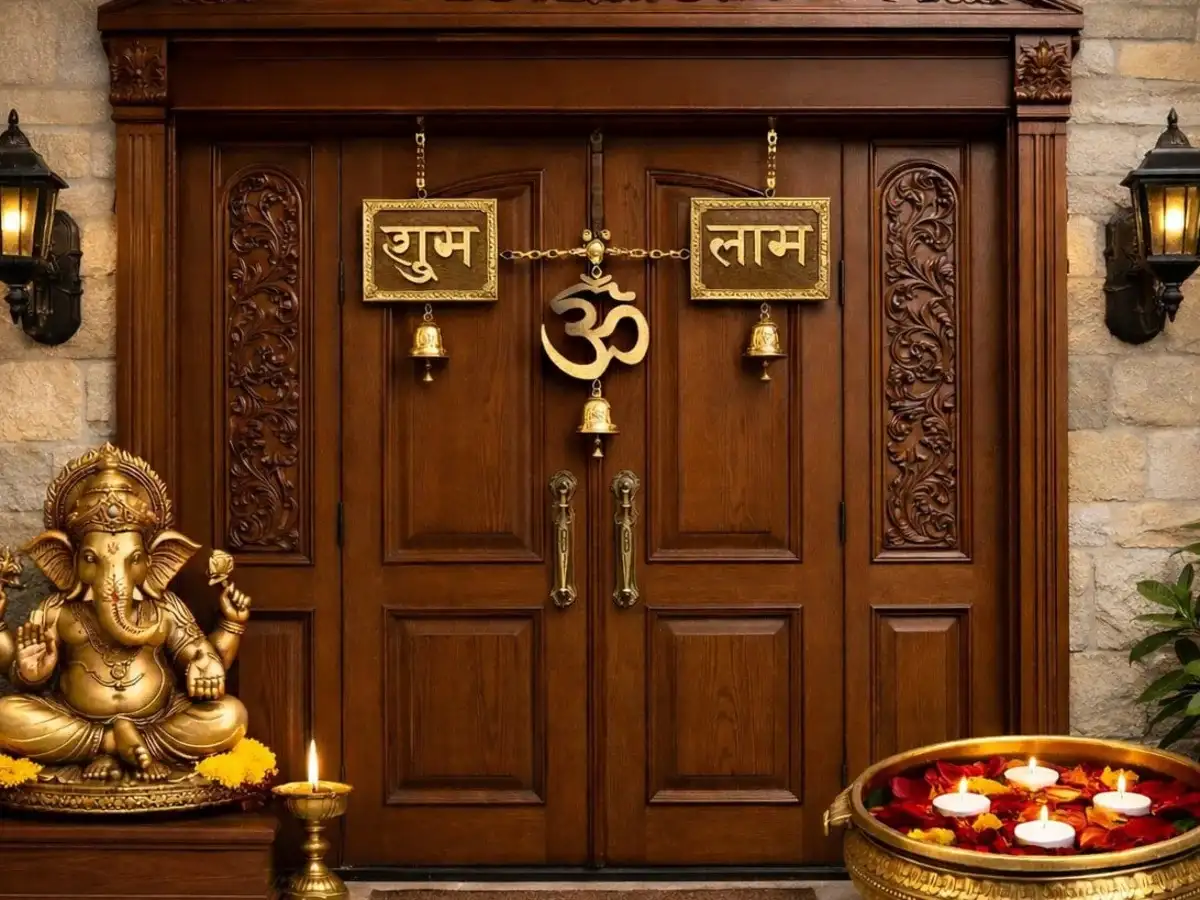
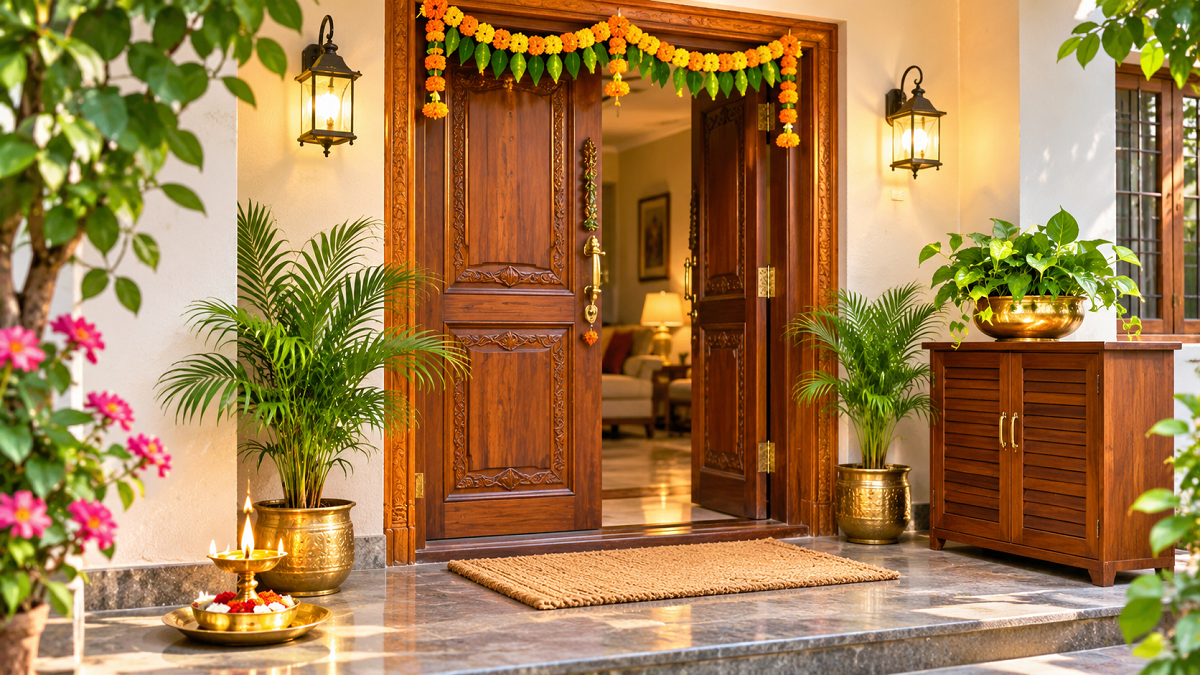
Vastu recommendations generally suggest that the entrance should be sturdy, attractive and larger than other internal doors.
The door should open smoothly without producing unnecessary noise. An inward-opening entrance is traditionally preferred, provided it complies with applicable safety and building requirements.
Adequate lighting around the doorway can also create a welcoming atmosphere and improve visibility during evening hours.
3. Balance Between Different Sections of the Property
Traditional Vastu principles recommend maintaining comparatively heavier and higher structures in the southern and western sections of a house.
The northern and eastern portions are generally preferred for relatively open spaces and lighter arrangements.
Followers believe that such planning creates spatial balance within the property.
However, structural weight distribution and building height should always be determined by qualified architects and structural engineers.
4. Appropriate Placement of Important Rooms
The internal arrangement of a house is another significant consideration under traditional Vastu practices.
Different rooms are associated with specific directions, as outlined below.
| Area of the House | Traditionally Preferred Direction |
|---|---|
| Main entrance | Selected central or southeastern portions of the southern wall |
| Kitchen | Southeast |
| Master bedroom | Southwest |
| Prayer room | Northeast |
| Open spaces | North and east |
| Heavy furniture and storage | South and west |
| Underground water storage | Traditionally preferred away from the southern section |
These directional preferences should be considered alongside practical requirements such as ventilation, natural lighting, accessibility and construction safety.
Six Simple Vastu Tips for South-Facing Houses
Homeowners living in south-facing properties do not necessarily need to undertake expensive renovations or relocate their main entrance.
Those who follow Vastu traditions can consider the following simple suggestions.
Maintain a clutter-free entrance: Avoid placing garbage bins, unused furniture, footwear piles or unnecessary household items directly outside the main doorway.
Ensure proper lighting: Keep the entrance adequately illuminated, particularly after sunset. Good lighting also improves security and accessibility.
Maintain the southern wall: Traditional Vastu practices favour a well-maintained and sturdy southern boundary. Any structural repairs should be handled by qualified professionals.
Consider water storage placement carefully: Traditional guidelines generally discourage underground water tanks, borewells and deep excavations in certain southern areas. However, water infrastructure must be planned according to engineering requirements and local regulations.
Remove unnecessary obstructions: Avoid blocking the entrance with large decorative objects, furniture or other items that restrict movement.
Keep the main door in good condition: Repair damaged hinges, locks and handles. Ensure the door opens and closes comfortably without excessive noise.
Should You Avoid Buying a South-Facing Property?
A property's southern orientation alone should not determine whether it is suitable for purchase.
Prospective homeowners should evaluate construction quality, legal ownership documents, affordability, neighbourhood safety, water availability, ventilation and access to essential services.
People who follow Vastu Shastra can additionally examine the entrance position and internal arrangement according to their traditional preferences.
Rejecting an otherwise suitable property solely because of its southern orientation may unnecessarily limit housing options.
Focus on Creating a Safe and Comfortable Home
A well-designed south-facing house can provide a comfortable residential environment when practical architectural requirements are properly addressed.
Adequate sunlight, effective ventilation, safe electrical installations, functional plumbing and appropriate space utilisation are important considerations for every home, regardless of its orientation.
Homeowners interested in Vastu can incorporate traditional preferences without compromising structural safety, functionality or financial priorities.
Disclaimer: Vastu Shastra is based on traditional Indian architectural and cultural beliefs. Claims that particular directions attract prosperity, negative energy or misfortune are not scientifically established. Consult qualified architects and engineers before undertaking structural modifications.