ASTROLOGY
Vastu Tips for Home: 6 Traditional Practices to Create a Peaceful Atmosphere and Keep Negativity Away
A home is more than just a place to live. It is where families spend quality time together, unwind after a busy day and find emotional comfort. However, everyday stress, household disagreements and an uncomfortable living environment can sometimes disturb the sense of peace.
According to Vastu Shastra and traditional Indian beliefs, the arrangement, cleanliness and atmosphere of a house are associated with harmony, prosperity and positive energy. Many households also follow certain customs believed to offer protection against the evil eye, commonly known as Buri Nazar.
Although supernatural claims associated with these practices are not scientifically established, several traditional habits, such as maintaining cleanliness, removing clutter and practising meditation, can contribute to a more comfortable living environment.
Here are six traditional Vastu remedies and household practices that you can consider incorporating into your daily routine.
1. Hang Lemon and Green Chillies Near the Entrance
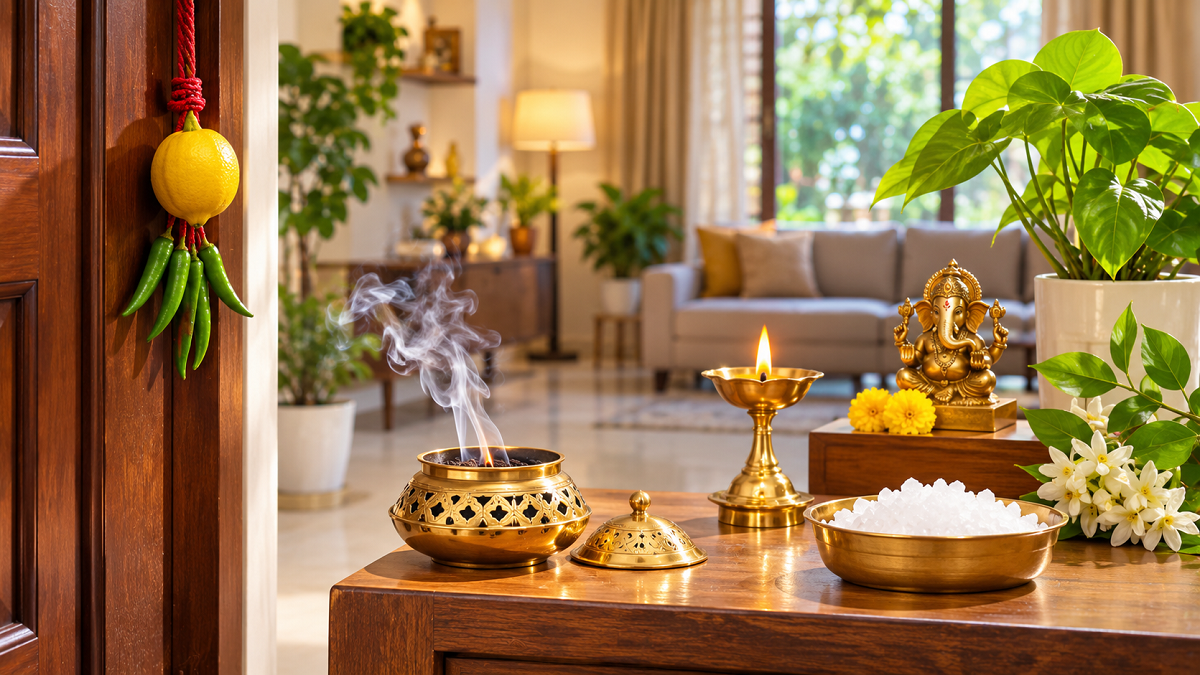
In many Indian households, hanging a combination of lemon and green chillies outside the main entrance is a longstanding cultural tradition.
According to popular beliefs, this arrangement symbolises protection against the evil eye and unwanted negative influences. Some families follow the custom of replacing the lemon and chillies every Saturday.
The entrance of a house is also considered particularly significant in Vastu Shastra because it represents the primary point of entry into the living space.
Apart from following traditional customs, homeowners should ensure that the entrance remains clean, well-lit and free from unnecessary objects.
A welcoming doorway can create a pleasant first impression and make the home feel more organised.
2. Clean Your Floors With Salt Water
Salt has traditionally been associated with purification in various cultural and religious practices. According to Vastu beliefs, adding a small quantity of salt to floor-cleaning water is considered a symbolic way of removing negativity from the household.
Some families follow this practice periodically as part of their regular cleaning routine.
However, homeowners should remember that salt water may not be suitable for every flooring material. Excessive salt can leave residue or potentially damage certain surfaces.
Use cleaning products appropriate for your flooring and follow the manufacturer's maintenance recommendations.
Regardless of traditional beliefs, regularly cleaning floors helps remove dust and dirt while maintaining a more hygienic and comfortable indoor environment.
3. Use Camphor or Traditional Incense With Proper Ventilation
Burning camphor, loban or traditional incense is a common practice during religious ceremonies and daily prayers in Indian homes.
According to spiritual traditions, these fragrances are believed to create a sacred atmosphere and encourage positive thoughts. Many people associate familiar religious fragrances with relaxation and emotional comfort.
However, burning incense or camphor releases smoke and airborne particles that may affect indoor air quality.
People with asthma, allergies, respiratory conditions or sensitivity to smoke should avoid such exposure.
If you choose to follow this tradition, ensure adequate ventilation, keep burning materials away from curtains and furniture, and never leave them unattended.
Opening windows and allowing fresh air to circulate can be a smoke-free alternative for maintaining a pleasant indoor atmosphere.
4. Remove Unnecessary Items From Corners and Rooftops
One of the most practical recommendations associated with Vastu Shastra is maintaining a clean and clutter-free home.
Unused furniture, damaged household items, old newspapers and discarded belongings often accumulate in corners, storage rooms and rooftops.
Traditional Vastu beliefs associate such clutter with stagnant energy. From a practical perspective, excessive clutter can make rooms feel crowded, reduce usable space and make regular cleaning more difficult.
Consider reviewing household belongings periodically and removing items that are no longer useful.
Some simple ways to maintain an organised home include:
- Donating clothes and furniture that are still usable.
- Disposing of damaged household items responsibly.
- Keeping staircases and passageways unobstructed.
- Cleaning neglected corners regularly.
- Maintaining an organised rooftop and storage area.
A tidy living space can make everyday household activities easier and create a more comfortable environment for family members.
5. Avoid Keeping Broken Mirrors and Damaged Glass
According to traditional Vastu beliefs, cracked mirrors and broken glass objects are considered inauspicious and are associated with disharmony.
While there is no scientific evidence that damaged mirrors attract negative energy, keeping broken glass inside the house presents a genuine safety concern.
Sharp edges can cause injuries, particularly in households with children and pets.
Inspect mirrors, decorative glass items, windows and other fragile household objects periodically. If you discover cracks or damage, arrange for safe repair, replacement or disposal.
Broken glass should be wrapped securely and discarded according to local waste disposal guidelines.
Replacing damaged household accessories can also improve the appearance and functionality of your living space.
6. Begin and End Your Day With Peaceful Music or Meditation
Many Indian families start their mornings with devotional songs, prayers, mantras or the chanting of Om.
According to spiritual traditions, these activities are believed to promote harmony and encourage positive energy within the household.
Listening to soothing music, practising gentle breathing exercises or spending a few minutes in quiet meditation may also help some individuals relax and manage everyday stress.
You can create a peaceful routine by dedicating a small area of your home to prayer, reflection or meditation.
Keeping the space clean, comfortable and free from distractions may make it easier to develop a consistent relaxation habit.
Family members can also spend time together listening to devotional music or engaging in meaningful conversations.
Traditional Vastu Remedies for Home at a Glance
| Traditional Practice | Associated Belief or Practical Benefit |
|---|---|
| Lemon and chillies at the entrance | Symbolic protection against the evil eye |
| Cleaning floors with salt water | Traditionally associated with purification |
| Burning camphor or loban | Spiritual atmosphere and fragrance |
| Removing unnecessary belongings | Cleaner and more organised living space |
| Replacing broken mirrors and glass | Improved household safety |
| Chanting Om and listening to devotional music | Relaxation and emotional well-being |
Simple Lifestyle Changes Can Improve Household Harmony
Creating a peaceful home does not necessarily require expensive renovations or elaborate rituals. Everyday habits such as maintaining cleanliness, allowing natural sunlight indoors, ensuring proper ventilation and communicating respectfully with family members can make a meaningful difference.
Traditional Vastu practices may hold cultural and spiritual significance for many households. However, persistent family disagreements, emotional distress or financial difficulties should be addressed through practical solutions, open communication and professional support when necessary.
Combining meaningful cultural traditions with healthy lifestyle habits can help create a welcoming, organised and comfortable home environment.
Disclaimer: This article is based on traditional Vastu practices, cultural customs and religious beliefs. Claims regarding supernatural energy, the evil eye and spiritual protection are not scientifically proven. Readers should exercise personal discretion and prioritise health and household safety.