ASTROLOGY
Vastu Tips for Home: Never Keep These 4 Things Directly on the Floor, According to Traditional Beliefs
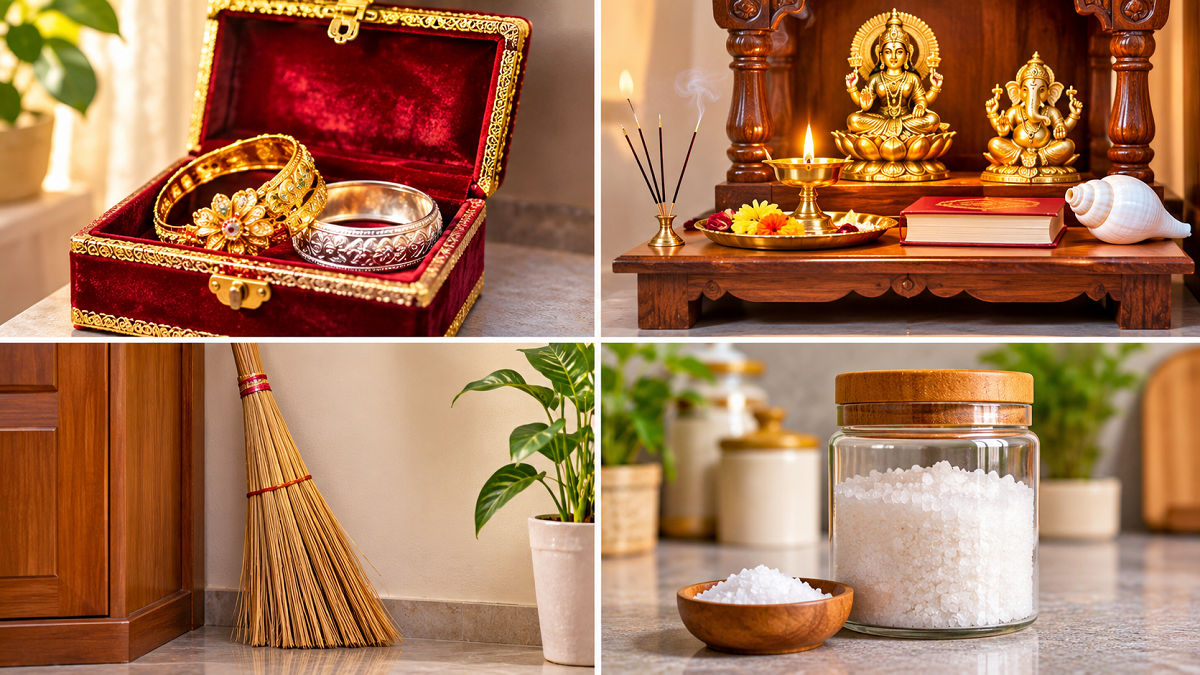
Vastu Shastra Tips: Maintaining a clean, organised and peaceful home is considered important in many Indian households. According to traditional Vastu Shastra beliefs, the placement of everyday objects can influence the atmosphere of a living space. Certain items are regarded as sacred or symbolically associated with prosperity, and keeping them directly on the floor is traditionally discouraged.
Vastu Shastra is an ancient Indian system associated with the arrangement and design of living spaces. Many families follow its principles when organising their homes, setting up prayer areas or deciding where to store important belongings.
According to these traditions, four commonly used household items deserve particular attention: gold and silver ornaments, religious objects, brooms and salt.
Here is why these items are traditionally kept away from direct contact with the floor and how they can be stored appropriately.
1. Gold and Silver: Store Jewellery in a Clean and Secure Place
Gold and silver hold considerable cultural and religious importance in Indian households.
Gold is traditionally associated with wealth, prosperity and auspicious occasions. In Hindu beliefs, precious metals are also connected with Goddess Lakshmi and Lord Vishnu.
For this reason, some Vastu traditions advise against placing gold or silver ornaments directly on the ground.
Jewellery is often regarded not only as a valuable possession but also as a symbol of financial security and family heritage.
According to traditional beliefs, treating precious ornaments respectfully reflects appreciation for prosperity and abundance.
How Should Gold and Silver Be Stored?
Gold and silver ornaments can be kept in a clean jewellery box, protective pouch or secure cupboard.
Wrapping delicate jewellery in soft fabric can help prevent scratches and damage.
For additional security, expensive ornaments should be stored in a locked cabinet or suitable safe.
Although the spiritual significance of jewellery placement comes from traditional beliefs, proper storage also offers practical benefits by protecting valuable possessions from loss, dust and accidental damage.
2. Religious Books, Idols and Puja Items: Keep Them on a Clean Platform
Religious objects are treated with respect in many Hindu households.
Items such as idols of deities, sacred scriptures, conch shells, prayer beads and other worship materials are commonly placed in designated prayer areas.
According to Vastu-related customs, these objects should not be left directly on the floor, particularly in places where people regularly walk.
Instead, they are traditionally kept on a clean wooden platform, shelf or household temple.
This practice is associated with maintaining cleanliness and showing reverence during worship.
Where Should Puja Items Be Placed?
Families can arrange religious objects on a clean and stable platform.
Sacred books may be kept on a dedicated shelf or wrapped in a clean cloth when not in use.
Prayer materials should be organised to prevent accidental damage or contamination.
If lamps or incense are used during worship, they should be positioned safely away from flammable materials.
Keeping the prayer area organised can also make daily religious activities more convenient.
The specific arrangement may differ according to family traditions and regional customs.
3. Broom: Why Vastu Advises Keeping It Away From Foot Traffic
A broom is an essential household cleaning tool, but it also carries symbolic significance in certain traditional beliefs.
In some Vastu interpretations, the broom is associated with Goddess Lakshmi because it helps remove dirt and maintain cleanliness.
For this reason, traditional advice discourages leaving a broom in places where people may accidentally step on it.
The belief is that cleaning tools should be handled respectfully and stored appropriately.
Some households also prefer to keep brooms out of direct view when they are not being used.
What Is the Right Way to Store a Broom?
A broom can be placed in a designated utility area, cleaning cupboard or other suitable storage space.
It should not be left across doorways, staircases or frequently used walking paths.
Keeping cleaning tools away from foot traffic reduces the risk of tripping and helps maintain an organised home.
Brooms should also be kept clean and replaced when they become excessively worn.
These practical habits are useful regardless of whether a household follows Vastu principles.
4. Salt: Why Traditional Vastu Recommends Proper Storage
Salt is another everyday household item that carries symbolic importance in certain Vastu traditions.
Some traditional beliefs associate salt with purification and the removal of unwanted influences from living spaces.
As a result, leaving salt scattered on the floor or storing it carelessly is discouraged.
According to these beliefs, keeping salt in a clean and properly maintained container is considered desirable for household harmony.
However, there is no established scientific evidence that the position of salt affects a home's spiritual energy or financial prosperity.
How Should Salt Be Stored at Home?
From a practical perspective, salt should be stored in a clean, dry and tightly closed container.
This helps protect it from moisture, dust and other contaminants.
Salt should also be kept away from wet surfaces and areas where it could spill.
Proper storage maintains food hygiene and makes the ingredient easier to use while cooking.
Vastu Tips: Four Household Items and Their Recommended Placement
| Household Item | Traditional Vastu Belief | Suggested Storage |
|---|---|---|
| Gold and Silver | Associated with prosperity and auspiciousness | Jewellery box, clean cloth or secure cupboard |
| Religious Books and Idols | Considered sacred and deserving of respectful handling | Household temple, shelf or raised platform |
| Broom | Symbolically associated with cleanliness and prosperity | Designated cleaning or utility area |
| Salt | Associated with purification in some traditions | Clean, dry and covered container |
Why Is Cleanliness Important in Vastu Shastra?
Cleanliness and organisation are recurring themes in many traditional household practices.
Vastu Shastra places importance on maintaining an orderly living environment and treating certain objects with respect.
In traditional interpretations, cluttered or poorly maintained spaces are sometimes associated with negative influences, while clean surroundings are linked with peace and positivity.
Although these energy-related claims are matters of belief rather than scientifically established facts, maintaining a tidy home has practical advantages.
An organised living space can reduce everyday inconvenience, improve hygiene and make household activities easier.
Keeping valuable, sacred and frequently used objects in appropriate places can also prevent accidental damage.
Are These Vastu Rules Scientifically Proven?
Vastu Shastra is rooted in traditional cultural and architectural beliefs.
Claims that placing particular objects on the floor attracts financial difficulties or negative energy have not been scientifically demonstrated.
However, some recommendations overlap with sensible household practices.
For example, keeping jewellery secure reduces the possibility of loss, storing food ingredients properly supports hygiene, and placing cleaning tools away from walking areas improves safety.
People may choose to follow Vastu customs for religious, cultural or personal reasons while recognising the distinction between traditional beliefs and evidence-based advice.
Final Thoughts
According to traditional Vastu beliefs, gold and silver jewellery, religious objects, brooms and salt should be handled carefully and stored in suitable places rather than being left directly on the floor.
These recommendations reflect cultural ideas about respect, cleanliness, prosperity and household harmony.
Whether or not someone follows Vastu Shastra, keeping valuable belongings secure, maintaining a clean prayer area, organising cleaning equipment and storing food ingredients properly are useful household habits.
Disclaimer: The Vastu recommendations discussed in this article are based on traditional religious and cultural beliefs. Their claimed spiritual effects are not scientifically established.