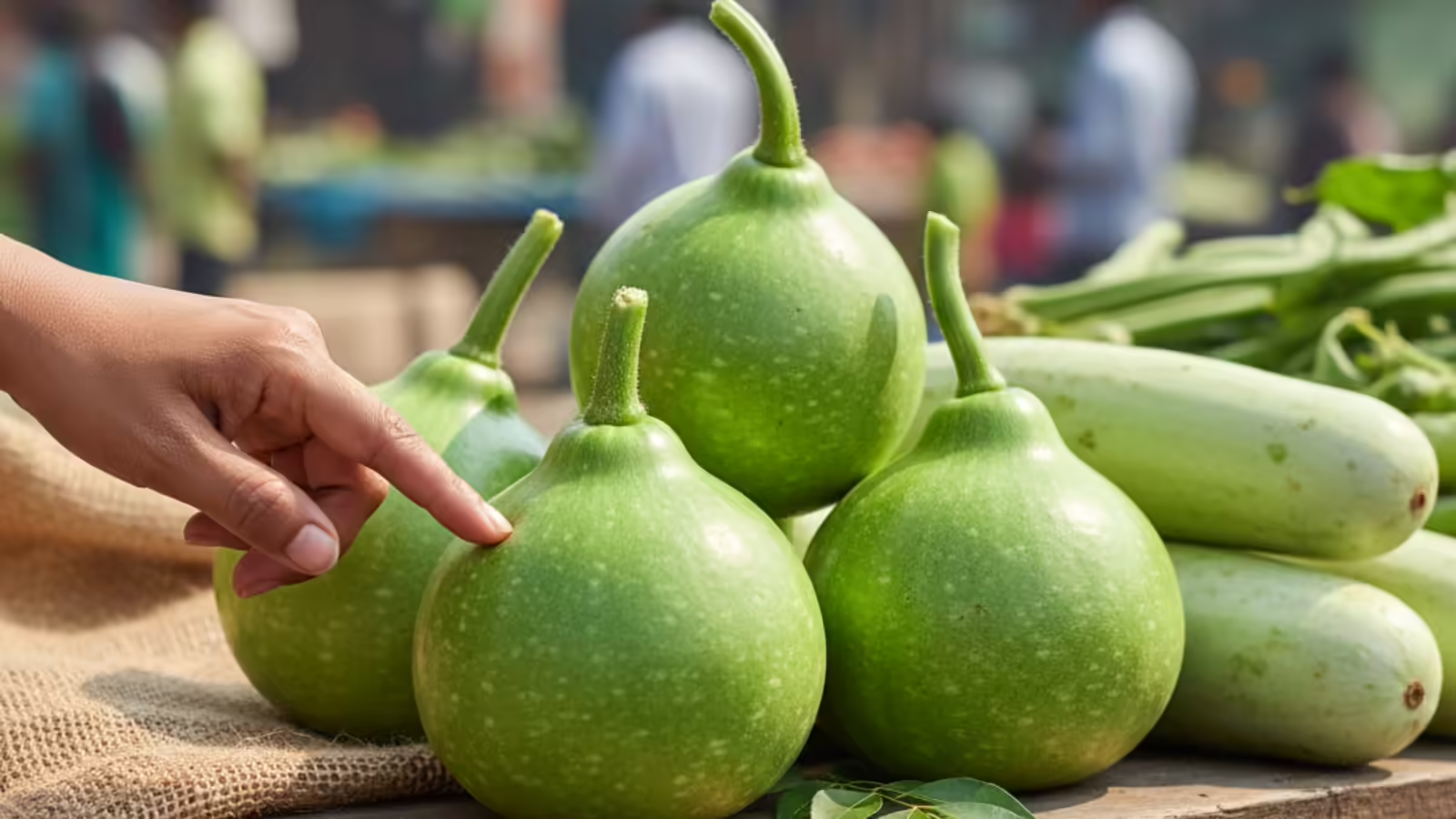
During the summer season, bottle gourd—popularly known as lauki—becomes a staple in many Indian kitchens. Light on the stomach, rich in nutrients, and easy to digest, this humble vegetable is often recommended by doctors and nutritionists alike. However, despite its health benefits, many people complain that their lauki curry turns bland, takes too long to cook, or sometimes even tastes bitter.
The problem usually isn’t the recipe—it’s the quality of the bottle gourd. Choosing the right lauki from the market can make a huge difference in taste, texture, and cooking time. With a few simple checks, you can ensure that the vegetable you bring home is tender, sweet, and perfect for everyday cooking.
Round vs Long Bottle Gourd: What’s the Difference?
Bottle gourd is commonly available in two main varieties:
- Long and slender bottle gourd
- Round or slightly oval bottle gourd
In agricultural terms, the long variety is often referred to as Narendra Shivani, while the round one is known as Narendra Madhuri. Many people casually call the round variety “desi lauki.”
Although both are edible, they differ significantly in cooking behavior and taste.
Which Bottle Gourd Cooks Faster and Tastes Better?
If you prefer soft, well-cooked vegetables that blend easily into gravies or curries, round bottle gourd is the better choice. It cooks faster, has fewer seeds, and offers a mildly sweet flavor.
On the other hand, long bottle gourds may sometimes take longer to soften. In some cases, rapid growth techniques are used to increase size, which can affect tenderness. As a result, the vegetable may remain hard even after prolonged cooking.
How to Identify Fresh Bottle Gourd in the Market
One of the easiest ways to judge freshness is by looking at the stem area. A fresh bottle gourd will have a green, moist-looking stem that appears recently cut. If the stem looks dry, brown, or shriveled, the vegetable is likely old.
Older bottle gourds often turn fibrous from the inside, making them difficult to cook and unpleasant to eat.
Color and Texture Matter More Than You Think
A good-quality bottle gourd should have a smooth surface with a medium to deep green color. If you notice tiny hair-like fibers on the skin, that’s actually a positive sign—it indicates freshness and tenderness.
Avoid overly large bottle gourds. Bigger size often means the vegetable is over-mature, packed with seeds, and less flavorful. A medium-sized lauki usually offers the best balance of softness and taste.
The Fingernail Test: A Foolproof Trick
Here’s a traditional kitchen hack that rarely fails. Gently press your fingernail into the skin of the bottle gourd. If it pierces easily, the vegetable is fresh and tender. If the skin feels too hard, chances are the lauki is old and fibrous.
This simple test can save you from ending up with a tasteless dish.
Final Kitchen Tip
A delicious lauki dish starts at the vegetable market, not in the kitchen. By paying attention to shape, size, color, and texture, you can significantly improve the taste of your cooking. The next time you shop for vegetables, keep these tips in mind and enjoy softer, sweeter, and faster-cooking bottle gourd dishes at home.