
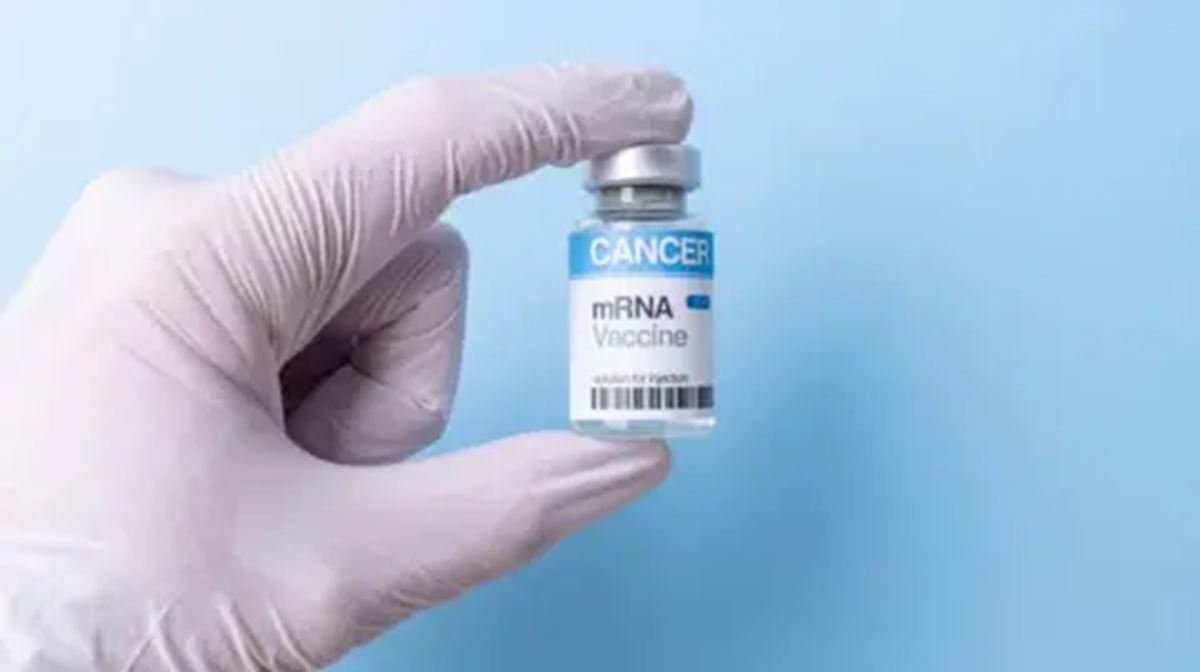
Cancer Research: The combination of vaccine and immunotherapy reduced the risk of melanoma spreading to other parts of the body by 38 percent over a two-year period compared to patients who received immunotherapy alone.
Personalized Cancer Vaccine Clinical Trial
Moderna MSD Skin Cancer Vaccine Intismeran: A new clinical trial has raised great hope for personalized vaccines in cancer treatment. A new clinical trial has shown that a cancer vaccine tailored to a patient's needs, combined with a common immunotherapy drug, reduced the risk of death or recurrence of skin cancer by 42 percent. Researchers say these results signal a significant shift in cancer treatment and could take personalized medicine a step further.
The trial also found that the combination of the vaccine and immunotherapy reduced the risk of melanoma, a serious type of skin cancer, spreading to other parts of the body by 38 percent over a two-year period compared to patients who received immunotherapy alone.
This vaccine is being developed by pharmaceutical companies MSD and Moderna. Both companies say that similar technology is now being tested in the treatment of other tumors, including kidney, bladder, and lung cancer. While independent cancer experts have called these results impressive, they say that long-term patient monitoring will be necessary to determine how much this treatment actually prolongs life expectancy.
How does a personalized vaccine work?
This new approach is for cancer patients whose tumors have been removed through surgery. The trial included 1,137 adult patients. All patients received an established immunotherapy drug called Keytruda, which helps the body's immune system recognize and attack cancer cells. About two-thirds of these patients also received an experimental vaccine, while the rest received a placebo, a drug that had no active therapeutic effect.
This vaccine, called Intismeron, uses mRNA technology, which has also been used in some COVID vaccines. However, its approach is different for cancer. The vaccine is tailored to each patient individually, using information from the patient's own tumor to train the immune system to recognize cancer cells.
The aim is to allow the immune system to recognize and attack cancer cells if they reappear in the body. Two years after starting treatment, patients who received the vaccine were significantly less likely to have their melanoma return or spread to other parts of the body.
Professor Pippa Cory, a medical oncologist working on one part of the trial at Addenbrooke's Hospital in Cambridge, described it as an exciting step towards personalized medicine. According to her, tailoring treatment to each patient's tumor takes this technology to a different level. However, she also said that the big question in this trial was how much real benefit this technology could be proven. Tony Chapman, a 75-year-old participant in the trial, was diagnosed with melanoma in 2019. The tumor was surgically removed from his chest, but a lump later appeared under his arm. Investigations revealed the cancer had returned, and he had to undergo another operation.
Cost and long-term monitoring are major challenges.
MSD and Moderna shares rose when both companies indicated successful results with their vaccine. However, they later fell after financial analysts commented that the current results were not as strong as those obtained in earlier, smaller trials. Both companies have stated that they are in discussions with drug regulators and may apply for approval by next year. However, widespread use will depend on several factors, including the cost of treatment, as each patient's tumor will require genetic analysis and a unique vaccine based on that analysis.