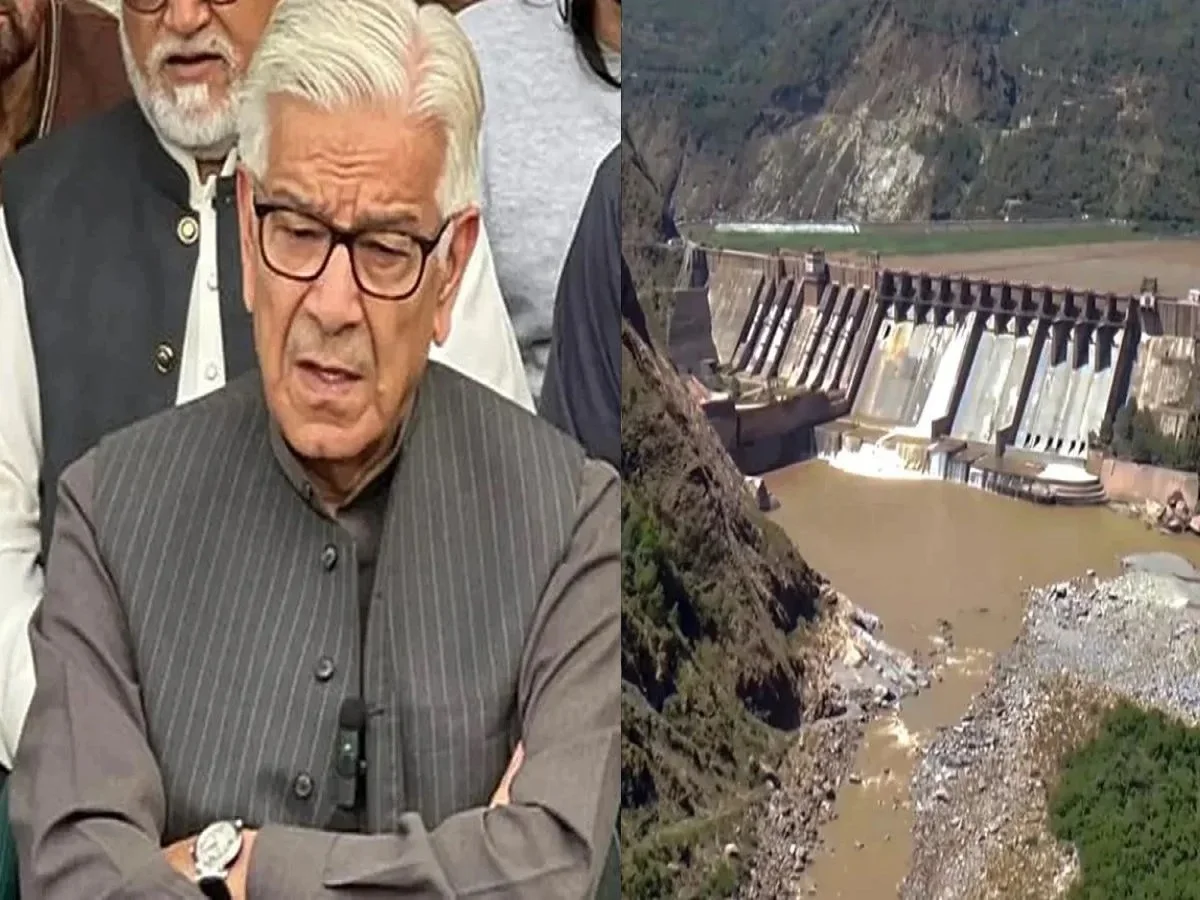
Fresh tensions have emerged between India and Pakistan over water-sharing issues, with senior Pakistani officials raising concerns about the country's water security amid a growing domestic water shortage.
Pakistan's Defence Minister Khawaja Asif recently stated that access to water is closely linked to Pakistan's national security and warned that any perceived threat to the country's water resources would be taken seriously by Islamabad.
The remarks come at a time when Pakistan is facing significant water stress in several regions, particularly in Sindh and Balochistan, where officials have reported declining water availability for agriculture and daily use.
Water Security Becomes a Key Political Issue
According to Pakistani officials, water availability has become an increasingly important national concern due to rising demand, climate challenges, and pressure on existing resources.
Khawaja Asif stated that Pakistan would closely monitor developments affecting its water supply and would respond to any actions that it believes threaten the country's interests.
His comments have intensified discussions surrounding water management and regional cooperation between the two neighboring nations.
Dispute Linked to the Indus Waters Treaty
The latest controversy is tied to the long-standing Indus Waters Treaty, an agreement signed in 1960 with the support of the World Bank.
The treaty governs the sharing of water from the Indus river system between India and Pakistan and has often been regarded as one of the most durable agreements between the two countries.
The issue has gained renewed attention following recent political developments and growing concerns over regional security.
Why the Treaty Matters
The Indus Waters Treaty plays a crucial role in Pakistan's economy and agriculture.
Key facts about the agreement include:
- Pakistan receives access to a significant share of water from the Indus river system.
- The river network supports a large portion of Pakistan's agricultural sector.
- Millions of farmers depend on these water resources for irrigation.
- The treaty has survived multiple periods of political and military tensions over the decades.
Because agriculture remains a major contributor to Pakistan's economy, any concerns regarding water availability often become matters of national importance.
Pakistan Raises Concerns Over Water Availability
Pakistani officials have expressed concerns about water flows and data-sharing arrangements related to river management.
Government representatives have argued that access to timely hydrological information is important for planning irrigation activities, reservoir management, and agricultural production.
They have also stated that recent developments have increased uncertainty regarding future water availability.
Growing Water Crisis Inside Pakistan
Beyond international concerns, Pakistan is also confronting an internal water shortage that is affecting several provinces.
Official figures released by regional authorities indicate significant reductions in water availability across major canal systems.
Reported Water Shortages
According to provincial irrigation data:
- The North-West Canal is reportedly facing a water shortage of more than 60%.
- The Rice Canal has experienced a substantial decline in water supply.
- The Dadu Canal has reported one of the most severe shortages.
Experts warn that prolonged shortages could affect crop production, local economies, and rural communities dependent on irrigation.
Provincial Disputes Add to the Challenge
Water distribution has also become a source of debate within Pakistan itself.
Officials in Sindh have raised concerns regarding water allocation between provinces, arguing that downstream areas are receiving less water than required.
These disputes highlight the broader challenge of managing limited water resources in a country that faces increasing pressure from population growth, climate variability, and agricultural demand.
Analysts note that resolving domestic water-management issues may be just as important as addressing international concerns.
Regional Implications
The growing focus on water security reflects a wider trend across South Asia, where climate change, rising temperatures, and changing rainfall patterns are putting additional strain on river systems.
Experts believe long-term solutions will require:
- Improved water conservation measures.
- Better irrigation efficiency.
- Enhanced regional cooperation.
- Investment in water infrastructure.
- Transparent data sharing and dialogue.
As discussions continue, water is expected to remain a critical issue in India-Pakistan relations and a key factor influencing regional stability in the years ahead.
For now, both countries face the challenge of balancing national interests with the need for sustainable management of shared water resources.