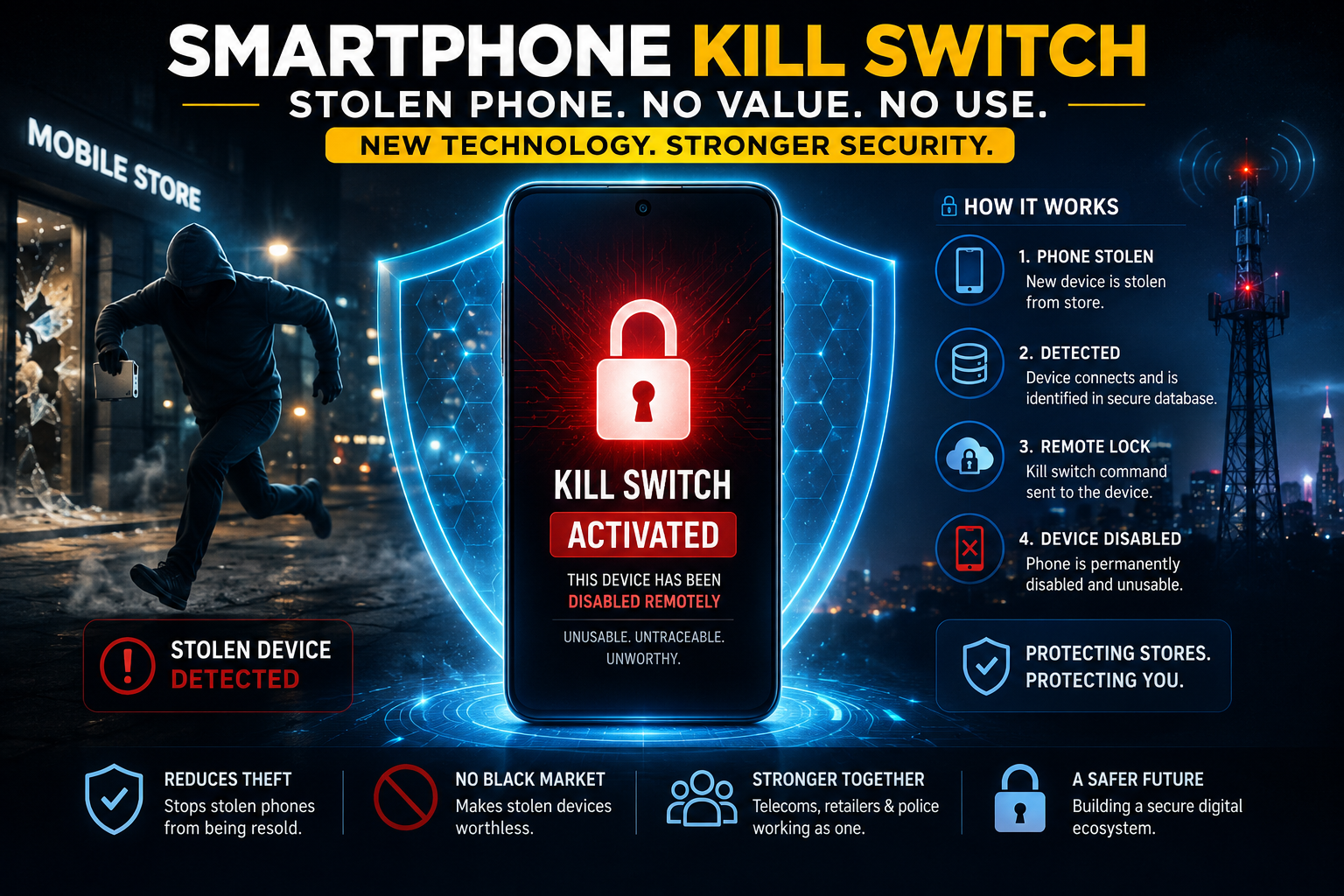
A new anti-theft technology aimed at tackling smartphone theft has been introduced in the United Kingdom, offering a powerful tool against organized criminal networks. The system, known as a "Kill Switch," has been launched by major telecom operators to ensure that newly stolen smartphones become completely unusable shortly after activation.
The move comes amid growing concerns over rising smartphone thefts and increasing pressure on the technology industry to strengthen device security measures.
Telecom Companies Take Action Against Mobile Theft
Two of the UK's largest mobile network providers, Virgin Media O2 and VodafoneThree, have introduced the new security mechanism to combat theft from retail stores and distribution channels.
The initiative was launched after calls for broader anti-theft protections across the smartphone industry. The technology is specifically designed to reduce the resale value of stolen devices and make organized theft operations less profitable.
Industry experts believe that targeting the black market for stolen smartphones could significantly reduce theft-related crimes over time.
Rising Smartphone Theft Driving New Solutions
Mobile phone theft has become a growing concern in several major cities. Reports indicate that tens of thousands of people fall victim to smartphone theft every year, creating significant financial losses for consumers, retailers, and insurance providers.
Authorities and telecom operators have increasingly looked for technological solutions that go beyond traditional tracking and device-locking features. Similar measures have already been explored in some European countries as part of broader efforts to disrupt illegal device resale networks.
The newly introduced Kill Switch is intended to address the problem at its source by ensuring that stolen inventory cannot be easily resold.
How the Kill Switch Technology Works
The system is designed specifically for brand-new smartphones that have not yet been sold to customers.
When an unsold device is stolen from a retail store or warehouse and switched on for the first time, it can be identified through a dedicated database maintained in coordination with device manufacturers and network operators.
Once the device is recognized as stolen inventory, a remote command can be sent to disable it permanently. As a result, the smartphone becomes unusable and loses its commercial value.
The goal is simple: make stolen phones worthless so that criminal groups have little incentive to target them in the first place.
Designed for Unsold Devices Only
An important aspect of the system is that it does not affect smartphones that have been legally purchased by customers.
Once a device is sold, ownership transfers to the buyer, and telecom operators do not have the authority to remotely disable a legally owned handset through this specific mechanism.
This distinction ensures that legitimate users remain protected while retailers and distributors gain an additional layer of security for inventory that has not yet entered the consumer market.
Growing Calls for Built-In Anti-Theft Features
The launch has reignited discussions about whether smartphone manufacturers should include universal anti-theft systems directly within their devices.
Law enforcement agencies and industry groups have long argued that stronger built-in security measures could help reduce smartphone theft and related crimes. Some organizations have urged technology companies to adopt standardized solutions that would allow stolen devices to be rendered useless regardless of where they are sold or activated.
The debate continues as governments, telecom operators, and technology firms explore ways to strengthen consumer protection while respecting ownership rights and privacy concerns.
Could This Change the Smartphone Theft Market?
Security analysts believe the effectiveness of the Kill Switch will depend on how widely similar systems are adopted. If successful, the technology could significantly reduce the value of stolen devices and make organized smartphone theft less attractive to criminal networks.
For consumers, the development highlights the growing role of technology in preventing theft rather than simply helping recover stolen devices after the crime has occurred.
As smartphone theft continues to challenge authorities worldwide, innovations such as the Kill Switch may become an increasingly important part of future device security strategies.