NEWS
ITR Filing 2026: New Deadline Calendar Released—Check the Last Date for Every Taxpayer Category
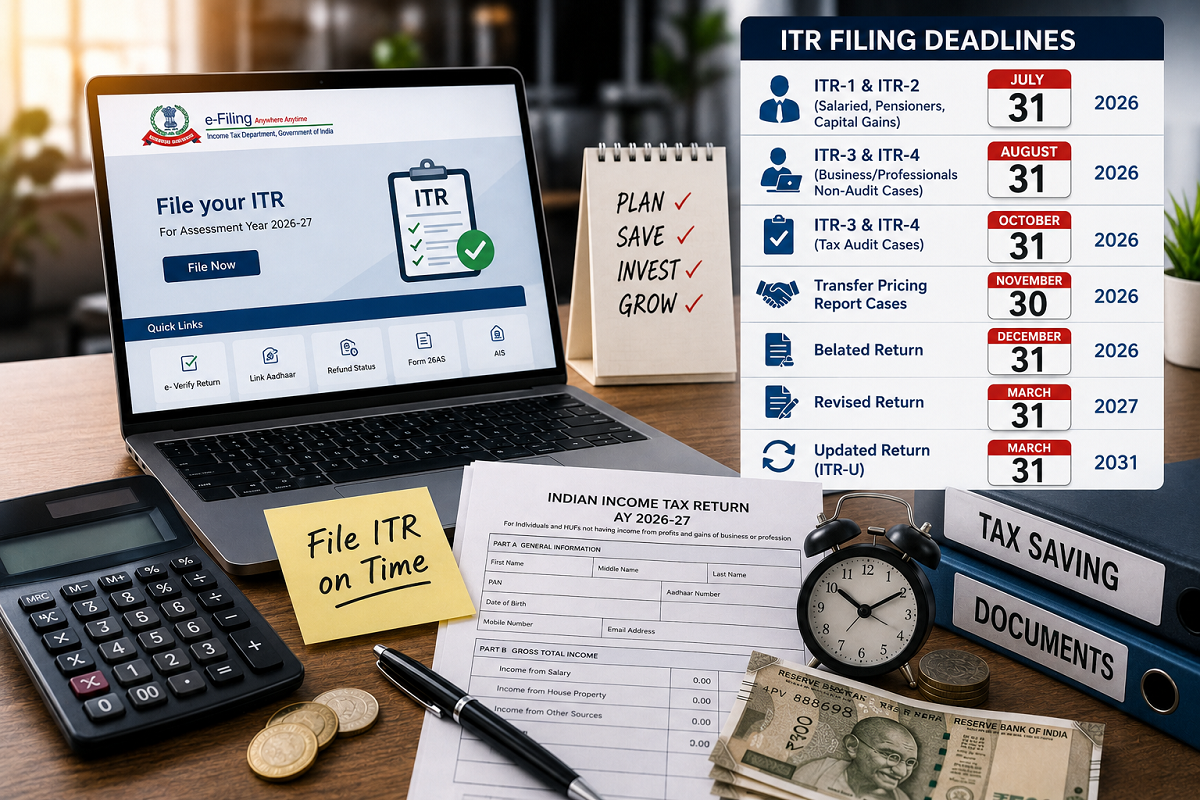
The government has introduced a revised Income Tax Return (ITR) filing calendar for Assessment Year (AY) 2026-27, giving additional time to certain categories of taxpayers while retaining the existing deadline for others. The updated schedule is expected to benefit business owners, professionals, freelancers, and taxpayers who often require more time to compile financial records before filing their returns.
One of the biggest changes is the extension of the filing deadline for non-audit taxpayers filing ITR-3 or ITR-4. At the same time, the government has also extended the deadline for filing revised returns, giving taxpayers more time to correct mistakes or claim missed deductions.
Here's a detailed look at the new ITR filing calendar and what it means for different taxpayer categories.
Non-Audit Business Taxpayers Get One More Month
Under the revised schedule, business owners and professionals who are not required to undergo a tax audit and file ITR-3 or ITR-4 can now submit their income tax returns until August 31, 2026.
Earlier, these taxpayers generally had to complete the filing process by the end of July. The additional one-month extension is expected to ease compliance for small businesses, consultants, and self-employed professionals.
Salaried Employees Still Face the July Deadline
The revised calendar does not change the deadline for most salaried individuals.
Taxpayers filing:
- ITR-1
- ITR-2
including salaried employees, pensioners, and most taxpayers reporting capital gains, must continue to file their returns by July 31, 2026.
More Time to File a Revised Return
Another significant relief comes in the form of an extended deadline for filing revised income tax returns.
Previously, revised returns generally had to be filed by December 31 of the relevant assessment year.
Under the updated calendar, taxpayers can now submit a revised return until March 31, 2027.
This additional time can be useful if a taxpayer:
- Discovers an error after filing.
- Misses claiming a deduction.
- Receives updated financial information.
- Needs to correct income details.
- Identifies discrepancies in the filed return.
Complete ITR Filing Calendar for AY 2026-27
| Taxpayer Category | Last Date |
|---|---|
| ITR-1 & ITR-2 (Salaried employees, pensioners, most capital gains cases) | 31 July 2026 |
| ITR-3 & ITR-4 (Business/Professionals – Non-Audit Cases) | 31 August 2026 |
| ITR-3 & ITR-4 (Tax Audit Cases) | 31 October 2026 |
| Businesses Requiring Transfer Pricing Report | 30 November 2026 |
| Belated Return | 31 December 2026 |
| Revised Return | 31 March 2027 |
| Updated Return (ITR-U) | 31 March 2031 |
Who Benefits From the New Calendar?
The revised schedule is expected to benefit several categories of taxpayers, including:
- Small business owners.
- Self-employed professionals.
- Freelancers.
- Consultants.
- Investors awaiting revised broker or mutual fund statements.
- Taxpayers waiting for corrections in AIS or Form 26AS.
- Individuals who may need additional time to claim deductions such as those available under Section 80C.
The extended timeline provides greater flexibility while reducing last-minute filing pressure.
Consequences of Missing the Deadline
Taxpayers who fail to file their returns within the prescribed due date may face financial and procedural consequences.
Possible implications include:
- Late filing fee under Section 234F.
- Interest on outstanding tax liability under Section 234A.
- Restrictions on carrying forward eligible business or capital losses.
- Limited ability to opt for the old tax regime in certain situations, subject to applicable rules.
- Delays in loan approvals, as banks often request recent ITR acknowledgements for home loans, personal loans, and business financing.
Why Filing Early Is Still Recommended
Although some taxpayers have received additional time, tax experts generally recommend filing returns as early as possible. Early filing reduces the risk of errors, allows faster processing of refunds, and provides sufficient time to respond if additional documents or corrections are required.
It also helps taxpayers avoid last-minute technical issues that often arise closer to the filing deadline.
Final Takeaway
The revised ITR filing calendar for AY 2026-27 offers welcome relief to non-audit business taxpayers and professionals by extending their filing deadline to August 31, 2026, while salaried individuals and most other taxpayers continue to face the July 31, 2026 deadline.
The extension of the revised return deadline until March 31, 2027 is another major change, giving taxpayers additional time to rectify errors and ensure accurate compliance. Taxpayers should identify the category applicable to them and complete the filing process well before the deadline to avoid penalties and other compliance-related issues.