NEWS
EPFO's Biggest PF Rule Change in 12 Years? Proposed Wage Limit Hike Could Expand Pension Benefits
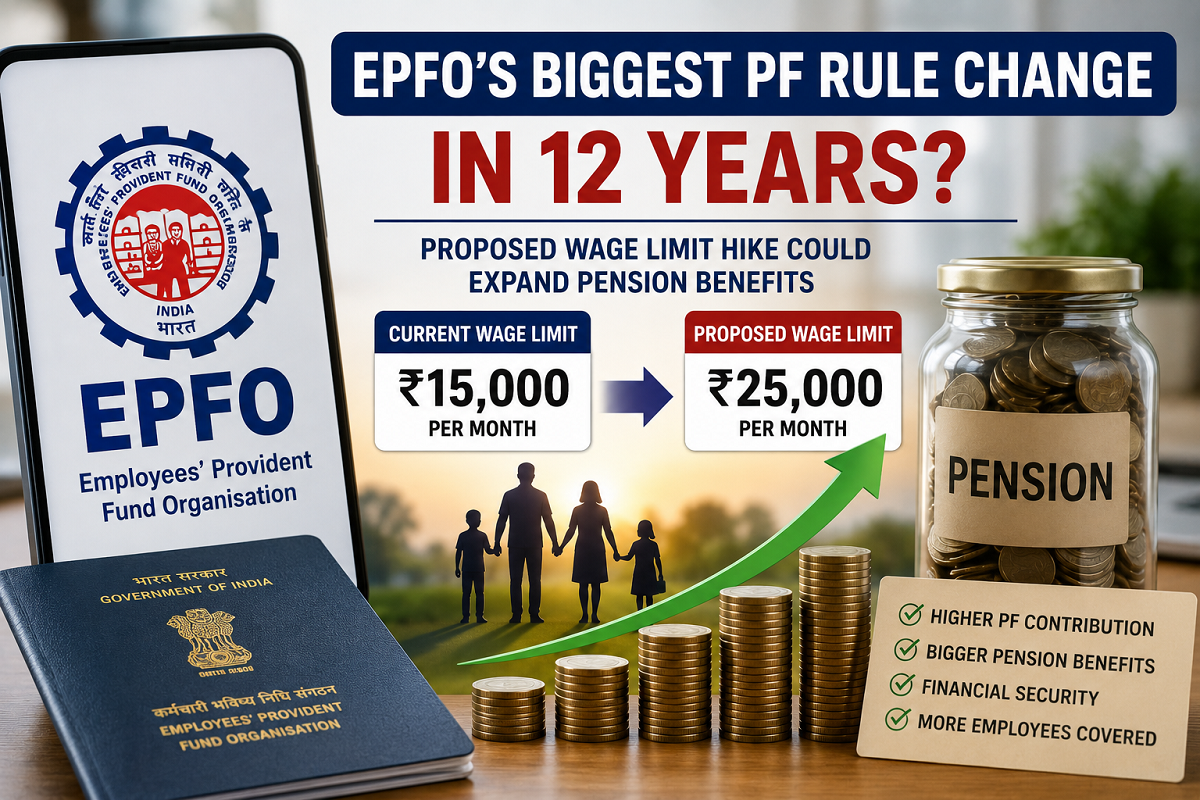
EPFO Update: A major change to India's Provident Fund and pension system could be on the way. According to reports, the government is considering increasing the mandatory EPF wage ceiling from ₹15,000 to ₹25,000 per month—the first such proposed revision in more than a decade. If approved, the move would bring a larger number of salaried employees under the ambit of the Employees' Provident Fund (EPF) and the Employees' Pension Scheme (EPS).
However, the proposal has not yet been implemented. It still requires approval from the Union Cabinet before becoming an official rule.
What Is the Proposed EPFO Change?
Under the current EPFO rules, the mandatory wage ceiling for EPF coverage is ₹15,000 per month. Employees earning above this amount are generally covered only under specific conditions agreed upon by the employer and employee.
The proposal under consideration seeks to raise this ceiling to ₹25,000 per month, potentially extending mandatory EPF and pension coverage to a much larger section of the workforce.
Why Is This Considered a Major Reform?
The existing wage ceiling has remained unchanged for years, even as salaries in the organised sector have steadily increased.
If the proposed revision is approved, it could:
- Expand mandatory EPF coverage to more salaried employees.
- Increase the number of workers eligible for the Employees' Pension Scheme (EPS).
- Strengthen retirement savings for employees earning up to ₹25,000 per month.
- Improve social security coverage across the organised workforce.
Because the wage ceiling has remained unchanged for over a decade, the proposal is being viewed as one of the most significant EPFO reforms in recent years.
How Could Employees Benefit?
Employees who become eligible under the revised wage ceiling may receive several long-term benefits, including:
- Regular contributions to the Employees' Provident Fund.
- Coverage under the Employees' Pension Scheme (EPS), subject to eligibility rules.
- Higher retirement savings through employer and employee contributions.
- Access to various EPFO benefits available to eligible members.
The proposal is expected to particularly benefit workers whose salaries currently exceed the existing ₹15,000 threshold but fall within the proposed ₹25,000 limit.
Will Everyone Earning ₹25,000 Get a Pension?
Not automatically.
Even if the revised wage ceiling is approved, pension eligibility will continue to depend on the provisions of the Employees' Pension Scheme (EPS).
Factors such as:
- EPF membership,
- Length of eligible service,
- Employer contributions, and
- Compliance with EPFO rules
will continue to determine whether an employee qualifies for pension benefits and how much pension they receive.
What Is the Current Status of the Proposal?
At present:
- The proposal to increase the wage ceiling has been reported.
- The change has not yet received Union Cabinet approval.
- No official EPFO notification has been issued.
- Existing EPF and EPS rules continue to remain in effect.
Until the government formally approves and notifies the revised rules, employers and employees must continue to follow the current EPFO framework.
What Could Change If the Proposal Is Approved?
If the government gives its approval, the revised policy could lead to:
- Expansion of mandatory EPF coverage.
- More employees becoming eligible for pension benefits under EPS.
- Higher retirement savings for newly covered workers.
- Changes in employer and employee contribution calculations, depending on the applicable rules.
The detailed implementation process and effective date would be announced only after an official notification is issued.
Final Take
The proposal to increase the mandatory EPF wage ceiling from ₹15,000 to ₹25,000 could mark one of the biggest changes to India's provident fund and pension system in over a decade. If implemented, it has the potential to extend retirement and pension benefits to a significantly larger number of salaried employees.
For now, however, the proposal remains under consideration. Since Union Cabinet approval and an official EPFO notification are still pending, the existing PF and pension rules continue to apply.