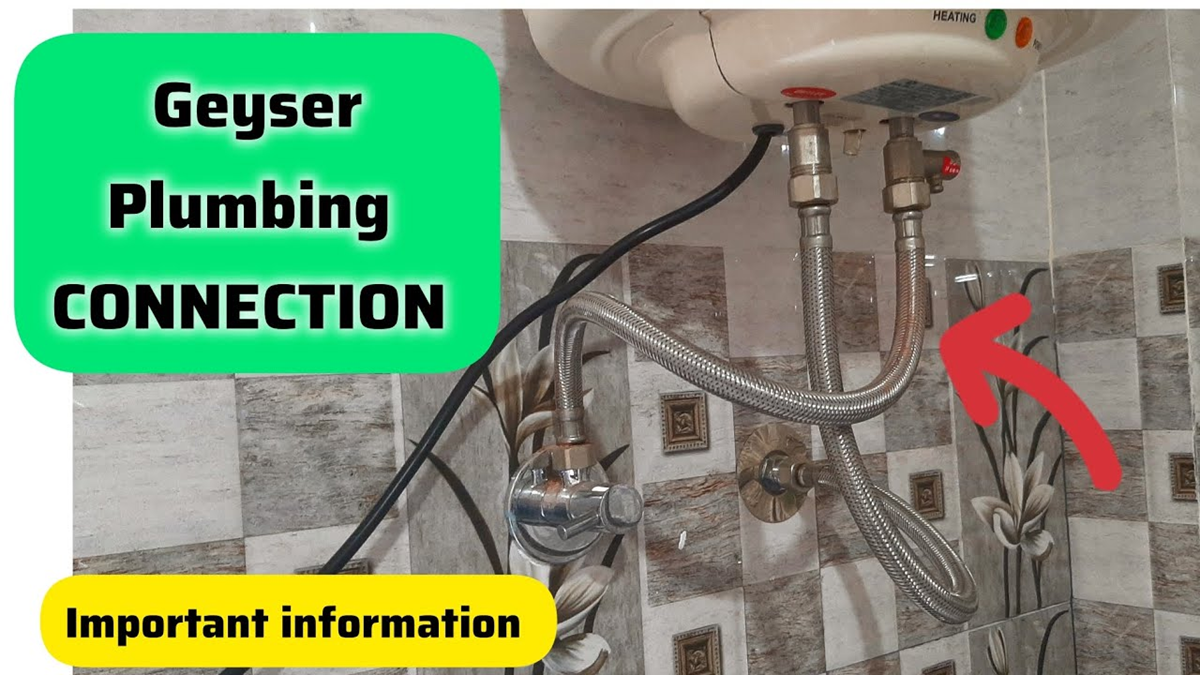
With the onset of winter, geysers that have been idle for months are starting to function again. But a small mistake regarding hot water can lead to a major disaster. Learn the correct rules for operating a geyser.
Geyser Tips
With the onset of mild winter, geysers in bathrooms that had been idle for months are starting to turn on again. People have started using them to avoid cold water in the morning. In winter, people often switch on the geyser as soon as they enter the bathroom. But this haste often leads to serious problems. Every winter, many frightening reports emerge regarding geyser bursts, short circuits, and gas geyser suffocation.
In fact, due to being left unattended for months, moisture and debris accumulate in the geyser's internal parts, which many people often ignore. Furthermore, during daily use, we often make small mistakes, knowingly or unknowingly, that can lead to a major accident. Therefore, for the safety of ourselves and our families, it's crucial to understand the precautions we should take when operating a geyser in the winter.
Do not keep the geyser on or running continuously while bathing.
Most people have the habit of turning on the geyser just before entering the bathroom and leaving the switch on even while bathing. This habit can prove to be extremely dangerous. If there is even a slight defect in the geyser's heating element or a leak in the internal wiring, there is a risk of electric current spreading directly through the water. Therefore, after heating the water, completely turn off the geyser's main switch before bathing.
Additionally, in many homes, the geyser is left on continuously from morning until afternoon so everyone can take turns bathing. Running continuously for several hours can damage the geyser's thermostat, and excessive pressure can build up inside, potentially even causing the tank to burst. Always turn on the geyser 15 to 20 minutes before the required amount of work is needed and turn it off immediately after completion.
Do not be negligent in the matter of gas geysers and ventilation.
Nowadays, many homes are installing LPG-powered gas geysers to save on electricity bills, but these require even greater caution. When a gas geyser is running, it rapidly draws oxygen from the bathroom to fuel the fire and releases toxic gas such as carbon monoxide. This gas is odorless and invisible.
If your bathroom is small and lacks an exhaust fan or an open window, a person can suffocate and faint within minutes while bathing. Try to install the main unit of the gas geyser in an open space outside the bathroom, and bring only the water pipeline inside. Also, always keep the exhaust fan running while bathing to ensure fresh air circulation.
Early season servicing
Before turning on your geyser for the first time at the beginning of winter, it's essential to have it serviced by a qualified technician. Stagnation of water throughout the year can cause a white, salty layer of scaling to form on the geyser rod and inside the tank. This layer not only delays heating the water but also increases pressure on the heating coil, increasing power consumption and the risk of a blast.
During servicing, have your technician check the geyser's pressure release valve and auto-cut feature. This is the feature that automatically shuts off the geyser once the water reaches the set temperature. Furthermore, never use a lightweight plug or standard switch for your geyser; instead, always install a heavy-load-capable power plug and MCB. When purchasing a geyser, avoid the temptation to buy cheaply; always choose a branded geyser with an ISI mark.