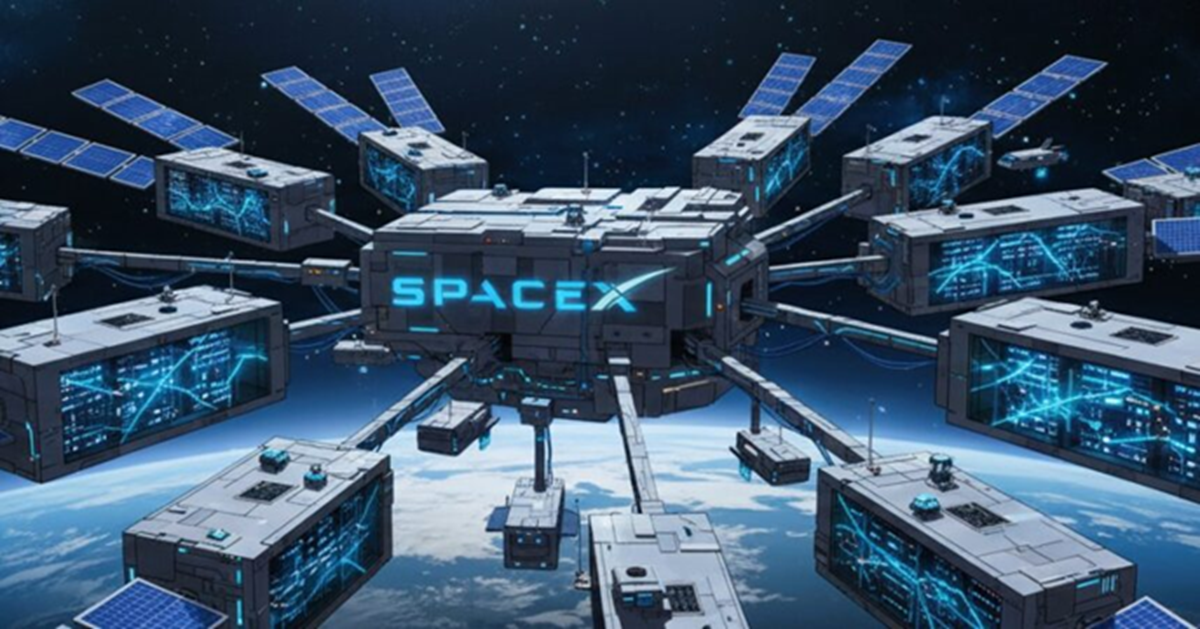
AI Data Centers In Space: With the growing demand for data centers amid the AI boom, companies are now looking to space. However, scientists have also urged attention to the risks involved.
AI Data Centres In Space: What are the disadvantages of building a data Centres in space?
AI Data Centres In Space: Due to the AI boom, the demand for data Centres has increased, and companies have started looking towards space for these. Companies like SpaceX, Jeff Bezos' Blue Origin, and Google are considering building data centers in space. Last month, SpaceX announced that under the Starmind project, it wants to send 1 million AI satellites into space. Companies are finding space a safe place to avoid the hassle of unlimited solar power and setting up data centers on Earth, but not everyone agrees with this. A group of scientists has demanded from the US Federal Communications Commission (FCC) that before large-scale deployment of satellites, its potential dangers need to be looked into.
Why is a data Centres necessary for AI?
Like the internet, AI services require computer servers to function. Given the scale of AI use, large servers are essential. These servers are housed in data Centres . Depending on their capacity, data Centres can span several acres. Data centers have existed for many years, but their numbers have grown rapidly since the advent of AI. These data centers require electricity to operate. When these servers operate, they generate heat. To control this heat and prevent the server temperature from rising, data centers require cooling, which requires large amounts of water. A single data center can consume as much water and electricity as a large city. This has led to opposition to data centers in many places.
Now companies are eyeing space.
To avoid the need for electricity and water, and other disputes, companies have now set their sights on space. This will offer two benefits simultaneously. Space offers unlimited solar energy, reducing companies' dependence on electricity. Second, space offers no land use hassles. Floating data Centres will be built in space, requiring no land. Google has described this concept as a subject of extensive research. The company is considering launching computing hardware into orbit in collaboration with Elon Musk's SpaceX. Similarly, Amazon founder Jeff Bezos believes that data centers will be built in space within the next 10-20 years.
Scientists want to draw attention to these dangers.
Many environmental groups argue that we shouldn't just focus on the benefits of data Centres in space . Earthjustice, representing these groups, has urged the FCC to conduct a comprehensive review of satellite projects. Scientists fear that the indiscriminate increase in satellite numbers could increase atmospheric pollution, damage the ozone layer, increase space debris, and even alter the appearance of the night sky. This will impact people's daily lives as well as the Earth's future. Scientists have also expressed concern that this could adversely affect wildlife and human health. Previously, many experts had warned that the ever-increasing number of satellites in space would complicate observations with telescopes worldwide, meaning even the most powerful telescopes on Earth would be unable to observe activities in space.
The number of satellites in space is increasing rapidly.
The European Southern Observatory (ESO) says that the number of satellites has increased rapidly in the last few years. Starlink alone currently has 10,400 satellites orbiting Earth. Before 2022, the total number of satellites in space was only 14,450. Companies are now planning to launch even more satellites.