NEWS
After Meta, Other Social Media Platforms May Face Government Scrutiny Over Algorithms and Intermediary Status
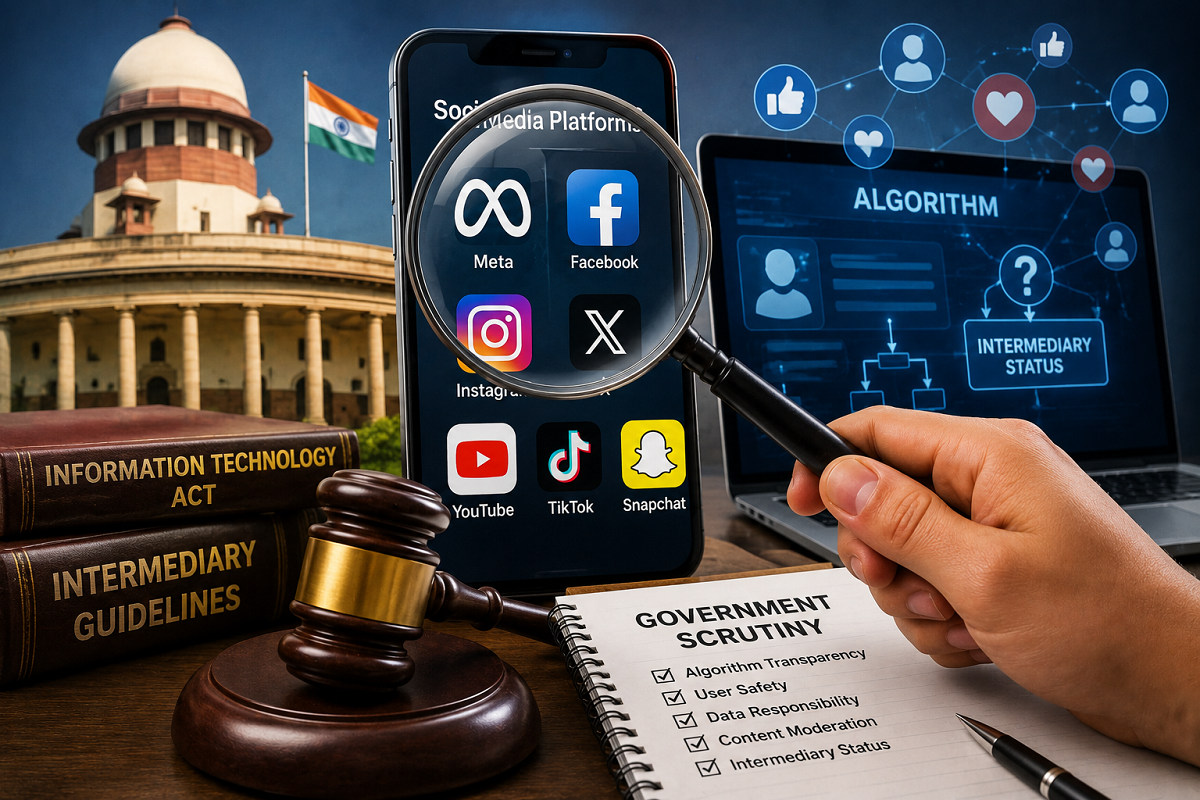
India's scrutiny of major social media companies could soon extend beyond Meta, with the central government reportedly planning to examine other digital platforms and how they operate under the country's intermediary framework.
The development comes amid a broader examination of Meta's content recommendation systems, moderation practices and handling of potentially harmful material. A key question being considered is whether platforms that actively determine what content is shown to particular users should continue to receive the legal protections available to intermediaries.
According to reports, government officials could hold discussions with other digital platforms as part of this wider exercise.
The issue is significant because large online platforms typically host enormous quantities of user-generated content. Their legal responsibilities can depend on whether they are functioning as intermediaries or playing a more active role in selecting, promoting or publishing content.
Here's what the latest development means and why algorithms have become central to the debate.
Why Is the Government Examining Social Media Platforms?
The immediate scrutiny has focused on Meta, the company behind Facebook, Instagram and WhatsApp.
Government discussions with Meta have reportedly covered content moderation, recommendation algorithms, deepfakes and other harmful or manipulated material.
The broader question is how much control a platform exercises over the content users eventually see.
Traditional intermediary protections are based, in part, on the idea that an online service provides infrastructure through which users communicate or publish their own content.
Modern social media platforms, however, don't necessarily display everything chronologically.
Algorithms can decide which posts, videos or recommendations appear prominently in a user's feed.
That has raised a more complicated regulatory question: if a platform's systems actively determine "what is shown to whom," should the platform always be treated purely as an intermediary?
What Does 'Intermediary' Mean?
In simple terms, an intermediary provides an online service through which information created by other users can be transmitted, hosted or accessed.
Social media platforms can fall within this framework, subject to applicable provisions of Indian law.
The distinction is important because qualifying intermediaries can receive certain legal protections regarding third-party content, provided they comply with prescribed due-diligence and other statutory requirements.
This protection is commonly described as "safe harbour."
It doesn't mean that platforms have no responsibilities. They are still required to comply with applicable Indian laws and intermediary rules.
The latest examination concerns whether the way modern recommendation systems operate changes that legal equation.
Why Are Algorithms Under the Scanner?
Social media algorithms play an enormous role in determining what users see.
When you open a social networking app, the posts appearing at the top of your feed aren't necessarily displayed randomly. Recommendation systems can analyse multiple signals to decide which content is likely to receive your attention.
The government's examination reportedly focuses on the degree to which this process amounts to active content selection.
If a platform isn't merely hosting user content but is algorithmically deciding which content should be promoted to specific audiences, questions can arise about whether it has taken on functions closer to those of a publisher.
However, this remains a legal and regulatory question under examination. It should not be interpreted as a final government determination that algorithm-driven platforms have already lost intermediary protection.
Meta's Deepfake Handling Is Also Being Examined
The latest regulatory scrutiny is also connected with concerns over deepfakes and harmful AI-generated content.
Artificial intelligence has made it increasingly easy to create convincing manipulated photographs, audio recordings and videos.
Such material can be used for impersonation, misinformation, financial scams and other harmful activities.
The government has reportedly sought stronger action from Meta on deepfakes and other problematic content circulating across its platforms.
Authorities are examining the company's detection mechanisms, moderation processes and technical safeguards.
Government Could Seek a Legal Opinion
No final legal conclusion has been announced on Meta's intermediary status.
Reports indicate that the government may seek legal opinion before deciding whether additional action is necessary.
This is an important distinction because losing or modifying intermediary protection could have substantial consequences for a digital platform.
The issue involves interpreting existing Indian technology law in the context of modern algorithm-driven social networks—a technological environment that has changed dramatically since many foundational intermediary principles were developed.
Other Platforms Could Be Called for Discussions
The scrutiny may not remain limited to Meta.
Government officials are reportedly considering engaging with other major digital platforms to understand how their content-selection and recommendation systems function.
The exercise could examine whether these companies satisfy the requirements associated with intermediary status under Indian law.
If pursued broadly, the review could have implications for social networks, video-sharing services and other platforms that rely heavily on recommendation algorithms.
However, no definitive finding against these other platforms has been announced merely because such discussions are being considered.
What Could the Government Examine?
The review could potentially focus on several interconnected areas.
Authorities may seek information about how recommendation algorithms rank and distribute content, how platforms identify illegal or harmful material, and what safeguards exist against deepfakes and manipulated media.
Content moderation mechanisms are also likely to remain important.
Another question is whether platforms apply sufficient checks before algorithmically amplifying potentially harmful content to large audiences.
The exact scope may differ depending on the type of platform and services it provides.
What Could This Mean for Social Media Users?
For ordinary users, there is no immediate indication that their everyday access to social media platforms will change because of the review.
The development is primarily about platform accountability and regulatory compliance.
Over the longer term, however, tighter regulatory scrutiny could influence how platforms recommend, moderate, label or remove content in India.
Users could potentially see stronger mechanisms for identifying deepfakes, more transparency around manipulated media or changes to recommendation systems if regulators introduce additional requirements.
Much will depend on what conclusions the government ultimately reaches.
Why Intermediary Status Matters So Much
The intermediary question sits at the heart of how internet platforms are regulated.
Millions of users can publish enormous amounts of content every day. Holding a platform automatically responsible for every piece of user-generated material would create a very different internet ecosystem.
At the same time, recommendation algorithms mean platforms may play a significant role in deciding which content receives visibility.
The regulatory challenge is therefore to determine where neutral hosting ends and active editorial or algorithmic intervention begins.
That distinction could shape future debates about platform liability in India.
What Happens Next?
For now, the government is examining Meta's systems and compliance obligations rather than announcing a final decision on its legal status.
Reports suggest authorities may seek legal advice after assessing the outcome of discussions with the company.
Other digital platforms could subsequently be approached for similar discussions about their recommendation systems, content moderation practices and compliance with Indian intermediary rules.
The outcome could be significant for India's technology sector because any broader interpretation of intermediary responsibility could influence how major social media and content platforms design and operate their services in the country.
Until the government completes its examination or announces a formal regulatory decision, however, reports that platforms have already lost their intermediary status would be premature.