
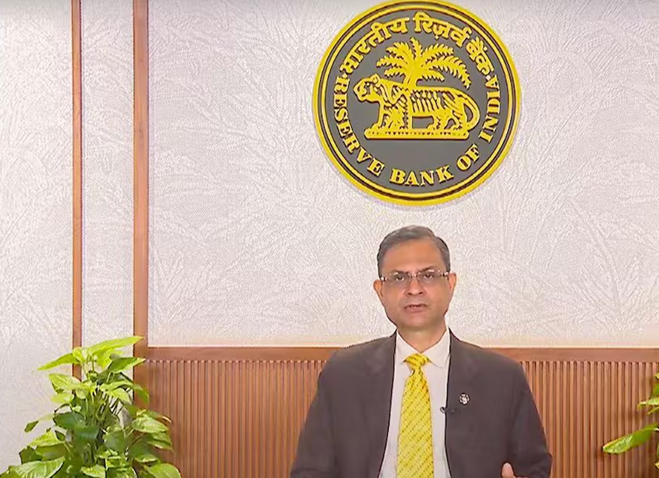
RBI Repo Rate Cut: The RBI has decided to keep the repo rate at 5.25%. This means that your EMI on your home or car loan will neither decrease nor increase.

EMI will remain the same; the RBI did not change the repo rate; it kept it at 5.25%.
RBI Repo Rate Cut: Reserve Bank Governor Sanjay Malhotra announced the monetary policy on Thursday, February 6. The Monetary Policy Committee meeting, which began on February 4, concluded today, and information about the decisions taken was given.
Meanwhile, Governor Sanjay Malhotra stated that the committee unanimously decided to keep the repo rate unchanged at 5.25%, leaving the policy repo rate unchanged at 5.25%. Following the MPC meeting, the RBI Governor said, "The Monetary Policy Committee has decided to keep the policy repo rate unchanged at 5.25% and maintain a neutral stance."
What did the RBI Governor say?
He also stated that economic activity is expected to remain strong in the coming year despite global uncertainties. He added that the Indian economy remains strong, and the outlook for domestic inflation and growth is positive. According to him, India will receive a new base year for both GDP and inflation in the next two days, and monetary policy will also be guided by inflation data based on this new series.
The Reserve Bank of India (RBI) has raised its growth outlook for FY2025-26 from 7.3% to 7.4%. Inflation projections for the first and second quarters of fiscal year 2027 have been raised to 4% and 4.2%, respectively.
How much did the repo rate decrease last year?
In 2025, the Reserve Bank cut the repo rate by 125 basis points. In the December policy meeting, the MPC reduced the repo rate by 25 basis points from 5.5% to 5.25%. Last year, the Reserve Bank cut the repo rate four times. First, it was cut by 25 basis points in February, followed by another 25 basis points in April. The third reduction was by 50 basis points in June, and the last reduction was by 25 basis points in December.
What is the repo rate?
The repo rate is the rate at which the country's central bank (Reserve Bank of India in India) lends to commercial banks to meet liquidity shortages. Banks borrow against government securities from the Reserve Bank and later repay them at a fixed rate. When the repo rate rises, it becomes more expensive for banks to borrow from the RBI, leading them to increase interest rates on home and car loans. When the repo rate falls, it becomes easier for banks to lend to customers at lower interest rates. Overall, the rise and fall of the repo rate impacts your finances.
Impact of repo rate
The benefits of a lower repo rate directly accrue to the country's citizens. Obviously, car and home loans will become cheaper, and installments will decrease, increasing people's purchasing power. This will increase market demand, leading to increased capital flow. Furthermore, a lower repo rate also reduces the cost of capital for companies, improving their cash flow.