NEWS
Mobile Calling Rules 2026: Caller Names May Appear on Your Phone From November 1, Know How CNAP Works
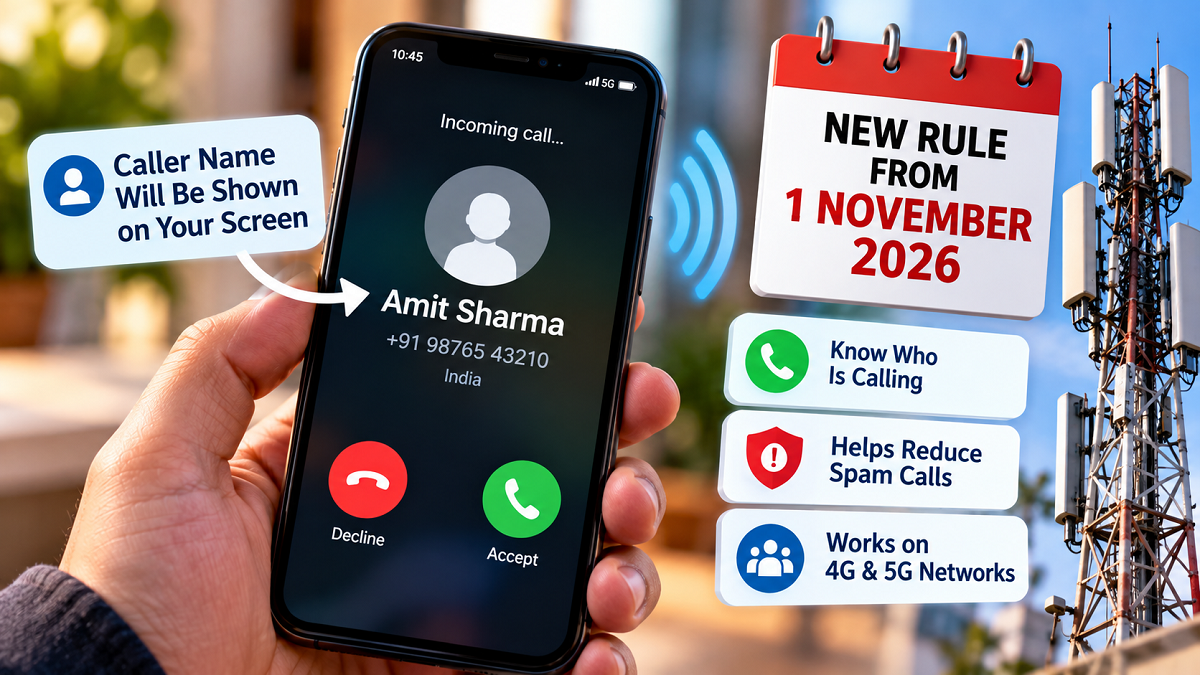
New Mobile Calling Rules November 2026: Receiving calls from unfamiliar numbers could soon become easier to manage for millions of mobile users across India. A new caller identification system, known as Calling Name Presentation (CNAP), is reportedly scheduled for implementation from November 1, 2026.
The initiative aims to help mobile subscribers identify incoming callers by displaying their registered names alongside their phone numbers. The proposed system could offer an additional layer of protection against unwanted calls, impersonation attempts and certain types of telephone fraud.
According to reports, the Department of Telecommunications (DoT) has directed telecom service providers to introduce the facility on supported mobile networks.
Unlike conventional caller identification applications, CNAP is designed to operate through telecom network infrastructure and use subscriber information maintained by service providers.
If implemented as described, the system could change how users identify unknown callers without requiring them to install a separate application.
However, the exact implementation schedule, network compatibility and availability will depend on official instructions and telecom operators' readiness.
What Is the New CNAP Calling Rule?
Calling Name Presentation, commonly known as CNAP, is a telecom-based caller identification facility intended to display the name associated with an incoming telephone number.
Under the reported arrangement, when someone receives a call, their mobile screen may display two important details:
- The incoming mobile number.
- The name associated with that number in the telecom operator's subscriber records.
This could help users recognise callers even when their phone numbers are not saved in the contact list.
For example, if an unfamiliar person calls, the recipient may be able to see the registered subscriber name instead of relying solely on an unknown number.
The initiative is intended to improve transparency in mobile communication and help subscribers make more informed decisions about answering calls.
CNAP Service May Begin From November 1, 2026
According to the supplied report, telecom companies have been instructed to introduce CNAP functionality beginning November 1, 2026.
The initial implementation is expected to focus on compatible 4G and 5G mobile networks.
These networks support modern calling technologies that may help telecom providers deliver additional caller identification information.
However, the actual availability of the service could depend on technical compatibility, operator implementation and the devices being used.
Users should not assume that every mobile connection or handset will necessarily receive the feature simultaneously.
The reported November 1 launch date should also be confirmed against the latest official DoT notification before being treated as a nationwide activation deadline.
How Will CNAP Display the Name of an Unknown Caller?
The proposed system relies on subscriber information available with telecom operators.
When a call is initiated, the network may retrieve the name associated with the originating number and make it available to the receiving network or device.
The recipient could then see the caller's name on the incoming call screen.
This is different from identifying callers solely through a smartphone's saved contacts.
For example, if someone receives a call from a number that has never contacted them before, CNAP may still provide a name based on the operator's registered subscriber details.
However, the displayed name may not always establish the actual identity of the person using the phone at that moment.
A mobile connection may be used by someone other than its registered subscriber, and technical limitations can also affect identification.
Therefore, CNAP should be considered an additional information tool rather than absolute proof that a caller is genuine.
Will Users Need to Download an App or Change Phone Settings?
One of the major attractions of the proposed CNAP facility is its network-based design.
According to the report, eligible users may not need to download a separate application or manually activate a dedicated setting.
The functionality is expected to be integrated into supported telecom calling services.
This could make caller identification more convenient for people who do not use third-party applications.
However, whether the feature works automatically on every supported phone will depend on the final technical specifications and rollout arrangements.
Some devices may require software compatibility or operator support before displaying the additional information.
Users should follow official instructions from their telecom provider rather than installing unfamiliar applications claiming to activate CNAP.
Will CNAP Work on 2G and 3G Mobile Phones?
The initial rollout described in the report focuses on 4G and 5G networks.
Older mobile technologies, including 2G and 3G, may require different technical arrangements.
The report indicates that authorities may examine separate implementation options for these networks at a later stage.
This means users with older handsets should not automatically expect the same caller identification experience from November 1.
Any future expansion will depend on technical feasibility and regulatory decisions.
What Happens When Someone Calls From an International Number?
International calls are another area receiving attention under the proposed caller identification framework.
According to the supplied information, incoming calls originating from international numbers may be identified as international calls on the recipient's screen.
This could help users distinguish overseas calls from ordinary domestic communication.
Such identification may be useful because certain telephone scams involve callers pretending to represent government agencies, financial institutions or delivery companies.
However, an international call label does not necessarily mean the call is fraudulent.
Many legitimate overseas calls are made by relatives, employers, businesses and service providers.
Similarly, fraudsters may use domestic numbers or techniques that disguise the apparent source of a call.
Users should therefore continue verifying unfamiliar callers independently.
Can CNAP Help Reduce Spam Calls and Phone Scams?
Unwanted promotional calls and telephone fraud have become significant concerns for mobile subscribers.
Fraudsters sometimes impersonate bank officials, customer service representatives or government employees to obtain confidential information.
CNAP could make certain impersonation attempts more difficult by providing additional caller information.
It may also help users recognise unfamiliar numbers before answering.
However, the service cannot guarantee that every suspicious call will be identified correctly.
A registered name alone cannot confirm that a caller is authorised to represent a bank, government department or business.
Users should never disclose OTPs, UPI PINs, passwords or banking credentials simply because a familiar-looking name appears on the screen.
How Is CNAP Different From Truecaller and Other Caller ID Apps?
Many smartphone users already rely on caller identification applications to recognise unknown numbers.
However, CNAP and third-party caller identification services use different approaches.
| Feature | CNAP | Third-Party Caller ID Apps |
|---|---|---|
| Main purpose | Display caller identification information | Identify unknown callers and flag possible spam |
| Information source | Telecom subscriber records | App databases and other available information |
| Separate app required | Not expected for supported native implementation | Generally required |
| Network integration | Telecom-based | Primarily app-based |
| Availability | Depends on operator and device support | Depends on application and device compatibility |
CNAP is intended to provide network-level identification, while third-party applications may offer additional services such as spam warnings, number searches and call management.
Both approaches have limitations, and neither should be considered a guarantee against fraud.
What About Privacy and Personal Information?
The proposed caller identification system also raises important questions about subscriber privacy.
Displaying registered names could make unknown calls more transparent, but it may also reveal personal information to recipients.
According to the supplied report, the system is expected to use subscriber records for caller identification, with certain temporary information handled according to the applicable technical and privacy arrangements.
However, specific claims about automatic deletion of caller names after every call should not be treated as confirmed without official technical documentation.
The final framework will need to address data protection, legitimate privacy concerns and possible exceptions.
Businesses may also require arrangements allowing their authorised commercial identities to appear instead of individual subscriber names.
What Should Mobile Users Do Before November 1?
Consumers do not need to make immediate changes based solely on the reported launch date.
They should keep their smartphones updated, monitor announcements from their telecom operators and remain cautious about suspicious calls.
It is also advisable to avoid downloading unofficial CNAP applications or clicking links that promise early activation.
If someone claims that a payment, OTP or identity verification is necessary to activate the feature, users should independently verify the request through their telecom provider's official customer support channels.
Final Takeaway
The proposed Calling Name Presentation system could become an important addition to India's mobile communication infrastructure.
By displaying subscriber names alongside incoming numbers, CNAP aims to make caller identification more transparent and potentially help users recognise suspicious communication.
According to the supplied report, the rollout is expected to begin on November 1, 2026, with initial support focused on compatible 4G and 5G networks.
The key point for mobile users is that CNAP may make unknown callers easier to identify, but it will not eliminate spam calls or guarantee protection against fraud.
Consumers should wait for official confirmation of the implementation schedule and continue following basic phone security precautions.
Disclaimer: The November 1, 2026 implementation date and rollout details are based on the supplied news report and have not been independently verified against an official DoT notification. Actual availability may vary by telecom operator, device and network.