Business
Delhi Lakshmi Yojana 2026: Sanction Letters From August 26, ₹2,500 Payments Expected From September
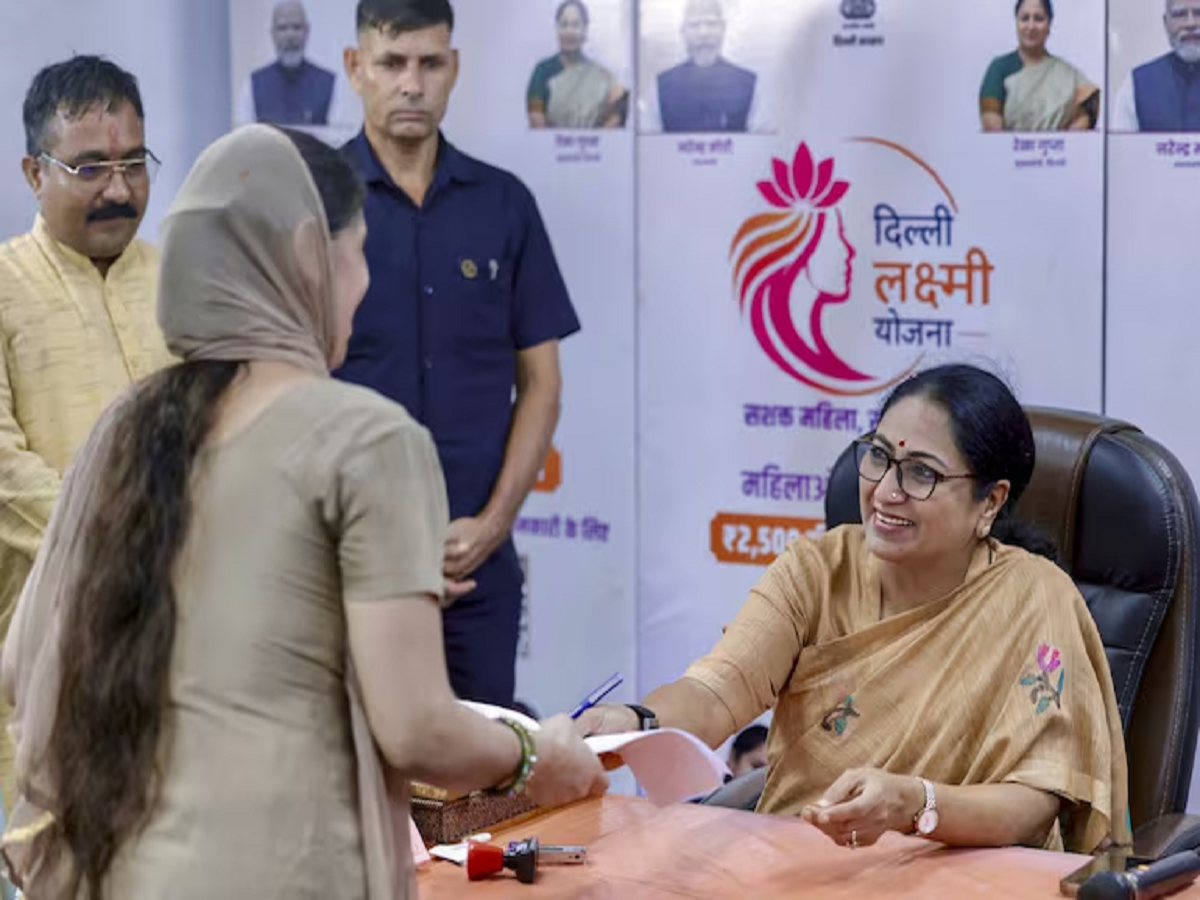
Women who have applied for financial assistance under the Delhi government's Lakshmi Yojana could soon receive an important update on their applications. The government plans to start issuing sanction letters to eligible beneficiaries from August 26, 2026, while monthly financial assistance of ₹2,500 is expected to start reaching approved bank accounts from September.
The scheme has attracted a large number of applicants since registrations opened on August 1. According to figures shared by the government, around 8 lakh women registered within the first 18 days, while more than 5 lakh applications had been submitted.
Authorities are now verifying applications to determine which women meet the eligibility requirements before approving monthly payments.
Sanction Letters to Be Distributed From August 26
Eligible applicants are expected to start receiving sanction letters from August 26.
A programme is scheduled to be organised at Talkatora Stadium in Delhi for the distribution of approval letters to beneficiaries.
Receiving a sanction letter will be an important step because it indicates that an application has cleared the required scrutiny and has been approved for benefits, subject to the final rules and payment process.
According to the announced schedule, the government expects the monthly assistance to start being transferred from September 1, 2026.
How Much Will Women Receive Under the Scheme?
Approved beneficiaries are set to receive ₹2,500 per month under the Lakshmi Yojana.
The payment system is being designed around direct transfers so that financial assistance reaches eligible beneficiaries without unnecessary intermediaries.
Before payments are released, bank-account information and other application details are expected to be verified.
This verification is important because an incorrect bank account, mismatch in personal information or eligibility problem could affect payment processing.
Applications Opened on August 1
Registration for the scheme began on August 1, 2026.
The response has been significant. Government figures indicate that approximately 8 lakh women registered in the first 18 days.
More than 5 lakh applications had also reportedly been formally submitted during this period.
Registration and submission should not, however, be confused with final approval. Applicants must clear the eligibility verification process before becoming beneficiaries.
Government departments are examining applications to identify eligible women and prevent duplicate or ineligible claims.
Who Can Qualify for Delhi Lakshmi Yojana?
The scheme is intended for eligible women residing in Delhi who meet the prescribed age, income, residence and other conditions.
The reported eligibility framework includes requirements relating to age and a minimum period of residence in Delhi.
Applicants should pay particular attention to the final official eligibility notification because reports surrounding the scheme have referred to specific age conditions, including an eligible age band for beneficiaries.
Family income must also remain within the prescribed limit.
Since eligibility rules determine whether the ₹2,500 monthly payment will be approved, women should rely on the final government guidelines rather than unofficial social media messages.
Long-Term Delhi Residence May Be Required
One of the key reported conditions relates to residence in the national capital.
Applicants are expected to demonstrate that they have been living in Delhi for the minimum period specified under the scheme, with reports referring to a requirement of at least 10 years of residence.
Applicants may therefore need appropriate residence-related documents when their application is verified.
The exact list of acceptable documents should be checked through official government channels.
Government Employees and Pensioner Families May Be Excluded
Not every Delhi household will qualify for the scheme.
According to the stated conditions, a woman may be considered ineligible if she or an applicable family member is a government employee or receives a government pension.
The purpose of such restrictions is to target the financial assistance towards households meeting the government's economic eligibility criteria.
Applicants should provide accurate information because incorrect declarations may lead to rejection during verification.
Income-Tax Paying Families Also Outside the Eligibility Net
Families that fall under the income-tax-paying category are also reported to be excluded from the scheme.
This means the financial status of the household—not merely the individual applicant—can influence eligibility.
The government is expected to cross-check relevant information while scrutinising applications.
Women whose household income exceeds the prescribed threshold may therefore not qualify even if they satisfy other conditions.
Existing Government Assistance Can Affect Eligibility
Another important condition concerns women already receiving regular financial support under another government programme.
According to the scheme details, women receiving recurring financial assistance through certain other government schemes may not be allowed to simultaneously claim the Lakshmi Yojana benefit.
This is intended to prevent overlapping benefits where the rules specifically prohibit them.
Applicants should declare existing welfare benefits accurately during registration.
Four-Wheeler Ownership Could Lead to Rejection
Vehicle ownership is another criterion mentioned in the eligibility framework.
Women may not qualify if they or an applicable member of their household owns a four-wheeler.
However, electric vehicles are reported to be treated differently under this condition.
Since vehicle-related eligibility can depend on how the final rules define ownership and household members, applicants should verify the official provisions rather than making assumptions.
₹2,500 to Be Transferred Through a Digital Payment System
The government has emphasised a digital and transparent payment mechanism.
Once an applicant is approved, the monthly benefit is expected to be credited through an authorised banking or digital payment system after verification.
Direct transfers can reduce administrative delays and create a clear transaction record for both beneficiaries and the government.
Women should ensure that the bank-account information submitted with their application is accurate and active.
Beneficiaries May Get Savings Options
The scheme reportedly also proposes choices regarding how beneficiaries use the ₹2,500 monthly assistance.
Under one option, a woman could receive ₹1,000 per month through a Central Bank Digital Currency (CBDC) wallet for routine expenditure while directing the remaining ₹1,500 into an RD or FD for savings.
Another option would allow the beneficiary to place the entire ₹2,500 into a recurring deposit or fixed deposit, supporting longer-term savings.
The availability and operational details of these options should be confirmed when the final payment mechanism is implemented.
Why the Savings Feature Could Matter
Regular cash assistance can help households meet immediate expenses, but the inclusion of a savings option could also encourage beneficiaries to build a financial cushion.
For example, if the entire ₹2,500 monthly benefit were saved for 12 months, the total contribution alone would amount to ₹30,000, excluding any interest that may accrue depending on the product selected.
A beneficiary who needs part of the money for household expenses could instead use the split option, keeping a portion available while saving the rest.
The best choice would depend on each woman's financial needs.
Government Says Verification Will Be Closely Monitored
The Delhi government has indicated that application scrutiny will remain a key part of implementation.
Officials have been instructed to ensure that benefits reach eligible women on time while preventing irregularities in registration and approval.
Applications are therefore being checked before sanction letters are issued.
Applicants whose information does not match supporting records could face delays or rejection.
Important Dates Applicants Should Remember
The current implementation timeline includes two major dates:
| Event | Date |
|---|---|
| Application process began | August 1, 2026 |
| Sanction letters scheduled to begin | August 26, 2026 |
| Monthly ₹2,500 payment process expected to start | September 1, 2026 |
Applicants should continue monitoring official announcements in case any dates, procedures or eligibility conditions are revised.
What Applicants Should Do Now
Women who have already applied should keep their registration and application details safely and ensure that the bank account provided in the form remains active.
They should also be prepared to provide supporting documents if authorities seek additional verification.
Most importantly, beneficiaries should avoid paying agents who promise guaranteed approval or early release of the ₹2,500 benefit.
Registration does not automatically guarantee payment. Financial assistance will be available only after the application has been verified and approved under the scheme's final eligibility rules.
With sanction letters scheduled from August 26 and payments expected to begin from September 1, the next few weeks will be important for applicants awaiting confirmation under Delhi's Lakshmi Yojana.