
LIFESTYLE
Atal Canteen: How healthy is the food in the canteen for Rs 1 or Rs 5? How can you check it?
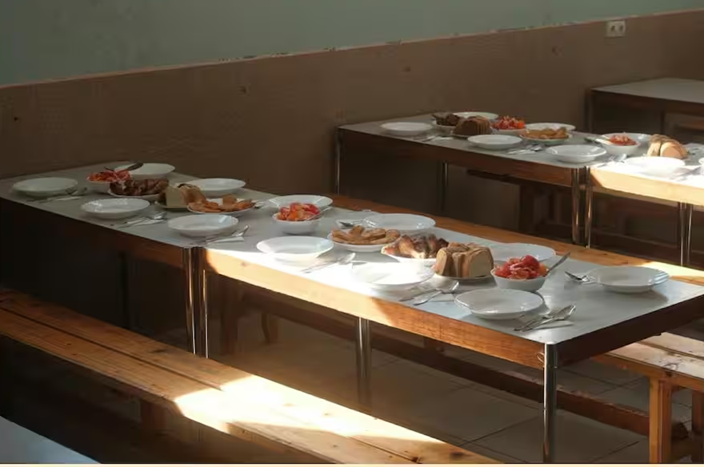
Inexpensive canteens are being run in many states for the poor, providing food at affordable prices. Let's find out if the food available in these canteens is healthy.
How healthy is the food available in government canteens?
In many states across the country, affordable canteens are being run for the poor and laborers. Among these, Amma Unavagam (Amma Canteen) in Tamil Nadu is quite famous, where idlis are available for one rupee and sambar rice for five rupees. Similarly, in West Bengal, there is Maa Canteen, where dal-rice, vegetables, and eggs are available for five rupees. Similarly, Atal Canteen has also started in Delhi, where a plate of dal-rice, vegetables, and roti is available for five rupees. Now the question arises: Is such cheap food really healthy? Let us know what doctors say about this.
How is the Atal Canteen in Delhi?
In December 2025, the Delhi government launched 100 Atal Canteens to mark the birth centenary of former Prime Minister Atal Bihari Vajpayee. These canteens are located in slum areas, construction sites, and slums. Each plate is priced at just five rupees, while the actual cost is 25-30 rupees. The government provides the remaining subsidy. The menu includes dal-rice, roti (up to 300 grams), vegetable (100 grams), and pickle. Each canteen serves food twice a day (morning and evening) and serves approximately 1,000 people. Food hygiene is checked by FSSAI and lab testing.
How is the food at Amma Canteen?
These canteens, which have been operating in Tamil Nadu since 2013, are still very popular. They offer idlis for one rupee, pongal for five rupees, sambar rice, lemon rice, and curry leaf rice for five rupees, and curd rice for three rupees. The food is hygienic and prepared by women's self-help groups.
How is Maa Canteen?
Maa Canteens were launched in West Bengal in 2021. Rice, lentils, and vegetables are available here for five rupees, with government subsidies. This plate proves to be very helpful for the poor, laborers, and those with financial difficulties.
What is the doctor's opinion on such plates?
According to Dr. Ritika Khera, a nutrition expert and food security researcher in Delhi, these canteens are excellent. They provide fresh, hot food under government schemes, which is healthier than street vendors. Their meals contain carbohydrates (rice/bread), protein (lentils), and vegetables, which help reduce malnutrition. These canteens are a good way to ensure food security for the poor, reducing malnutrition and hygiene problems. However, eating only this food for a long time can lead to anemia or vitamin deficiencies.
How to check whether the food is healthy or not?
The canteen's menu should include dal (protein), chapati/rice (energy), and sabji (vitamins). The canteen should be FSSAI-approved. Staff should wear gloves and use clean water. The food should be fresh, hot, and tasty. It should not contain excessive oil or spices.