Business
Aadhaar Card After Death: How to Report a Family Member’s Death to UIDAI and Prevent Identity Misuse
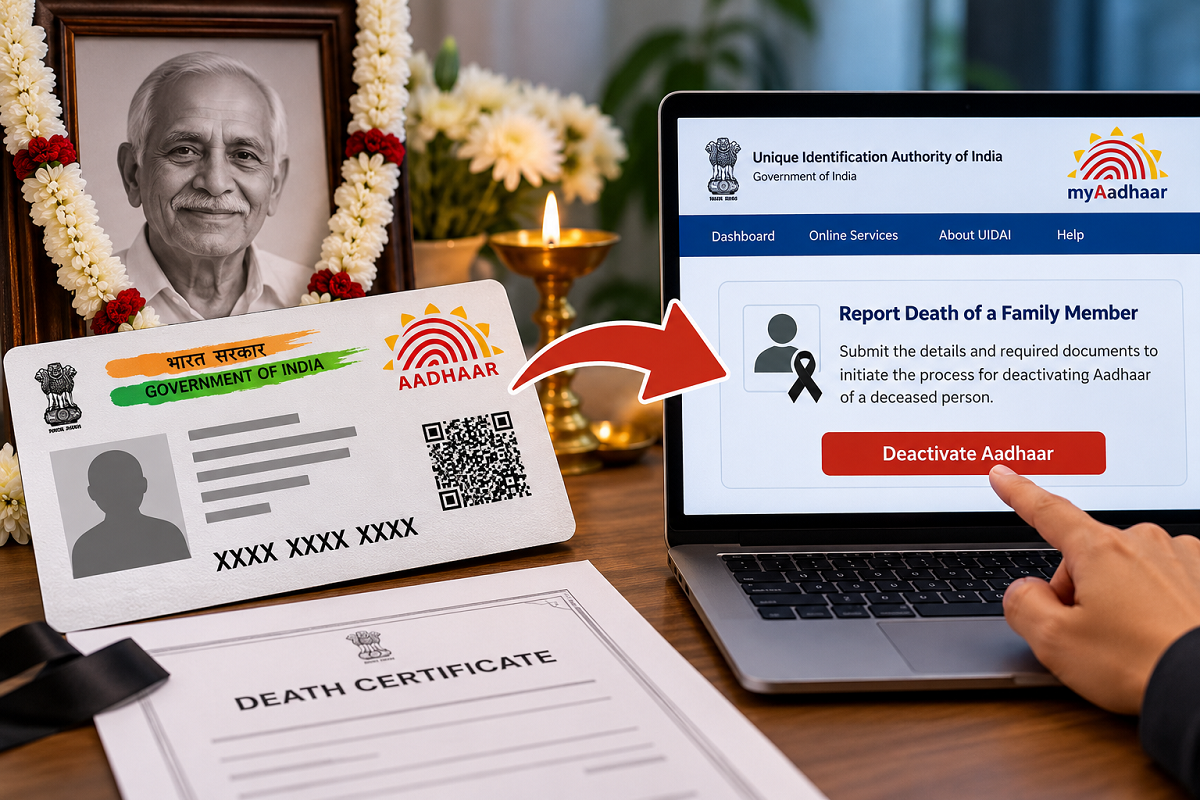
Aadhaar Card Update 2026: Losing a family member is an emotionally difficult experience. Along with managing personal responsibilities and completing legal formalities, families must also take care of the deceased person's important identity documents. One such document is the Aadhaar card, which is widely used across India for identity verification, banking services, government welfare schemes and other essential activities.
Many people are unaware of what happens to an Aadhaar number after its holder passes away. Can the Aadhaar card be deactivated? Is it necessary to inform the Unique Identification Authority of India (UIDAI)? What documents are required to report a death?
UIDAI provides an online facility through which eligible family members can report the death of an Aadhaar holder. This process helps authorities verify the information and take appropriate action to reduce the possibility of identity misuse.
Here is everything families should know about reporting a deceased person's Aadhaar details, the documents involved and the verification process.
Why Should Families Report the Death of an Aadhaar Holder?
Every Aadhaar card contains a unique 12-digit identification number issued to an individual. This number is connected to demographic information and may be used for authentication across various services.
When an Aadhaar holder dies, leaving their identity records unattended may create opportunities for misuse, particularly if sensitive documents fall into the wrong hands.
Reporting the death to UIDAI can help maintain accurate identification records and reduce the risk of fraudulent authentication attempts.
Some potential concerns include:
- Unauthorized use of the deceased person's identity details.
- Attempts to access services or benefits using outdated identity records.
- Misuse of Aadhaar information for fraudulent activities.
- Identity-related discrepancies in government or financial records.
However, reporting a death does not automatically close bank accounts, cancel financial products or settle government benefit claims. Families must complete those formalities separately with the relevant organizations.
Documents Required to Report a Death to UIDAI
Before starting the online process, family members should collect the necessary information and supporting documents.
The exact requirements may depend on the reporting facility and the verification procedure applicable to the deceased person's record.
| Required Information | Purpose |
|---|---|
| Death Certificate | Official proof confirming the individual's death |
| Deceased Person's Aadhaar Number | Helps identify the relevant Aadhaar record |
| Death Registration Details | May be required to verify the registered death |
| Family Member's Aadhaar Number | Used to authenticate the person submitting the report |
| Registered Mobile Number | May be required for OTP verification |
| Personal Information | Name and other details used to match official records |
Families should carefully check all information before submission. Incorrect Aadhaar numbers, mismatched names or inaccurate death registration details could delay verification.
How to Report a Deceased Family Member's Aadhaar Online
UIDAI has introduced a facility for reporting the death of a family member through the myAadhaar platform. Eligible users can follow these general steps:
- Visit the official UIDAI myAadhaar website at myaadhaar.uidai.gov.in.
- Sign in using your Aadhaar number and complete the required authentication.
- Look for the service related to reporting the death of a family member, where available.
- Enter the deceased person's Aadhaar number and the requested identification details.
- Provide the death registration information and supporting documents, if requested.
- Review the entered information carefully before submitting the request.
- Save any acknowledgement or reference number generated by the system for future communication.
The availability of the service and the exact submission requirements may vary depending on the applicable UIDAI procedure.
If the relevant option is unavailable, family members should contact UIDAI through its official support channels for guidance.
Does UIDAI Deactivate Aadhaar Immediately After a Death Report?
One of the most important points to understand is that submitting a death report does not necessarily result in immediate Aadhaar deactivation.
UIDAI must first verify the submitted information against the relevant records before taking further action.
This verification is important because Aadhaar is a unique identity number, and an incorrect deactivation could create serious complications.
The authority may examine the death registration details and other available information before determining the appropriate action.
Therefore, families should not assume that the Aadhaar number has been deactivated simply because they submitted an online report.
They should retain any acknowledgement received and follow UIDAI's official instructions regarding further verification or status updates.
What If the Deceased Person's Registered Mobile Number Is Unavailable?
In some cases, family members may no longer have access to the mobile number associated with the deceased person's Aadhaar.
This situation can create confusion, especially when online authentication requires a one-time password.
Families should avoid attempting unauthorized access to the deceased person's Aadhaar-linked accounts or authentication credentials.
Instead, they can contact UIDAI's official helpline at 1947 to understand the available reporting procedure and whether alternative verification is possible.
The reporting family member's own Aadhaar authentication may be relevant, depending on the service requirements.
Important Precautions to Prevent Aadhaar Misuse After Death
Apart from informing UIDAI, families should take practical steps to protect the deceased person's identity and financial information.
Keep the original Aadhaar card, PAN card, bank documents and other identity records in a secure location. Avoid sharing photographs of these documents through unknown websites, messaging groups or unverified online services.
Families should also inform banks, insurance companies and other relevant institutions about the death and complete the required account settlement or nominee procedures.
If the deceased person received a pension or government benefits, the concerned department should be informed according to its applicable rules.
Importantly, Aadhaar deactivation is not a substitute for completing succession, banking, insurance or pension formalities.
How to Contact UIDAI for Aadhaar-Related Assistance
Family members who face difficulties with the reporting process can seek assistance through UIDAI's official communication channels.
UIDAI provides information about Aadhaar services through its website, online support facilities and toll-free helpline.
Before uploading a death certificate or entering an Aadhaar number, users should verify that they are accessing the genuine government portal.
They should never disclose Aadhaar OTPs, passwords or sensitive personal details to unknown callers claiming to represent UIDAI.
Final Words
Handling identity documents after the death of a family member is an important responsibility that should not be overlooked. Since Aadhaar is connected to several identification and authentication services, families should understand the official procedure for reporting a deceased Aadhaar holder.
UIDAI's death-reporting facility provides a way to submit relevant information for verification and appropriate action. However, reporting a death and confirming Aadhaar deactivation are not the same thing.
Families should prepare the required documents, use only official UIDAI services and follow the prescribed verification process. Taking these precautions can help protect sensitive identity information and reduce the possibility of fraudulent misuse.