Business
UPI Payments Above ₹2,000 May Attract Charges in Future? Here's What the Government's Proposal Means
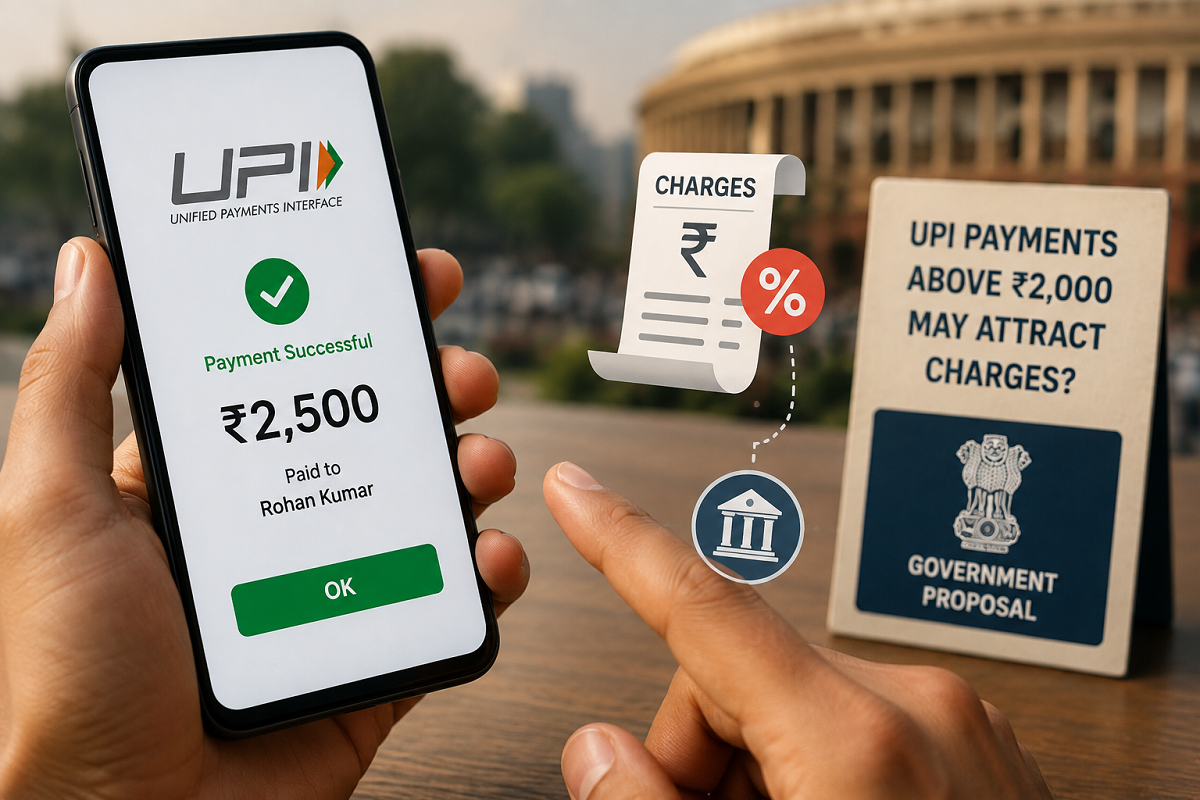
UPI MDR Proposal: Unified Payments Interface (UPI) has transformed digital payments in India by allowing users to transfer money without transaction charges. However, a proposed legal provision could pave the way for Merchant Discount Rate (MDR) to be introduced on certain UPI transactions in the future.
It's important to note that no new fee has been imposed yet. The proposal only creates a legal framework that could allow MDR to be charged on specific merchant transactions if approved at a later stage.
Here's what the proposal means for consumers and businesses.
Is UPI Becoming Chargeable?
At present, UPI payments remain free for customers. There has been no announcement introducing charges on regular UPI transactions, including person-to-person transfers.
The proposed legal change does not immediately impose any fee. Instead, it would provide the government with the authority to allow MDR on certain merchant transactions in the future, if considered necessary.
What Is Merchant Discount Rate (MDR)?
Merchant Discount Rate (MDR) is a fee paid by businesses to banks or payment service providers whenever customers make digital payments.
The MDR is generally borne by the merchant rather than the customer and helps cover:
- Payment processing costs
- Banking infrastructure
- Transaction settlement
- Digital payment services
Currently, most UPI transactions do not attract MDR because of the government's zero-MDR policy on UPI and RuPay debit card payments.
Which Transactions Could Be Affected?
Based on the proposal, the possible focus is expected to be on large-value merchant transactions, particularly those exceeding ₹2,000.
If implemented in the future, MDR may apply only to eligible merchant payments rather than all UPI transactions.
There is no indication that ordinary peer-to-peer (P2P) transfers between individuals would be affected under the current proposal.
Has Any Fee Been Announced?
No.
As of now:
- UPI payments continue to remain free.
- No MDR has been introduced on eligible transactions.
- No effective date for any new charge has been announced.
The proposal simply creates the legal possibility for future implementation, subject to further decisions by the government.
Why Is MDR Being Discussed?
Digital payment service providers and parts of the financial industry have long argued that maintaining payment infrastructure involves significant operational costs.
Allowing MDR on selected merchant transactions could potentially help:
- Support payment infrastructure.
- Encourage further investment in digital payment systems.
- Strengthen long-term sustainability of payment services.
However, any decision would need to balance these considerations with the government's objective of promoting affordable digital payments.
Will Customers Have to Pay More?
At present, there is no change for consumers.
If MDR is introduced in the future, the exact impact would depend on:
- The final government notification.
- Which transactions are covered.
- Whether merchants absorb the fee or pass any cost to customers, subject to applicable regulations.
Until official rules are notified, it is not possible to conclude how consumers may be affected.
Why Is UPI So Popular?
UPI has become India's preferred digital payment system because it offers:
- Instant money transfers.
- Round-the-clock availability.
- QR code payments.
- Bank-to-bank transactions.
- No charges for most users.
- Wide acceptance across businesses.
Its simplicity and zero-cost model have played a major role in driving digital payment adoption across the country.
Final Take
Reports about UPI transactions above ₹2,000 becoming chargeable should be viewed with proper context. No fee has been introduced at this stage. The government has only proposed a legal provision that could allow Merchant Discount Rate (MDR) to be levied on certain merchant UPI transactions in the future.
Until an official notification is issued, users can continue making UPI payments as usual without any change in the existing fee structure.