NEWS
The government made a major decision, suddenly increasing the windfall tax on petrol and reducing the price of diesel.
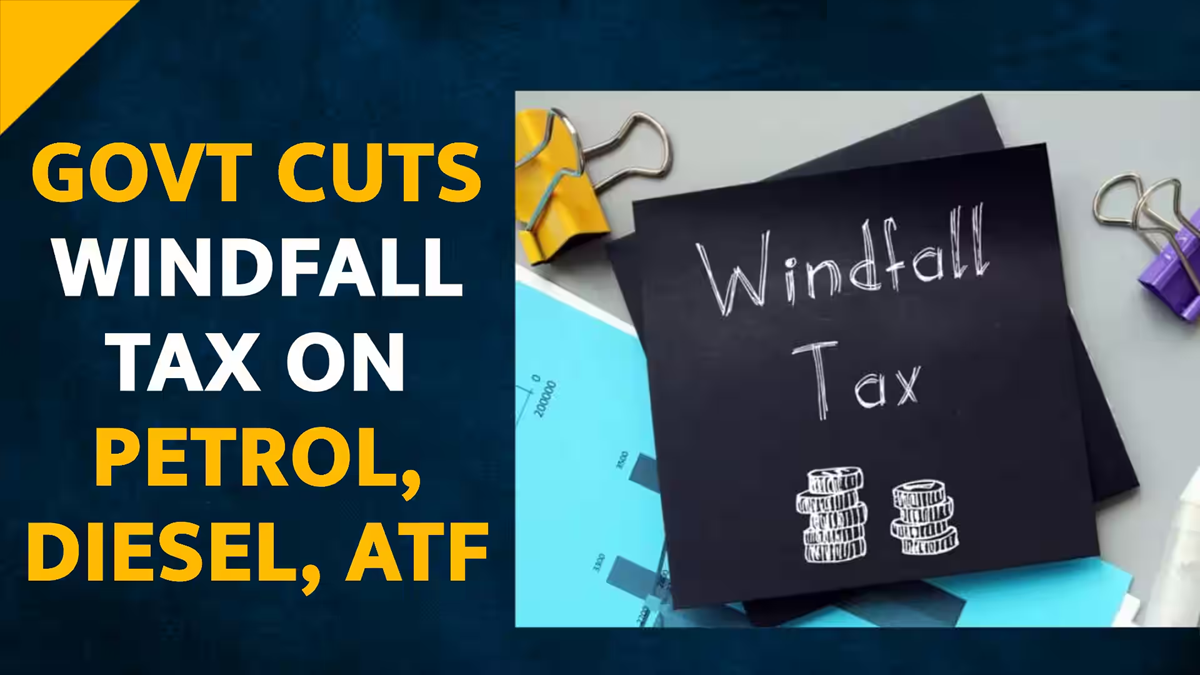
The government has increased the windfall tax on petrol and reduced the tax on diesel. This does not affect the retail prices of petrol and diesel in the country, so there is no cause for concern for the general public.
Government hikes windfall tax on petrol and diesel.
The central government took a major decision late Thursday night and changed the windfall tax on petrol and diesel. Under this, the tax on export of petrol has been increased from Rs 0.50 per liter to Rs 2.50 per liter, that is, it has been increased five times.
Meanwhile, the export tax on diesel has been reduced from ₹16 per liter to ₹8.50 per liter, a reduction of ₹7.50 per liter. These new rates are effective from Friday, October 16, 2026.
Show Quick Read
Key points generated by AI, verified by newsroom
The Central Board of Indirect Taxes and Customs (CBIC) stated that the windfall tax on aviation turbine fuel (ATF) will remain unchanged. The government also made no changes to the existing duty rates on petrol and diesel sold for domestic consumption.
Why does the government impose a windfall tax?
The government reviews the windfall tax every 15 days, taking into account changes in international crude oil and petroleum product prices.
India first imposed a windfall tax on petroleum exports in July 2022. It was repealed two years later. According to a Reuters report, the government reimposed it in March 2026 after a sharp rise in crude oil prices during the Iran-US-Israel conflict. The government imposes the windfall tax to prevent oil companies from selling all of the country's fuel abroad in pursuit of higher profits in the international market. To prevent this, the government increases the windfall tax on exports to prevent a fuel shortage in the country.
What is a windfall tax?
Windfall Gains Tax is imposed when a company or a major sector suddenly generates significant profits. Often, during times of war or international crisis, global commodity prices rise significantly, prompting domestic companies to export larger quantities to maximize profits. This worsens the supply situation within the country. In such circumstances, the government increases the Windfall Tax to control the situation and ensure domestic security.