NEWS
Petrol-Diesel Price: How much have petrol and diesel prices increased in neighboring countries in the last 15 days!
Petrol and Diesel Price: Over the past 15 days, oil prices have been crippling not only in India but across the world. Here, we're explaining the situation in our country as well as neighboring countries in detail.
How much has the oil game changed in neighboring countries in the last 15 days?
Petrol-Diesel Price: Over the past 15 days, oil prices have caused a stir across South Asia. In some places, prices have risen sharply, while in others, governments have cut them to provide relief. While petrol and diesel prices have steadily risen in India, the situation has been slightly different in Pakistan and some other countries. Tensions in the Middle East and rising crude oil prices have affected not only India but all neighboring countries. The only difference is that each country has made different decisions based on its economy. Here, you can find out the situation in your country and neighboring countries.
What changed in India?
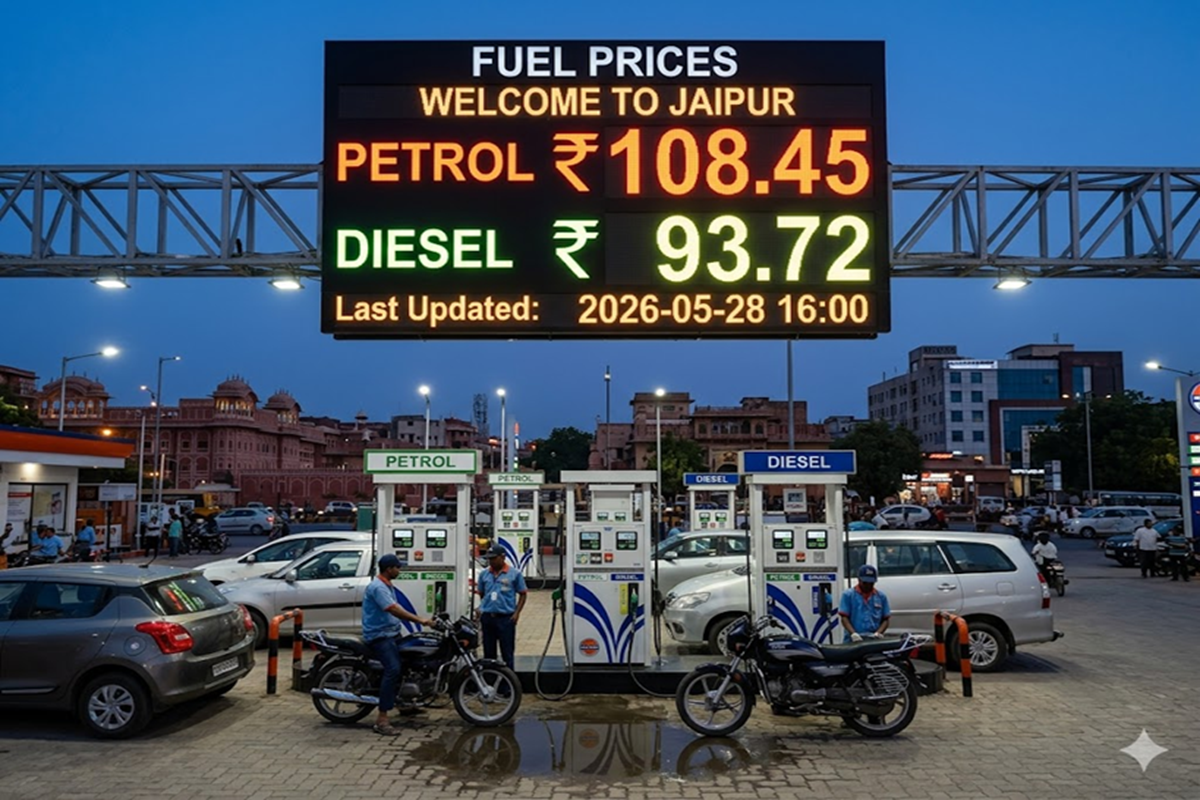
In India, petrol and diesel prices have increased by approximately ₹7 to ₹8 per liter over the past 15 days. According to media reports, prices have been increased four times in just 10 to 12 days, disrupting the budget of ordinary people. Petrol has surpassed ₹100 to ₹110 in many cities, and diesel is also becoming increasingly expensive. Transportation and daily necessities have also seen increased prices.
Relief in Pakistan
The situation in Pakistan has been quite volatile. Recently, petrol and diesel prices saw a massive increase of 50 rupees (a massive increase in PKR), bringing prices to around 320 PKR per liter. However, the government later provided some relief in response to international pressure and domestic inflation. Initially, there was a sharp increase, followed by a slight reduction. However, prices remain high.
Prices are high in Banglades
There has been no significant change in oil prices in Bangladesh over the past 15 days, but prices are already high. Fuel subsidies are limited in the country, so even though prices remain stable, they remain expensive for the general public.
Nepal's rise
Oil prices in Nepal are affected by Nepal's greater import dependence compared to India. A slight increase has been observed over the past 15 days, impacting transportation and daily costs. The government is trying to control prices.
Reforms in Sri Lanka
In Sri Lanka, which recently experienced an economic crisis, the oil market is gradually stabilizing. Prices haven't changed significantly. Efforts are underway to control them with IMF support, but prices remain higher than normal.
There is no burden in China
In China, oil prices are controlled by the government, so large fluctuations are rare. The last 15 days have seen little change. The government maintains stability through subsidies and controls. The general public is not suddenly burdened.
India vs Neighbor: Know the Difference?
If we look closely, India has seen the sharpest recent price increases. This is due to rising crude oil prices, the rupee's weakness, tax structures, and cost adjustments by oil companies. Meanwhile, countries like Pakistan and Sri Lanka sometimes offer relief and sometimes impose sudden increases because their economies are more volatile. The trend over the past 15 days clearly shows that oil prices in South Asia have become completely dependent on the global market. While the continuous increase in India has affected the common man's pocket, other countries have experienced some relief and some instability.