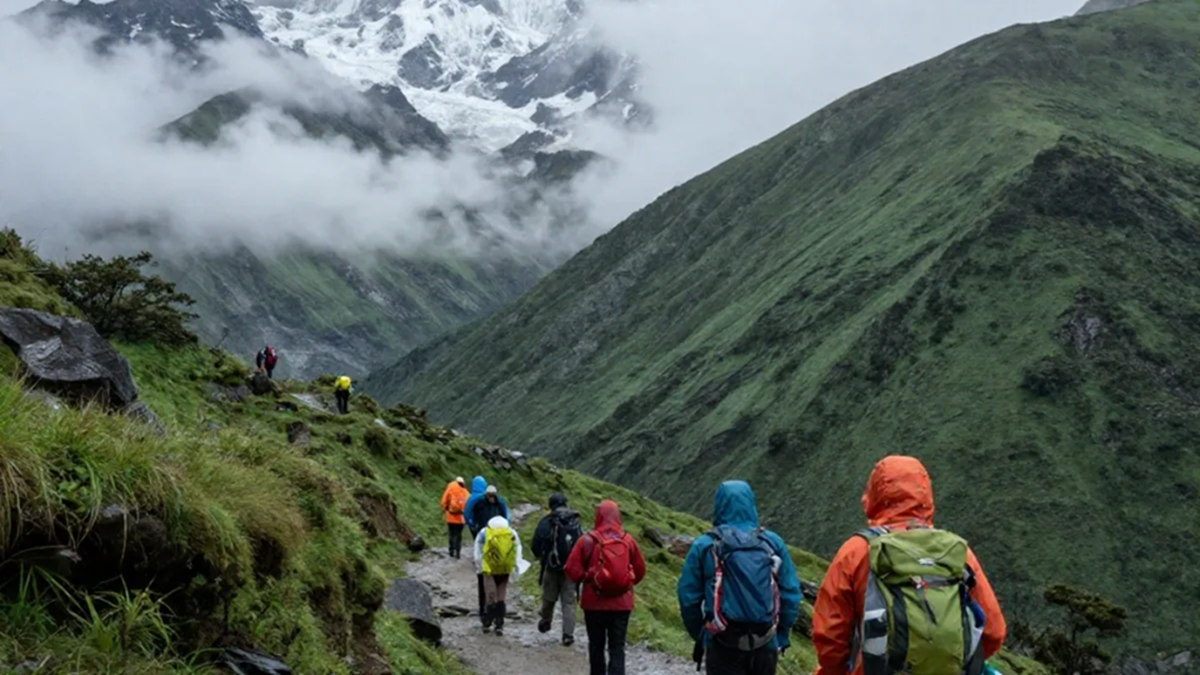
Trekking In The Rain: Don't overlook weather conditions and route safety during the monsoon. Some popular treks are best avoided during the rainy season.
Dangers and Precautions of Trekking in Monsoon
Dangerous Monsoon Treks In The Himalayas: The arrival of the monsoons completely transforms the landscape of the mountains. Lush hills, gushing waterfalls, and cloud-shrouded paths beckon nature lovers. However, this season also brings many challenges for mountain trekkers. Heavy rains between June and September can lead to landslides, flash floods, overflowing streams, slippery paths, and low visibility.
So, if you're planning a trek in the Himalayas or any high-altitude trek during the monsoon season, don't overlook the weather conditions and route safety. Some popular treks are best avoided during the rainy season.
Hampta Pass Trek, Himachal Pradesh
The Hampta Pass trek in Himachal Pradesh is renowned for its beautiful valleys. It connects the lush Kullu Valley with the drier and more isolated mountainous region of Lahaul. However, this route can be quite challenging during the monsoon season.
Continuous rainfall can cause streams to overflow. Muddy and slippery paths, along with large boulders, can make walking difficult. Rain and fog can reduce visibility. Sudden surges after heavy rainfall can make crossings along the route more dangerous. Furthermore, landslides on the roads leading to the trek may impact travel.
Valley of Flowers Trek, Uttarakhand
Uttarakhand's Valley of Flowers is at its most beautiful during the monsoon season. Flowers of various colors bloom here during this time, which is why a large number of people visit the place even during the rainy season.
However, extra caution regarding the weather is necessary on this trek. The route to the UNESCO World Heritage Site passes through mountainous terrain, where landslides are prone to occur during rain. Continuous rainfall can make the rocky paths slippery. Water levels in rivers and waterfalls may also rise. In case of severe weather, authorities may even suspend travel on the trail. Therefore, be sure to check the weather and official trail advisories before setting out.
Kashmir Great Lakes Trek, Jammu and Kashmir
The Kashmir Great Lakes Trek is considered one of the country's most beautiful high-altitude treks. The route offers views of towering mountains, lush green fields, and beautiful lakes. However, the weather can change rapidly during the monsoon season.
Even grassy slopes can become extremely slippery after heavy rain. Clouds and fog can make visibility difficult. Crossing streams along the route can also be risky during rain. Furthermore, reaching remote camps can be difficult during bad weather. Given the altitude and long trekking day, this route is best undertaken during stable weather.
Roopkund Trek, Uttarakhand
The Roopkund trek in Uttarakhand is known for its mystical lake and high-altitude mountain paths. The trek involves steep climbs, rocky paths, and high-altitude sections. However, access to Roopkund has been restricted in recent years due to environmental concerns. The surrounding trekking routes are also not completely free from risks during the rainy season. Heavy rains can exacerbate the problem of landslides, loose rocks, and slippery paths. Dense fog can also make it difficult to find the route in many places. Therefore, it is important to check current regulations and official access information before embarking.
Sandakphu Trek, West Bengal
The Sandakphu trek in West Bengal is known for its spectacular Himalayan views. Clear weather offers breathtaking views of towering mountains like Mount Everest, Kanchenjunga, Lhotse, and Makalu. However, during the monsoon, continuous rain can make the forested paths muddy and slippery. Leeches are also more visible during this time. Thick clouds often obscure the spectacular mountain views. Furthermore, the roads leading to the initial stretch of the trek can be affected by landslides.