NEWS
Meta Plans New Teen Safety Rules for Instagram and Facebook: Time Limits, Night Restrictions and More
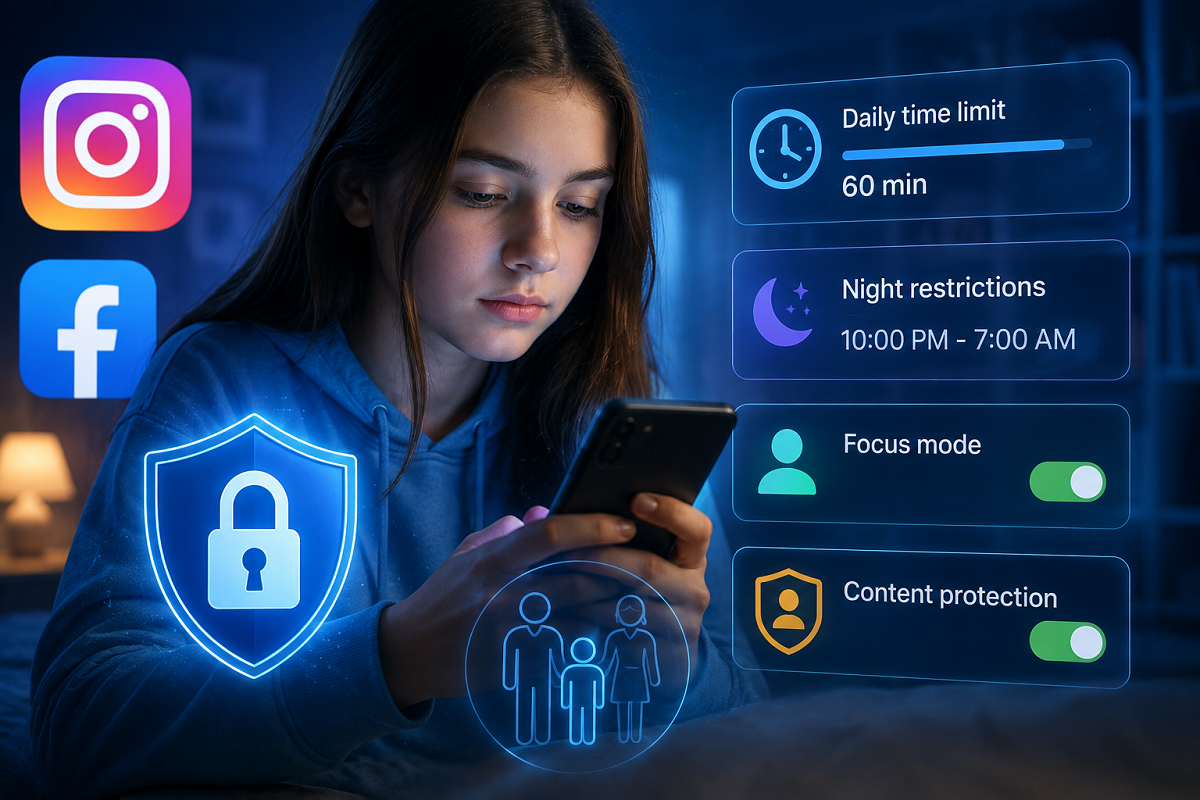
Meta is preparing a series of significant changes to make Instagram and Facebook safer for teenagers, with new restrictions expected to focus on screen time, nighttime usage, notifications, autoplay content and interactions with strangers.
The measures come amid growing global scrutiny over how social media platforms affect younger users. Features such as endless scrolling, personalised recommendations, frequent notifications and automatically playing videos have increasingly become part of the debate over excessive social media use.
Under the changes described in the report, teenagers could face a default daily usage limit of two hours on Instagram and Facebook. Parents would have the ability to allow additional time through parental controls.
Meta is also expected to introduce restrictions on late-night access and school-time notifications, while giving teenagers greater control over autoplay and algorithm-driven feeds.
The measures are expected to be introduced for US users first, meaning they should not be interpreted as immediate worldwide restrictions.
Teenagers Could Get a Two-Hour Daily Limit
One of the biggest proposed changes concerns the amount of time teenagers spend on Meta's platforms.
According to the report, teenage users would be limited to two hours a day on Instagram and Facebook by default.
Parents would be able to modify the setting if they wanted to give their child additional time.
Meta is also expected to display reminders after 60 and 90 minutes of usage. These prompts are intended to make younger users more aware of how long they have been using the apps.
The approach marks a shift from simply providing optional screen-time tools toward introducing stronger default restrictions for younger accounts.
Instagram and Facebook Could Be Restricted at Night
The proposed safeguards would also address late-night social media use.
According to the details provided, teenagers would not be able to use the apps between midnight and 6 am under the new settings.
Nighttime restrictions are designed to reduce the possibility of social media interfering with sleep schedules.
The company is also reportedly planning restrictions during school hours.
Notifications would be switched off between 8 am and 3 pm, reducing interruptions while teenagers are expected to be attending classes or concentrating on school-related activities.
Autoplay Could Be Switched Off
Another important change concerns how content is presented.
Autoplay allows videos to begin without requiring users to actively select them, making it easier to continue consuming content for extended periods.
Under the proposed system, users would be able to disable autoplay.
Instead of the next piece of content automatically appearing or playing, teenagers would need to actively tap or swipe to continue.
The report also says teenagers could be given the ability to move away from an algorithmically personalised feed.
Such a feature could give users more control over what determines the content appearing on their screens.
Teen Accounts Already Have Additional Restrictions
Meta already uses a separate account structure for younger users.
According to the article, people aged 13 or older can create Instagram and Facebook accounts, while users below 18 are automatically placed into "Teen Accounts."
These accounts are private by default and include restrictions designed to limit exposure to certain potentially harmful content.
The latest measures would expand those protections further.
Meta is reportedly preparing to roll out the additional features over the next six months, although the availability and exact implementation could vary.
Meta May Restrict Some Beauty Filters
The proposed changes are not limited to screen time.
Meta is also expected to place restrictions on some appearance-related features for teenagers.
The report says the company plans to limit access to "extreme makeup filters" and filters that can make users appear as though they have undergone cosmetic procedures.
The impact of appearance-focused social media content on younger users has become an increasingly important part of online safety discussions.
Meta is also expected to hide or disable visible "like" counts under some of the new protections described in the report.
Stronger Protection Against Unwanted Contact
Interaction with strangers is another area Meta plans to address.
The company is expected to introduce stronger safeguards against unwanted contact from unknown people.
However, the article notes that the exact way some of these protections will operate has not yet been fully explained.
Parental supervision tools are also expected to become more powerful.
Parents could get additional information about how much time their children spend on the apps and what they are searching for.
The report further states that parents could receive alerts when a teenager creates a new account or communicates with an account considered suspicious.
Age Verification Remains a Major Challenge
Online age verification continues to be one of the most complicated aspects of child safety.
A platform can introduce special rules for teenagers only if it can reliably determine whether a user is actually under the specified age.
The report says Meta and other technology companies are developing tools designed to improve age verification.
Better age-assurance systems could make it harder for younger users to bypass safety settings simply by entering an incorrect date of birth.
At the same time, any age-verification mechanism also raises important questions about privacy and how personal information is collected and processed.
Will the New Rules Solve the Bigger Social Media Problem?
The proposed restrictions represent a significant change, but they may not address every concern surrounding teenagers and social media.
A two-hour limit, for example, controls how long a teenager can use an app. It does not necessarily determine what type of material they see during those two hours.
Recommendation algorithms remain particularly important because they determine which posts, videos and other content are repeatedly presented to users.
The source article notes that questions remain about how recommendation systems and engagement-focused design will be addressed.
This means screen-time restrictions may be only one part of a much broader online-safety challenge.
What About Children Using Social Media in India?
India already has a legal framework addressing children's personal data.
The Digital Personal Data Protection Act, 2023 treats people under the age of 18 as children for relevant data-processing requirements and provides for verifiable parental consent before processing children's personal data, as described in the supplied article.
However, implementing age verification effectively remains challenging.
The report also points out that data-protection rules and measures targeting potentially addictive platform design are not necessarily the same thing. Algorithm-driven feeds and engagement-focused notifications create separate regulatory questions.
What Parents and Teenagers Should Know
Meta's planned changes indicate that major social media platforms are facing increasing pressure to rethink how their services operate for younger audiences.
Daily limits, nighttime restrictions, notification controls, autoplay options, stronger protections from strangers and improved parental supervision could give families more control over teenagers' social media use.
However, these measures should not be viewed as a complete solution.
The effectiveness of the changes will depend on how they are implemented, whether teenagers can easily bypass them, how accurately platforms determine users' ages and whether safety tools meaningfully change the content young people encounter.
For now, parents should also note an important limitation: the restrictions discussed in the report are described as applying initially in the United States rather than automatically becoming global Instagram and Facebook rules.
If successfully implemented and independently assessed, however, these measures could influence how other social media companies approach child and teen safety in the future.