Business
Major update on dearness relief! Pensioners write to the Cabinet Secretary seeking early payment.
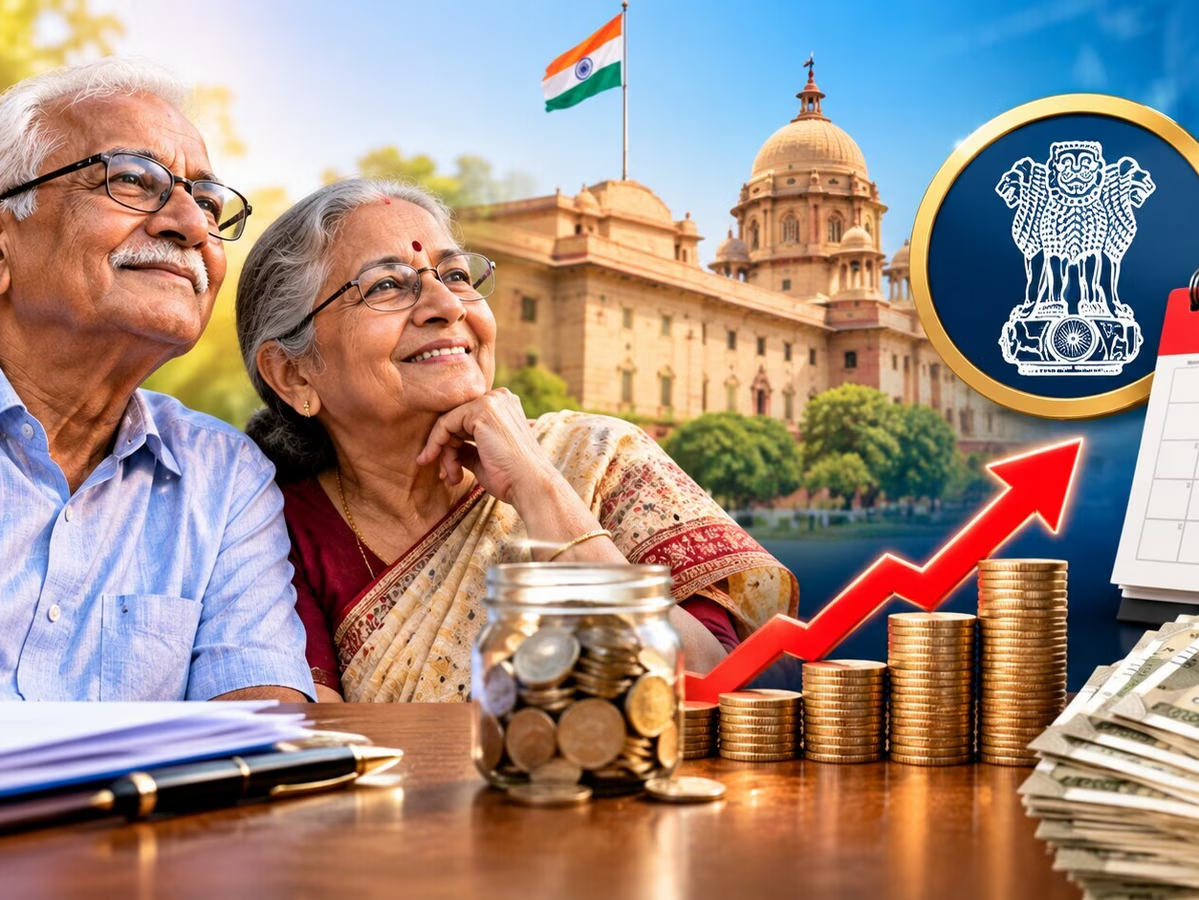
Dearness Relief Hike 2026: Central government pensioners and family pensioners are awaiting an announcement on the next Dearness Relief (DR) revision. Amid the delay, pensioners' organisation Bharat Pensioners Samaj has reportedly approached the Cabinet Secretary, seeking an early decision on the pending increase and payment of arrears.
According to a report published on October 25, 2026, the organisation sent a letter dated October 22 requesting intervention to expedite the process.
There is speculation that the government may increase DR by three percentage points, taking the rate from 60% to 63%.
However, the proposed 63% DR rate has not been officially approved in the supplied report. Pensioners will need to wait for a formal government notification to know the final increase, effective date and arrears payment schedule.
DR Hike 2026: What Is the Latest Update?
Bharat Pensioners Samaj has reportedly written to the Cabinet Secretary regarding the pending Dearness Relief revision for central government pensioners.
The letter, dated October 22, 2026, was reportedly signed by the organisation's general secretary, Avinash Rajput.
The pensioners' body requested that the Department of Pension and Pensioners' Welfare (DoPPW) and the Department of Expenditure (DoE) be directed to take necessary steps for an early announcement and payment.
The organisation expressed concern that the delay is creating uncertainty among retired government employees and family pensioners.
It also highlighted the financial challenges faced by elderly pensioners, particularly those who depend heavily on pension income to meet their regular expenses.
Will Dearness Relief Increase From 60% to 63%?
The report suggests that the government may consider increasing Dearness Relief by three percentage points.
If this happens, the rate would move from the reported existing level of 60% to 63%.
For pensioners, the increase would mean an additional amount equal to 3% of their eligible basic pension.
The same principle would apply to eligible family pensioners, subject to the applicable rules.
However, the projected increase remains an estimate.
The government has not confirmed in the supplied report whether the revision will be three or four percentage points, or whether any other rate will be approved.
Pensioners should avoid treating projections as a final announcement.
Pension Increase Calculator: How Much Extra Money Could You Receive?
If DR increases from 60% to 63%, the monthly increase would equal 3% of the eligible basic pension.
The following table illustrates the possible financial impact.
| Basic monthly pension | DR at 60% | DR at 63% | Possible monthly increase |
|---|---|---|---|
| ₹9,000 | ₹5,400 | ₹5,670 | ₹270 |
| ₹15,000 | ₹9,000 | ₹9,450 | ₹450 |
| ₹20,000 | ₹12,000 | ₹12,600 | ₹600 |
| ₹25,000 | ₹15,000 | ₹15,750 | ₹750 |
| ₹30,000 | ₹18,000 | ₹18,900 | ₹900 |
| ₹40,000 | ₹24,000 | ₹25,200 | ₹1,200 |
| ₹50,000 | ₹30,000 | ₹31,500 | ₹1,500 |
Note: These are hypothetical calculations based on a three-percentage-point increase. They do not represent an approved DR revision.
The actual additional payment will depend on the pensioner's eligible basic pension and the government's final order.
Example: How Much Will a Pensioner Receiving ₹20,000 Get?
Consider a retired central government employee whose eligible basic pension is ₹20,000 per month.
At the reported existing DR rate of 60%, the monthly Dearness Relief is ₹12,000.
If the government approves a revised rate of 63%, the DR amount would increase to ₹12,600.
The difference would be ₹600 per month.
The combined basic pension and DR would increase from ₹32,000 to ₹32,600, before considering any other applicable payments or deductions.
This example shows how even a relatively small percentage-point revision can provide additional monthly income.
Will Pensioners Receive DR Arrears From July 1, 2026?
The next DR revision is expected to relate to the period beginning July 1, 2026.
If the government approves an increase with effect from that date, eligible pensioners may receive arrears for the period between the effective date and the actual implementation of the revised rate.
However, the arrears amount and payment date will depend on the official notification.
For example, if a pensioner is eligible for an additional ₹600 per month and the revision is applied retrospectively for four months, the illustrative arrears would be:
₹600 × 4 months = ₹2,400.
Similarly, six months of arrears at ₹600 per month would amount to ₹3,600.
These figures are examples only. They do not confirm that the government will release four or six months of arrears.
Why Has Bharat Pensioners Samaj Written to the Cabinet Secretary?
The pensioners' organisation has expressed concern over the time taken to announce the pending DR revision.
According to the report, the organisation believes that Dearness Relief should be treated as an important inflation-linked adjustment rather than an optional financial benefit.
It argues that rising living costs affect pensioners who depend on a relatively fixed monthly income.
Expenses related to food, medicines, healthcare and household necessities can place additional pressure on retired employees.
The organisation has therefore requested an early decision and release of any applicable arrears.
The report states that Bharat Pensioners Samaj claims to represent approximately 10 lakh central government pensioners.
What Is Dearness Relief?
Dearness Relief is an inflation-linked payment provided to eligible government pensioners and family pensioners.
It serves a purpose similar to Dearness Allowance (DA), which is paid to serving government employees.
While DA is calculated on eligible basic pay, DR is generally calculated on eligible basic pension or family pension.
Both mechanisms are intended to provide partial protection against increases in the cost of living.
The government periodically reviews the rates according to the applicable framework.
How Is Dearness Relief Calculated?
Dearness Relief for central government pensioners is linked to the inflation-index-based mechanism applicable under the relevant pay commission framework.
The All India Consumer Price Index for Industrial Workers, or AICPI-IW, is an important input in this process.
The index is published by the Labour Bureau and tracks price movements across a basket of goods and services relevant to industrial workers.
For the July 2026 revision cycle, the relevant 12-month average includes index data from July 2025 to June 2026.
The government uses the prescribed calculation method to determine the applicable adjustment.
However, the final rate is subject to official approval and notification.
Why Is the DR Announcement Taking Time?
The supplied report does not establish a single official reason for the pending announcement.
Pensioners had expected an update around the festive period, but the anticipated announcement had not materialised by the date of publication.
The report also notes that a Cabinet meeting was not held on October 21, when some observers had expected a decision.
However, the absence of a meeting on that date does not establish when the government will announce the next revision.
The timing of the decision remains subject to the government's official process.
DA and DR Hike: What Is the Difference?
Dearness Allowance and Dearness Relief are closely related, but they apply to different groups.
| Particulars | Dearness Allowance (DA) | Dearness Relief (DR) |
|---|---|---|
| Main beneficiaries | Serving government employees | Eligible pensioners and family pensioners |
| Calculation basis | Eligible basic pay | Eligible basic pension |
| Main purpose | Offset inflation-related pressure on salaries | Offset inflation-related pressure on pensions |
| Revision cycle | Generally twice a year | Generally twice a year |
| Final approval | Government notification | Government notification |
For central government employees and pensioners covered by the corresponding framework, DA and DR revisions are generally announced together.
However, the applicable payment and implementation details may differ according to the relevant rules.
What Should Pensioners Check Before the Next DR Payment?
Pensioners should ensure that their pension account details and required records are up to date.
They should also monitor official communications from the Department of Pension and Pensioners' Welfare, the Department of Expenditure and their pension-disbursing authority.
Once the revision is approved, the official order should clarify the revised percentage, effective date and payment arrangements.
Pensioners should rely on these documents rather than social media messages claiming that arrears have already been credited.
Official information can be accessed through the Department of Pension and Pensioners' Welfare website at https://doppw.gov.in/.
Three Important Announcements Pensioners Are Waiting For
Central government pensioners are primarily awaiting clarification on three matters.
First, whether the next DR revision will increase the rate from 60% to 63%, as currently projected.
Second, whether the revised rate will take effect from July 1, 2026.
Third, when eligible pensioners will receive the additional monthly amount and any applicable arrears.
Until these details are formally announced, the projected figures remain illustrative.
Final Update
Bharat Pensioners Samaj has reportedly requested the Cabinet Secretary to intervene and expedite the pending Dearness Relief revision and arrears payment.
The organisation's October 22 letter reflects growing concern among pensioners awaiting an inflation-linked increase in their monthly payments.
A three-percentage-point hike could take DR from 60% to 63%, potentially providing an additional ₹600 per month to someone receiving a basic pension of ₹20,000.
However, no official confirmation of the revised DR rate, implementation date or arrears schedule has been established in the supplied report.
Central government pensioners and family pensioners should wait for the formal government order before considering any projected increase as confirmed.
Disclaimer: The reported correspondence, existing DR rate and expected increase are based on the supplied October 25, 2026 news report. All calculations are illustrative and depend on the final government notification.