Business
LPG to PNG Switch: New Government Push Explained, Know When Your Cooking Gas Connection Could Be Affected
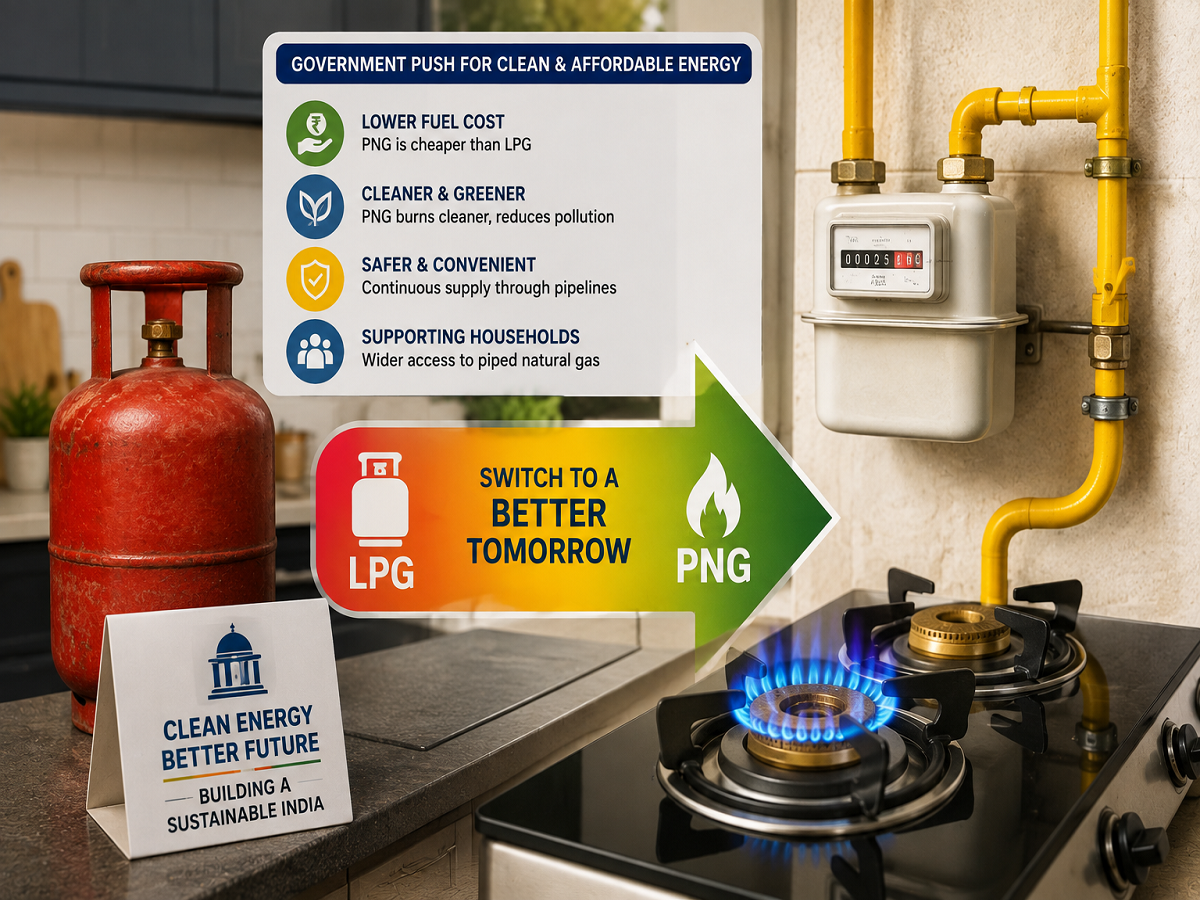
Households using LPG cylinders may need to pay closer attention to the expansion of piped natural gas (PNG) networks in their area. A fresh government push is aimed at encouraging more consumers to move from LPG cylinders to piped cooking gas wherever PNG infrastructure is already available.
According to the reported directive, the Petroleum Ministry has asked states to support the expansion and adoption of PNG connections. The focus is particularly on areas where pipelines have already been laid and households have access to the network but continue to depend on LPG cylinders.
Consumers who receive formal communication regarding the availability of PNG should therefore avoid ignoring it. In certain circumstances, continued refusal to shift despite the availability of a connection and issuance of notices could affect the consumer's existing LPG arrangement.
However, this does not mean LPG connections across India are being cancelled automatically. The reported measure is linked to locations where PNG infrastructure is already accessible and consumers are being encouraged to migrate.
Why Is the Government Promoting PNG Connections?
The wider objective is to increase the use of piped natural gas for household cooking in areas covered by city gas distribution networks.
Unlike LPG, which requires cylinders to be transported, delivered and periodically replaced, PNG reaches homes directly through a pipeline network. Once connected, households do not have to book a cylinder every time their cooking-gas supply runs low.
Expanding PNG adoption can also help improve the utilisation of existing city gas infrastructure. In areas where substantial investments have already been made in pipelines, low household adoption can leave a significant part of that network underused.
The latest push is therefore aimed not only at expanding infrastructure but also at increasing actual household connections.
Could Your LPG Connection Really Be Cancelled?
The key issue for consumers is whether an existing LPG connection could be discontinued after PNG becomes available.
The reported direction suggests that consumers living in PNG-covered areas may be asked to switch to piped gas. If a household has access to PNG and receives the required notice but still does not take a connection, its LPG cylinder connection could potentially be affected under the applicable implementation framework.
But consumers should not interpret this as an immediate nationwide cancellation drive.
A household living in an area without PNG infrastructure cannot simply switch to piped gas. Similarly, availability of a pipeline somewhere in a city does not necessarily mean every individual house or building is technically ready to receive PNG.
The actual position will depend on local network availability, connectivity and the communication issued by the relevant authorities or gas distributor.
What Should You Do If You Receive a Notice?
Consumers who receive a notice about switching from LPG to PNG should first verify whether a functional PNG connection is actually available for their property.
They should also check who issued the notice and carefully read the deadline, connection procedure and other conditions mentioned in it.
Rather than relying on messages circulating on social media, households should confirm the information with their LPG distributor, authorised city gas distribution company or relevant government authority.
If PNG cannot technically be provided to a particular house despite pipelines being available nearby, consumers should seek clarification before taking further action.
How Is PNG Different From LPG?
Both LPG and PNG are commonly used for household cooking, but their delivery systems are very different.
LPG is generally supplied in cylinders. Consumers book a refill when the cylinder is empty, after which another cylinder is delivered or collected depending on the service arrangement.
PNG, on the other hand, is delivered continuously through pipelines. Consumption is measured through a meter, and the customer is billed according to the applicable tariff and billing cycle.
This removes the need to store and replace cylinders at regular intervals.
PNG Expansion Could Reduce Dependence on Cylinders
Increasing the number of PNG households could help reduce the logistical burden associated with transporting and distributing LPG cylinders in densely populated urban areas.
For consumers, piped supply may also offer greater convenience because they do not have to monitor cylinder levels or wait for a refill.
However, shifting from LPG to PNG involves initial connection work. Depending on the provider and prevailing rules, consumers may need to complete documentation, installation and safety-related formalities before piped gas can be used.
The applicable charges and conditions may also differ between city gas distributors.
Not Every LPG Consumer Needs to Worry
The most important takeaway is that LPG users should not panic simply because of reports about possible cancellation of cylinder connections.
The reported policy focus is on locations where PNG infrastructure is already available. Millions of households in areas without piped gas networks will continue to depend on LPG.
Even within cities covered by PNG networks, actual connectivity can vary from one neighbourhood or building to another.
Consumers should therefore check the status of their specific address instead of assuming that a city-wide PNG network automatically means their LPG connection is at risk.
Check Official Communication Before Taking Action
If you currently use an LPG cylinder and PNG has recently become available in your locality, it may be useful to check whether your household is eligible for a piped connection.
If an official notice is issued, read it carefully and complete the required formalities within the specified timeline where applicable. Consumers facing technical difficulties in obtaining a PNG connection should contact the relevant gas distributor for clarification.
The government's broader direction is clearly towards increasing piped natural gas adoption in areas where infrastructure is already in place. But whether an individual LPG connection can be discontinued will depend on the applicable rules, local availability and notices issued to the consumer.
For this reason, LPG users should rely on official communication from the Petroleum Ministry, their LPG distributor or authorised city gas provider before making any change to their existing cooking-gas arrangement.