NEWS
Lek Ladki Yojana: Daughters will receive ₹1.01 lakh! Applying for the 'Lek Ladki Scheme' has become easier, with fewer documents required
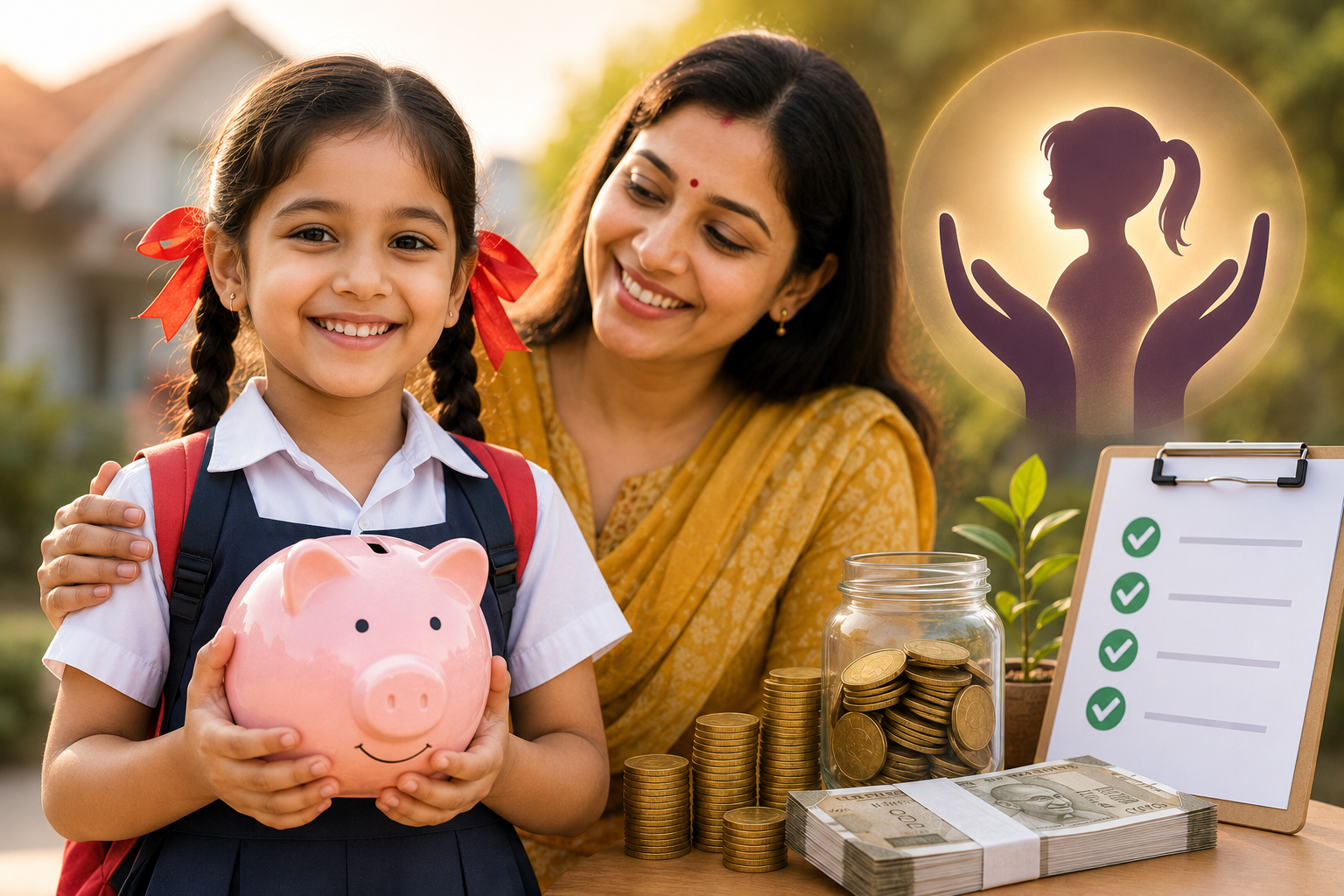
Lek Ladki Yojana: Maharashtra Girls Can Get ₹1.01 Lakh; Online Application Process Made Easier
Maharashtra Lek Ladki Yojana 2026: Families in Maharashtra eligible for the Lek Ladki Yojana can receive financial assistance totalling ₹1.01 lakh for a girl child, with the support distributed at different stages from birth until she turns 18. The state government has now moved to simplify the application process, including online access and reduced documentation requirements.
The Maharashtra government's Women and Child Development Department introduced the scheme to support the education and empowerment of girls from eligible families. Official department information confirms that the programme covers girls from families holding yellow or orange ration cards, subject to prescribed eligibility conditions. (Women and Child Development Maharashtra)
The latest change is particularly useful for parents who previously had to deal with a more paperwork-heavy process. Eligible applicants can now use Maharashtra's digital government-services framework to submit applications and receive benefits through Direct Benefit Transfer (DBT).
What Is Maharashtra's Lek Ladki Yojana?
Lek Ladki is a financial assistance programme aimed at supporting girls through important stages of childhood and education.
Instead of providing the entire benefit at once, the government distributes the assistance in instalments linked to milestones such as birth, school admission and adulthood.
The scheme was introduced under a Maharashtra government resolution dated October 30, 2023, and was formally launched on January 12, 2024, according to the Women and Child Development Department's citizen charter. (Women and Child Development Maharashtra)
The objective is not limited to providing money. The programme is intended to encourage girls' education, strengthen their financial security and promote a more supportive social environment for daughters.
How Much Money Can a Girl Receive?
Under the scheme, an eligible girl can receive a total benefit of ₹1.01 lakh across five stages.
| Stage | Financial Assistance |
|---|---|
| After birth | ₹5,000 |
| Admission to Class 1 | ₹6,000 |
| Admission to Class 6 | ₹7,000 |
| Admission to Class 11 | ₹8,000 |
| After completing 18 years | ₹75,000 |
| Total Benefit | ₹1,01,000 |
The largest payment comes after the beneficiary reaches 18 years of age.
This phased structure is designed to provide financial support not only at birth but also when education-related expenses typically increase.
Who Is Eligible for the Lek Ladki Scheme?
The programme is targeted at eligible families living in Maharashtra.
According to the scheme framework, the family must meet prescribed eligibility conditions, including the ration-card requirement.
Key conditions include:
- The family should be a resident of Maharashtra.
- The family should hold an eligible yellow or orange ration card.
- The girl and family must meet the income and other conditions prescribed by the state government.
- The benefit applies to eligible girls covered under the scheme's applicable birth-date and family conditions.
Families should verify the latest eligibility requirements before applying because government schemes can have additional conditions relating to family composition, income and documentation.
Online Application Facility Makes the Process Easier
One of the biggest changes is the availability of a simplified digital application process.
Maharashtra's Aaple Sarkar system allows citizens to access government services online rather than repeatedly visiting government offices. The state describes the portal as a platform through which citizens can obtain information and apply online for notified public services. (SJSA Maharashtra)
Applicants should search for the applicable Lek Ladki service after logging in and follow the instructions displayed on the portal.
Aadhaar Can Reduce Manual Data Entry
The digital process can also make identity verification easier.
Maharashtra's DBT infrastructure supports Aadhaar-based registration. After successful Aadhaar authentication, information available through UIDAI can be automatically populated into relevant applicant fields.
This reduces the need to repeatedly enter the same information manually and can also help reduce errors in applications.
Aadhaar-based authentication may use an OTP sent to the registered mobile number where applicable.
e-KYC Will Be Important
Under the simplified process described for Lek Ladki beneficiaries, e-KYC is expected to be completed for the eligible girl and her parents as applicable.
Families should therefore ensure that important identity information is accurate before beginning the application.
If an Aadhaar-linked mobile number or other information is outdated, correcting it beforehand may help avoid difficulties during verification.
Applicants should also carefully check names, dates of birth and bank details before submitting the form.
Money Will Be Sent Through DBT
Eligible financial assistance is transferred through the Direct Benefit Transfer mechanism.
DBT allows government benefits to reach the beneficiary's linked bank account electronically.
Maharashtra's official DBT guidance explains that Aadhaar seeding helps benefits reach the Aadhaar-linked bank account associated with the beneficiary.
Parents should therefore ensure that the bank-account and Aadhaar details required under the scheme are correctly linked and active.
Incorrect account information can potentially delay payment even after an application is approved.
Special Window for Earlier Eligible Beneficiaries
The updated process also provides an opportunity for eligible beneficiaries who may not have applied earlier.
According to the announced changes, eligible girls covered from April 1, 2023 can submit applications up to August 15, 2027, under the special provision.
For new eligible births, the application is generally required to be submitted within the prescribed period after the girl's birth.
Families should not wait until the final deadline if they are already eligible, as early submission leaves more time to resolve documentation or verification issues.
Will Parents Have to Apply Again for Every Instalment?
One of the useful features of the revised process is that beneficiaries are not expected to file an entirely new application every time the girl reaches the next eligible stage.
Once the beneficiary is registered and approved, subsequent benefits can be processed according to the scheme's conditions and verification requirements.
For example, the benefit associated with admission to Class 1 would be linked to the next qualifying milestone rather than requiring the family to begin the entire registration process from scratch.
Families may still need to provide or verify information required to establish that the next eligibility condition has been met.
How to Apply Online
Eligible parents can begin by visiting Maharashtra's Aaple Sarkar platform and creating or accessing their account.
The portal supports online government-service applications, document uploads and application tracking. (Rural Development Dept.)
The general process involves registering or logging in, locating the relevant service, entering beneficiary details, completing required verification, uploading documents where requested and submitting the application.
Applicants should save the application or acknowledgement number after submission so that they can track its progress later.
Keep Aadhaar and Bank Details Ready
Even though documentation requirements have been simplified, applicants should keep essential information available before starting.
These may include Aadhaar details, ration-card information, Maharashtra residence-related documents, bank-account details and documents establishing the girl's birth or educational stage.
The exact list displayed on the official application portal should be treated as final for the individual application.
Avoid submitting incorrect or mismatched details simply to complete the form quickly.
Why the Final ₹75,000 Payment Matters
The largest component of the ₹1.01 lakh assistance is the ₹75,000 payment after the girl reaches 18 years and satisfies the applicable scheme conditions.
This structure means that most of the assistance is reserved for the stage when the beneficiary is entering adulthood.
The amount can potentially provide useful financial support at a time when higher education, skill development and other future expenses become more important.
The earlier instalments, meanwhile, provide smaller amounts linked to education and childhood milestones.
Nearly 3 Lakh Beneficiaries Have Received the First Instalment
According to the latest figures cited by Maharashtra Women and Child Development Minister Aditi Tatkare, 2,98,695 beneficiaries have already received the first instalment under the Lek Ladki programme.
The simplified process is expected to make it easier for additional eligible families to enter the scheme.
Digital applications can also help improve tracking and reduce repeated visits to government offices.
Don't Pay Agents for Benefits Promised Under the Scheme
Families applying for government welfare programmes should be cautious about people claiming they can guarantee approval in exchange for money.
Eligibility is determined according to government rules.
Applicants should use official Maharashtra government portals and authorised service centres rather than sharing Aadhaar numbers, bank information or OTPs with unknown individuals.
No person should be given an OTP received for Aadhaar or banking authentication.
Lek Ladki Yojana 2026: What Parents Should Know
Maharashtra's Lek Ladki Yojana provides eligible girls with financial assistance totalling ₹1.01 lakh, distributed from birth until adulthood.
The benefit structure includes ₹5,000 after birth, ₹6,000 at Class 1 admission, ₹7,000 at Class 6, ₹8,000 at Class 11 and ₹75,000 after completing 18 years.
The scheme is aimed particularly at eligible Maharashtra families holding yellow or orange ration cards, and the government has moved toward making applications easier through online services and Aadhaar-based verification. The official Women and Child Development Department confirms that the scheme was created to support the empowerment of girls in eligible families. (Women and Child Development Maharashtra)
Parents who believe their daughter qualifies should verify the latest conditions on the official Maharashtra government platform before applying, particularly the birth-date requirement, income criteria, ration-card category and documents required for their specific case.