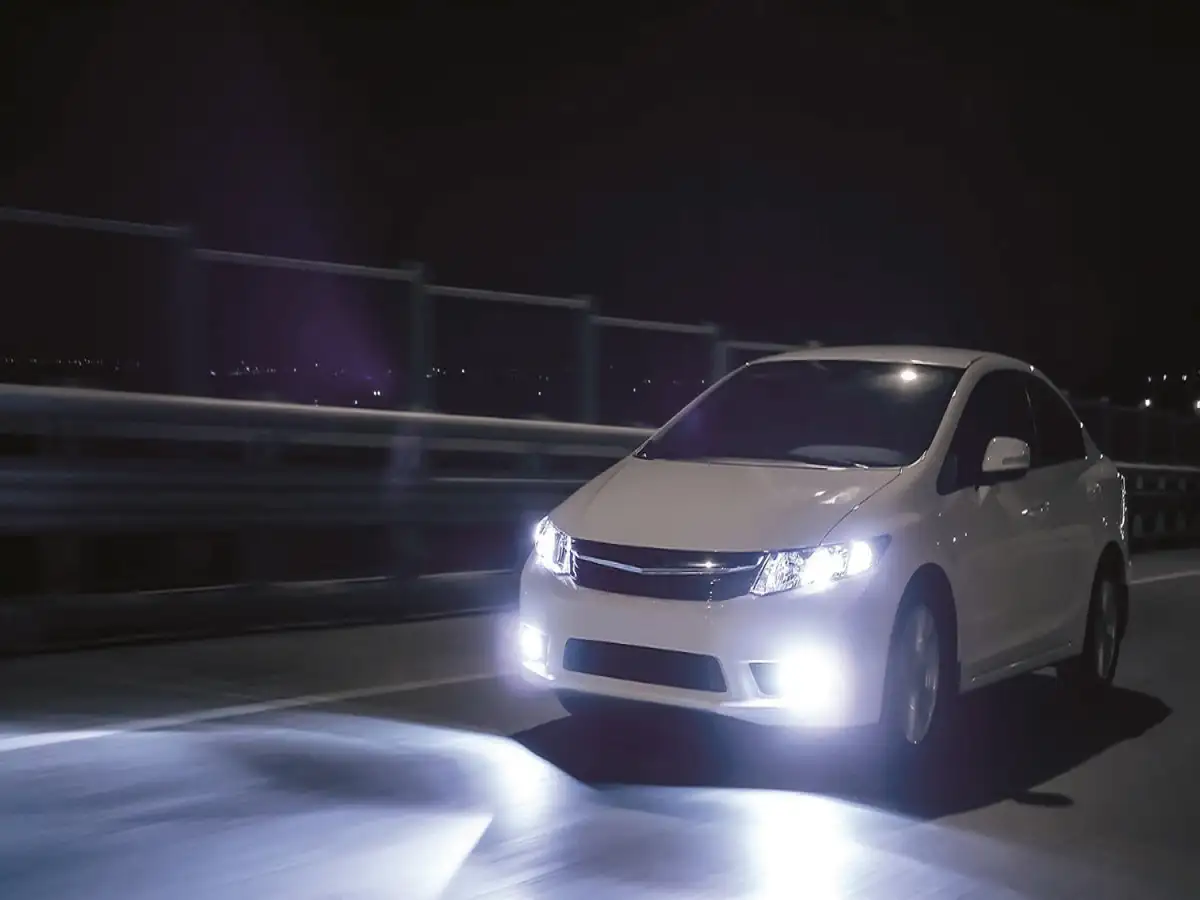
Driving on a highway at night requires more than maintaining the right speed and staying in your lane. Using your vehicle's headlights correctly is equally important for road safety, especially when deciding between high beam and low beam.
Many drivers keep their headlights on high beam continuously because it provides better visibility over a longer distance. However, high beams can create intense glare for drivers approaching from the opposite direction. This glare can temporarily reduce their ability to see the road, increasing the risk of an accident.
High beams are useful in specific situations, particularly on dark and poorly illuminated roads. The key is knowing when they are needed and switching back to low beam as soon as conditions change.
Here is what motorists should know about using high beams safely while driving at night.
When Should You Use High Beam?
High beam headlights are designed to illuminate a longer stretch of road than low beams. They can be particularly useful when driving through areas where there is little or no external lighting.
Drivers may consider using high beams on a deserted highway where street lighting is unavailable and visibility ahead is limited.
They can also be useful on extremely dark rural roads where there are no vehicles immediately ahead or approaching from the opposite direction.
On winding or poorly illuminated roads, the additional visibility offered by high beams may help a driver notice obstacles, animals, barriers or changes in the road ahead earlier.
However, high beam should not be treated as the default setting for every situation simply because the road is dark.
Switch to Low Beam When a Vehicle Approaches
One of the most important nighttime driving habits is to dip your headlights when you notice an approaching vehicle.
As soon as another vehicle becomes visible from the opposite direction, switching from high beam to low beam reduces glare and allows the other motorist to see the road more clearly.
High-intensity light directed towards an approaching driver's eyes can temporarily affect vision. Even a brief reduction in visibility can become dangerous at highway speeds because vehicles cover considerable distances within a few seconds.
Once the approaching vehicle has safely passed and the road ahead is dark and clear again, high beam can be used if necessary.
Avoid High Beam When Following Another Vehicle
High beam can also create problems when you are travelling behind another vehicle.
The light from your headlights can reflect through the vehicle's rear-view and side mirrors and cause glare for the driver ahead. This can make it harder for that driver to judge traffic behind them or concentrate on the road.
If you are following another vehicle at a normal driving distance, low beam is generally the more appropriate choice.
Using low beam in such circumstances helps maintain adequate visibility without unnecessarily disturbing other road users.
Why High Beam Can Be Dangerous in Fog
Drivers sometimes assume that high beam will improve visibility in fog because it produces stronger light. In practice, it can have the opposite effect.
During dense fog or mist, powerful headlight beams can reflect off tiny water droplets suspended in the air. Some of this light is scattered back towards the driver, creating glare and making it even more difficult to see the road ahead.
A similar problem can occur during heavy rain.
For this reason, motorists should avoid relying on high beam in dense fog, mist or severe rainfall. Appropriate low-beam headlights and, where fitted and suitable, fog lights can provide better usable visibility.
Drivers should also reduce speed and maintain a larger following distance when visibility is poor.
Low Beam Is Better for Busy and Well-Lit Roads
High beams are generally unnecessary on roads that already have sufficient lighting.
In cities, busy intersections, markets and well-lit urban roads, low beam usually provides enough illumination while creating less glare for other motorists.
The same principle applies when there are many vehicles travelling in both directions on a highway.
The purpose of high beam is to provide additional visibility when genuinely needed—not to maximise brightness at all times.
How Continuous High Beam Use Can Increase Accident Risk
Driving continuously with high beams can create several hazards.
The most immediate concern is glare. An approaching driver exposed to powerful headlights may temporarily struggle to distinguish lane markings, pedestrians, parked vehicles, road dividers or other hazards.
At higher speeds, even a momentary loss of clear vision can significantly reduce the time available to react.
High beams can also affect drivers travelling in the same direction when intense light reflects through their mirrors.
The problem can become even more serious on narrow, winding or undivided roads where vehicles travelling in opposite directions pass relatively close to each other.
Flashing High Beams Should Not Replace Safe Driving
Some drivers briefly flash their headlights to indicate their presence, but flashing the high beam should never be treated as a guaranteed signal that another road user has seen you or will give way.
Drivers must still slow down when necessary, maintain a safe distance and be prepared for unexpected movements by other vehicles.
Headlights are an aid to safe driving, not a substitute for speed control, observation and defensive driving.
Keep Your Headlights Clean and Properly Adjusted
Safe nighttime driving also depends on the condition of the headlights themselves.
Dirty or cloudy headlamp covers can reduce illumination. Incorrectly aligned headlights can also direct excessive light towards approaching traffic instead of illuminating the road effectively.
Motorists should periodically check whether both headlights are working properly and whether their alignment is appropriate.
Replacing failed bulbs promptly and keeping the headlamp lenses clean can improve nighttime visibility without requiring unnecessary use of high beams.
Simple Rule for Safer Night Driving
The safest approach is straightforward: use high beam only when additional visibility is genuinely required and when it will not disturb another road user.
On a dark, empty highway, high beam can help you see farther ahead. When another vehicle approaches, switch to low beam. If you are following another vehicle, avoid shining high beams into its mirrors. In fog, mist or heavy rain, remember that stronger light may actually make visibility worse.
Using the dipper and low beam at the right time takes only a moment, but it can make nighttime roads safer for drivers, passengers, cyclists and pedestrians alike.