NEWS
Gold Posts Worst June Quarter in 13 Years as Prices Slide 14%; Dollar Strength Weighs on Bullion
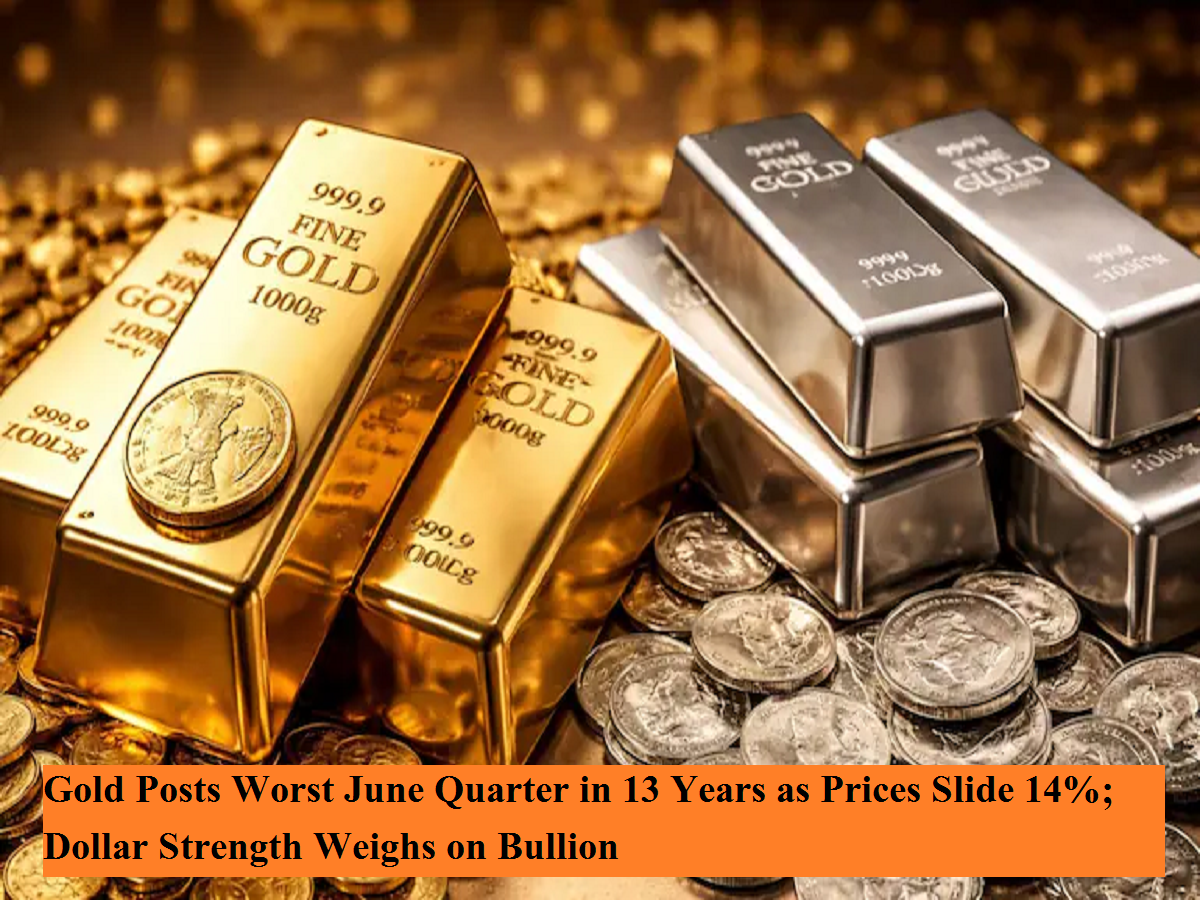
Gold recorded its weakest June quarter in more than a decade, with prices falling sharply amid a stronger US dollar and growing expectations that the US Federal Reserve could maintain a tighter interest rate stance. The precious metal has remained under pressure for several weeks, while silver also extended its decline in both global and domestic markets.
According to market data, gold lost around 14% during the June quarter, making it the steepest quarterly decline since 2013. The metal has also posted losses for four consecutive months, reflecting weaker investor sentiment and changing global market expectations.
Gold and Silver Extend Losses
Selling pressure continued on July 1, with both gold and silver trading lower in international markets.
Global gold futures slipped to around $3,973 per ounce, while silver futures declined to approximately $57.61 per ounce.
The weakness was also reflected in Indian commodity markets, where precious metal futures traded lower during the session.
MCX Gold and Silver Futures Decline
On the Multi Commodity Exchange (MCX), gold futures fell by around 1.07%, or ₹1,532, to trade near ₹1,40,999 per 10 grams.
Silver futures also witnessed sharp selling, declining by approximately 2.61%, or ₹5,933, to around ₹2,21,110 per kilogram.
The declines mirror the broader weakness seen in international bullion markets.
Stronger US Dollar Pressures Gold
One of the primary reasons behind the recent decline in gold prices has been the continued strength of the US dollar.
Since gold is priced globally in US dollars, a stronger dollar generally makes the metal more expensive for buyers using other currencies, often reducing demand and putting downward pressure on prices.
Market participants are also closely watching the US Federal Reserve's monetary policy outlook. Expectations that interest rates could remain elevated have reduced the appeal of non-interest-bearing assets such as gold.
Higher interest rates generally increase the attractiveness of fixed-income investments relative to precious metals.
Investor Sentiment Remains Weak
Market analysts say gold has struggled to sustain any meaningful recovery despite occasional rebounds.
Recent trading patterns suggest that many investors have preferred booking profits whenever prices rise instead of accumulating fresh positions during market corrections.
This has prevented gold from maintaining upward momentum over the past several weeks.
Gold Down More Than 11% in June Alone
The June decline accounted for a significant portion of the quarterly losses.
Gold prices dropped by more than 11% during June, marking the fourth consecutive month of negative returns.
The latest quarter also represents the first quarterly decline for gold since 2024 and the weakest June quarter for the metal in approximately 13 years.
During the three-month period, international gold prices declined by nearly $500 per ounce.
Prices Down Nearly 30% From January Peak
Gold has retreated substantially from the record highs witnessed earlier this year.
After reaching a peak of around $5,589 per ounce in late January, prices have corrected by nearly 30%, reflecting a combination of easing geopolitical concerns, stronger currency markets, and changing expectations regarding US monetary policy.
Although geopolitical tensions in parts of West Asia have moderated, bullion prices have remained under pressure.
More Investors Selling Old Gold
The decline in prices has prompted many investors and households to sell existing gold holdings.
According to industry data, approximately 50 tonnes of old gold were sold during the June quarter, representing a significant increase compared with the same period last year.
The rise in secondary gold sales suggests that some investors are choosing to liquidate holdings amid concerns that prices could decline further.
What Could Influence Gold Prices Going Forward?
Market participants will continue to monitor several factors that could determine the next direction for gold prices, including:
- Future US Federal Reserve interest rate decisions.
- Movement in the US dollar.
- Global inflation trends.
- Geopolitical developments.
- Central bank gold purchases.
- Investment demand for safe-haven assets.
While gold has historically been viewed as a long-term store of value, recent market conditions highlight that prices can remain volatile in response to changes in global economic and financial conditions. Investors may consider evaluating their investment horizon and risk tolerance before making fresh investment decisions in precious metals.