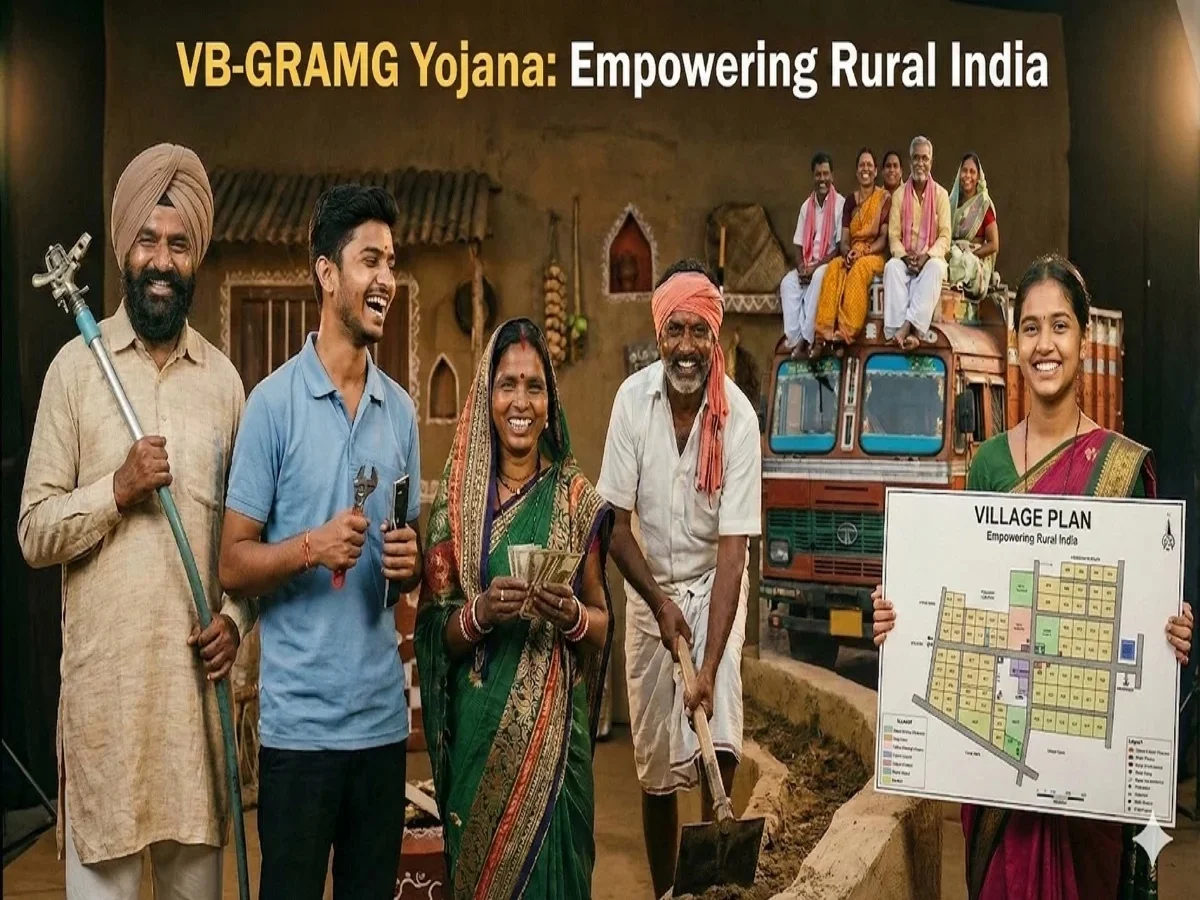
The Government of India has launched a new nationwide rural employment initiative called the G RAM G Scheme to strengthen livelihoods and accelerate infrastructure development in villages. Officially known as the Viksit Bharat – Guarantee for Employment and Livelihood Mission, the programme aims to create sustainable job opportunities while improving essential public assets across rural India.
The initiative is designed to provide employment to eligible rural households, support local economic growth, and promote long-term development through infrastructure projects. Here's a detailed look at how the scheme works, who can benefit, and what it offers.
What Is the G RAM G Scheme?
The G RAM G Scheme is a centrally launched rural employment programme intended to increase livelihood opportunities for people living in villages.
Its primary objective is to generate wage employment while supporting the construction of public infrastructure that can improve the quality of life in rural communities. By combining employment generation with development projects, the scheme seeks to create lasting economic benefits for participating households.
Why Was the Scheme Introduced?
The government launched the programme with the goal of strengthening rural employment and providing stable income opportunities for economically vulnerable families.
Many rural households depend on seasonal work, making income uncertain throughout the year. The G RAM G Scheme aims to address this challenge by offering employment opportunities linked to public development projects.
The programme also focuses on improving rural infrastructure, which can contribute to better connectivity, water management, and overall village development.
Who Can Benefit?
The scheme is intended for eligible rural households that meet the government's prescribed criteria.
By providing guaranteed employment opportunities, the programme aims to improve household income, increase financial stability, and support sustainable livelihoods for families living in rural areas.
Eligible beneficiaries will need to comply with the guidelines and eligibility conditions notified by the government to receive benefits under the scheme.
What Type of Work Will Be Undertaken?
The G RAM G Scheme covers a wide range of public infrastructure and community development projects.
Some of the key activities expected under the programme include:
- Construction and improvement of rural roads.
- Development of ponds and other water bodies.
- Water conservation and rainwater management projects.
- Creation of public infrastructure for village development.
- Other approved community asset-building works.
These projects are expected to generate employment while also improving essential facilities that benefit local communities.
How Will Workers Receive Their Wages?
To promote transparency and reduce payment delays, wages earned under the scheme will be transferred directly to the beneficiaries' bank accounts.
The use of direct bank transfers is intended to ensure that workers receive their payments securely and without unnecessary intermediaries.
Employment Guarantee Under the Scheme
One of the major highlights of the programme is its employment assurance.
Under the G RAM G Scheme, eligible rural families will be entitled to up to 125 days of guaranteed employment each year, subject to the applicable rules and operational guidelines.
This employment guarantee is expected to provide a more stable source of income for participating households while reducing dependence on irregular seasonal work.
Expected Benefits for Rural India
The scheme is expected to deliver multiple long-term benefits beyond employment generation.
These include:
- Increased job opportunities in rural areas.
- Better household income and financial security.
- Improved village infrastructure.
- Stronger focus on water conservation.
- Creation of durable community assets.
- Support for overall rural development and economic growth.
By investing in infrastructure alongside employment generation, the programme aims to create lasting improvements for rural communities.
Nationwide Rollout Begins
The government has announced that the G RAM G Scheme came into effect across the country from July 1, 2026.
With its nationwide implementation, eligible beneficiaries in different states are expected to receive employment opportunities through locally approved development projects carried out under the mission.
Important Points to Remember
Before applying or participating in the programme, beneficiaries should keep the following points in mind:
- The scheme is intended for eligible rural households.
- Employment is linked to approved public infrastructure projects.
- Wages will be paid directly into beneficiaries' bank accounts.
- Eligible families may receive up to 125 days of employment annually, subject to scheme guidelines.
- Applicants must satisfy the eligibility conditions and comply with the rules issued by the government.
The G RAM G Scheme represents the government's effort to combine rural employment with infrastructure development. By generating work opportunities while building public assets, the initiative aims to strengthen livelihoods, improve village infrastructure, and contribute to inclusive economic development across rural India.