Business
FASTag Rules 2026: Can You Use One FASTag for Two Cars? Know the Rules Before Crossing a Toll Plaza
FASTag Update 2026: If you regularly travel on national highways in India, you are probably familiar with FASTag, the electronic toll payment system that allows vehicles to pass through toll plazas without making cash payments. The system has made highway travel more convenient by reducing waiting times and enabling automatic toll deductions.
However, vehicle owners often have questions about how FASTag works, especially when they own more than one car. One common question is whether a single FASTag can be transferred between two vehicles to avoid purchasing another tag.
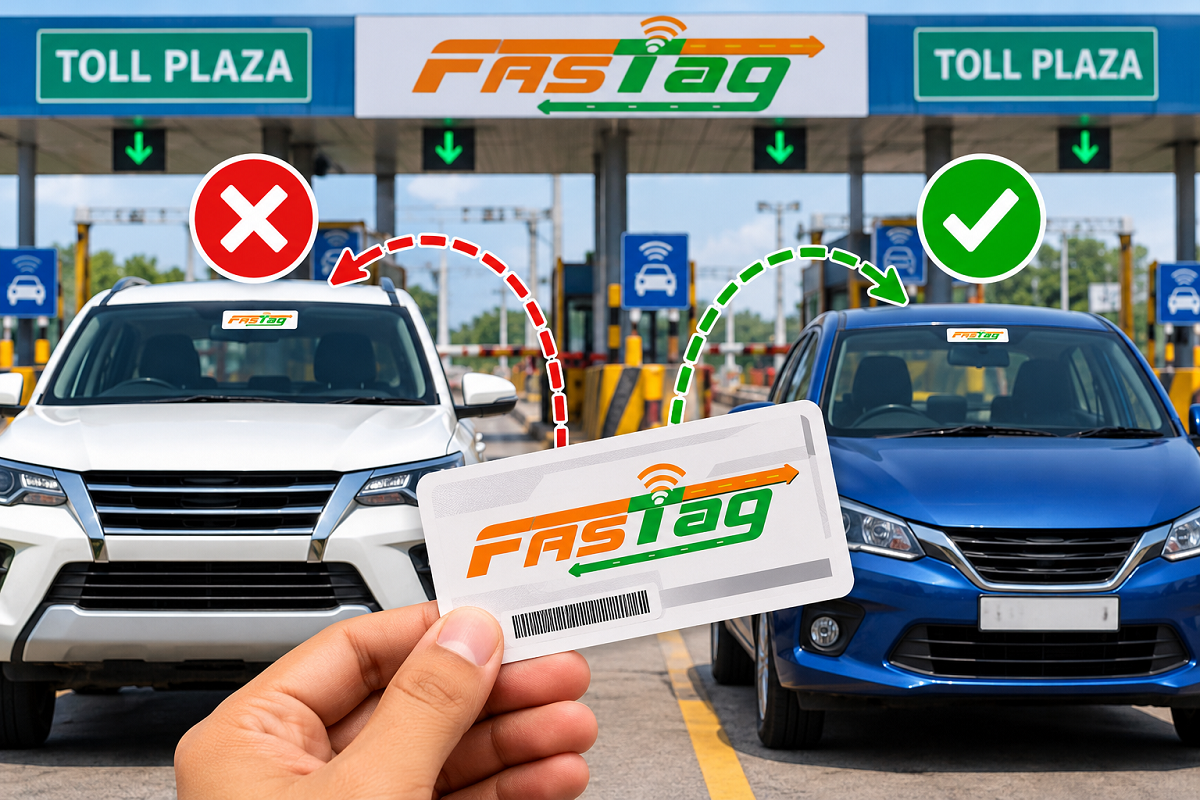
The answer is no. Under the One Vehicle, One FASTag rule, each vehicle must have its own FASTag. A tag issued for one vehicle cannot be legally shared with another, even if both vehicles belong to the same person.
Understanding this rule is important because using the wrong FASTag may cause payment failures, additional toll charges and unnecessary delays at toll plazas.
What Is FASTag and How Does It Work?
FASTag is an electronic toll collection system based on Radio Frequency Identification (RFID) technology. It allows toll charges to be collected automatically when a vehicle passes through an enabled toll plaza.
The tag is generally attached to the inside of a vehicle's front windshield. When the vehicle approaches a toll collection lane, an RFID reader detects the tag and processes the applicable toll payment through the linked account.
This eliminates the need for drivers to stop and pay cash under normal operating conditions.
FASTag is issued by authorized banks and service providers. Each tag is associated with a particular vehicle and its registration details.
The system is designed to improve traffic movement, reduce congestion and make toll payments more transparent.
Can One FASTag Be Used for Two Different Vehicles?
According to the One Vehicle, One FASTag framework implemented by the National Highways Authority of India (NHAI), a FASTag is meant for one specific vehicle.
For example, suppose a person owns two cars, one used for daily commuting and another for family trips.
Even though both cars belong to the same owner, they cannot share the same FASTag.
The first vehicle must have a FASTag associated with its registration number, while the second vehicle requires a separate tag.
This requirement applies regardless of whether the vehicles are registered under the same person's name.
The purpose of this system is to maintain accurate vehicle identification and prevent irregularities in electronic toll collection.
What Happens If You Put Your FASTag on Another Car?
Some drivers may consider removing the FASTag from one vehicle and attaching it to another. However, this practice can create several problems.
When a FASTag is issued, its identification information is linked to the registered vehicle. If the same tag is used on a different car, the details associated with the tag may not match the vehicle passing through the toll plaza.
Such discrepancies can interfere with toll processing.
Possible consequences include:
- Failure of the FASTag to process a toll transaction correctly.
- Additional verification or delays at the toll plaza.
- Applicable higher toll charges if the vehicle is treated as not having a valid, functional FASTag.
- Damage to the RFID sticker when it is removed from the windshield.
- Problems arising from mismatched vehicle registration information.
Drivers should also understand that FASTag stickers are not designed to be repeatedly removed and reattached.
Attempting to transfer a sticker between vehicles may damage it and affect its performance.
Two Cars Mean Two Separate FASTags
If you own multiple vehicles, the correct approach is to obtain an individual FASTag for each one.
For instance, a family with two cars should maintain two separate tags, each connected to the corresponding vehicle registration number.
The tags can be purchased from authorized issuing banks or approved FASTag providers.
Vehicle owners should ensure that the registration details and required Know Your Customer (KYC) information are accurate.
Maintaining separate tags helps prevent identification mismatches and allows toll transactions to be recorded against the correct vehicle.
It also makes it easier to review toll expenses for each car.
Can Two FASTags Be Linked to the Same Bank Account?
Vehicle owners may wonder whether having separate FASTags means they must also open separate bank accounts.
Not necessarily.
Depending on the issuing bank or service provider, multiple vehicle-specific FASTags may be managed through the same customer relationship or supported payment arrangement.
However, each vehicle must still have its own unique FASTag.
The payment account arrangement does not change the requirement that a tag must remain associated with its designated vehicle.
Drivers should check with their FASTag issuer to understand the available account management and recharge options.
What Should You Do With FASTag After Selling Your Car?
Selling a vehicle involves more than transferring its registration documents. The FASTag associated with the vehicle also needs attention.
If you sell your old car, you should contact the FASTag issuing bank or service provider and request closure of the existing tag.
This helps prevent future toll transactions from being charged to your account after the vehicle changes ownership.
Before completing the sale, vehicle owners should follow these precautions:
- Contact the bank or authorized FASTag issuer.
- Request closure or deactivation of the tag associated with the vehicle being sold.
- Clear any outstanding toll-related dues, if applicable.
- Ask about the refund of any eligible remaining balance or security deposit.
- Remove the old FASTag from the windshield as instructed by the issuer.
- Ensure the buyer obtains a FASTag linked to the vehicle under the applicable registration and KYC requirements.
If you purchase another vehicle, obtain a separate FASTag associated with that vehicle instead of transferring the previous car's tag.
Why Is the One Vehicle, One FASTag Rule Important?
The One Vehicle, One FASTag initiative is intended to improve the reliability and efficiency of electronic toll collection across India's national highway network.
When each vehicle has a dedicated tag, toll systems can identify vehicles more accurately and maintain clearer transaction records.
The policy also helps discourage practices such as using one FASTag across multiple vehicles.
For highway users, following the rules reduces the chances of toll payment disputes and delays.
Vehicle owners should also keep their FASTag account adequately funded and ensure that the sticker is properly installed on the windshield.
Final Words
FASTag has made highway toll payments easier, but it is important to follow the applicable rules to avoid inconvenience.
If you own two or more vehicles, remember that a single FASTag cannot be shared between them. Every vehicle must have its own tag linked to its registration details.
Similarly, when selling a vehicle, make sure to close the associated FASTag through the issuing bank or service provider.
The key rule is simple: One Vehicle, One FASTag. Following it can help ensure smoother toll payments, accurate transaction records and hassle-free highway journeys.