Business
EPF vs NPS 2026: Invest ₹10,000 Monthly for 30 Years—Which Retirement Plan Can Build a Bigger Fund?
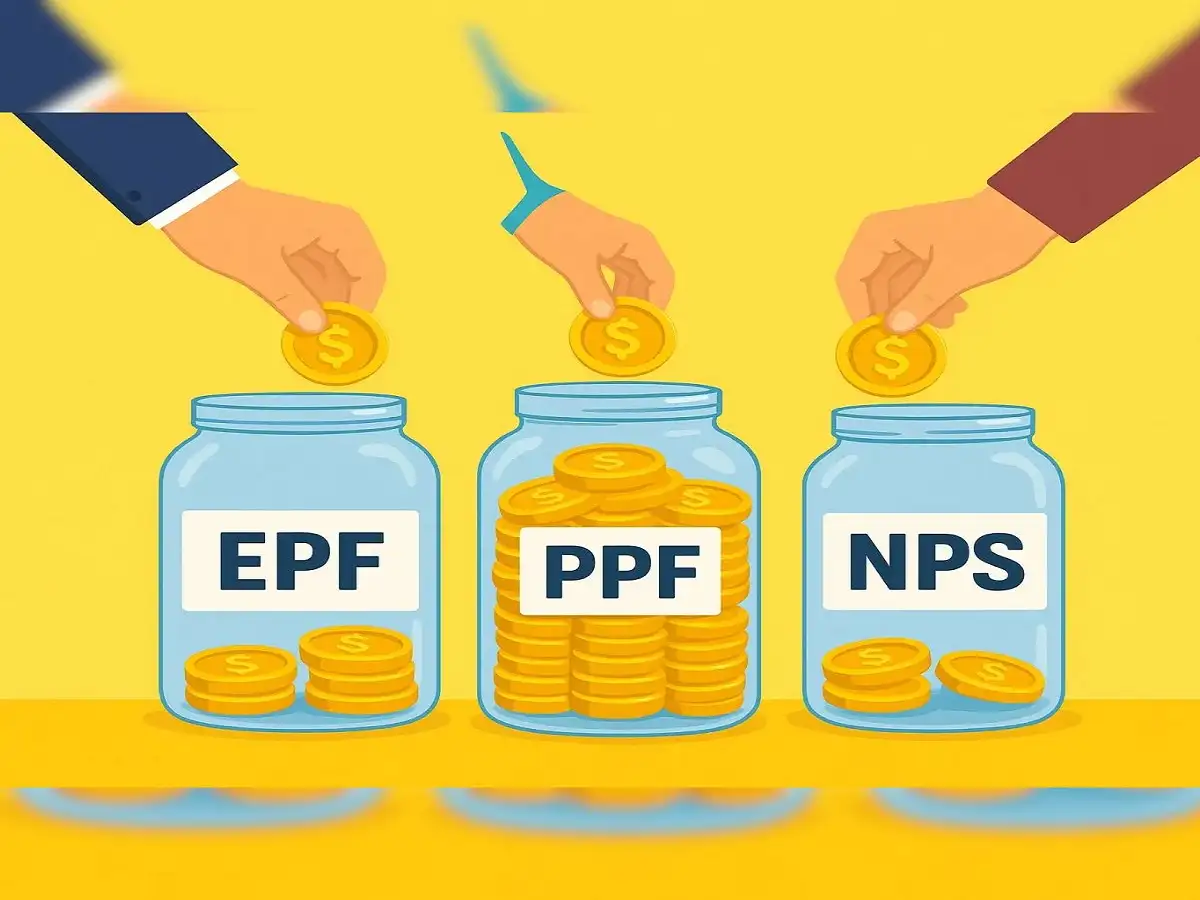
EPF vs NPS Retirement Planning 2026: Building a substantial retirement fund is one of the most important financial goals for salaried employees. With rising living expenses, healthcare costs and longer life expectancy, relying entirely on monthly pension payments may not be sufficient to maintain a comfortable lifestyle after retirement.
Two popular retirement savings options in India are the Employees' Provident Fund (EPF) and the National Pension System (NPS). Both encourage long-term savings, but their investment structures, returns, withdrawal conditions and risk levels differ significantly.
Suppose an individual contributes ₹10,000 every month for 30 years. The total contribution would reach ₹36 lakh. However, the final retirement corpus could vary considerably depending on the returns generated.
Let's understand how EPF and NPS work, their potential maturity values and which option may be more suitable for different retirement goals.
EPF Investment: How Much Can ₹10,000 Monthly Grow in 30 Years?
The Employees' Provident Fund is a retirement savings arrangement primarily designed for eligible salaried employees working in covered establishments.
Under this scheme, contributions are deposited into an employee's provident fund account, generally through payroll deductions and applicable employer contributions.
One of the major advantages of EPF is that its interest rate is declared annually, rather than being directly linked to daily stock market movements.
For illustration, consider an annual interest rate of 8.25% throughout the investment period.
The investment assumptions are:
- Monthly contribution: ₹10,000
- Investment duration: 30 years
- Total contributions: ₹36,00,000
- Assumed annual interest rate: 8.25%
- Projected retirement fund: Approximately ₹1.57 crore, as estimated in the original comparison
The final amount depends on the calculation method, contribution timing and interest-crediting rules. A standard monthly-compounding illustration can produce a different figure.
It is also important to understand that EPF interest rates are reviewed for each financial year. Therefore, assuming an unchanged 8.25% rate for three decades is only a hypothetical scenario.
Nevertheless, EPF remains attractive to employees who prefer relatively stable retirement savings without direct exposure to stock market fluctuations.
NPS Retirement Fund: Can Monthly Savings Create Over ₹2 Crore?
The National Pension System follows a different investment approach.
Unlike EPF, NPS invests contributions across market-linked instruments, including equities, corporate debt and government securities.
The returns depend on the performance of the underlying investments and the asset allocation selected by the subscriber.
For individuals with a long investment horizon, NPS offers the possibility of higher growth through exposure to equity markets. However, this also introduces investment risk.
Consider the following hypothetical assumptions:
- Monthly investment: ₹10,000
- Investment period: 30 years
- Total investment: ₹36 lakh
- Assumed annual return: 10%
- Estimated retirement corpus: Approximately ₹2.26 crore, according to the supplied illustration
If the assumed annual return falls to 9%, the original comparison estimates a retirement fund of approximately ₹1.83 crore.
These estimates should not be interpreted as guaranteed maturity amounts. Actual results depend on investment performance, charges and compounding assumptions.
NPS subscribers should also remember that the accumulated corpus is subject to applicable exit and annuity rules.
EPF vs NPS: Comparison of Investment Returns
The following table summarises the illustrative figures presented in the original comparison.
| Investment Details | EPF | NPS |
|---|---|---|
| Monthly contribution | ₹10,000 | ₹10,000 |
| Investment period | 30 years | 30 years |
| Total contribution | ₹36 lakh | ₹36 lakh |
| Assumed annual return | 8.25% | 10% |
| Quoted projected corpus | ₹1.57 crore | ₹2.26 crore |
| Return structure | Annually declared interest | Market-linked |
| Investment risk | Relatively low | Depends on asset allocation |
| Market exposure | Not directly linked to daily market movements | Equity and debt investments |
Important: The quoted maturity figures use assumptions that are not fully specified in the source. They should not be treated as directly comparable projections without a consistent compounding method.
EPF and NPS Withdrawal Rules: What Happens After Retirement?
Investment returns are not the only factor to consider when choosing a retirement savings scheme. Withdrawal flexibility is equally important.
EPF Withdrawal Rules
Eligible EPF members can generally withdraw their accumulated provident fund balance after retirement, subject to the applicable rules.
The scheme also permits certain withdrawals under specified circumstances, including eligible housing, medical and other permitted needs.
Tax treatment depends on factors such as the employee's service period and the nature of the withdrawal.
NPS Withdrawal Rules
NPS is structured to support retirement income through a combination of accumulated savings and pension payments.
Under the commonly applicable normal-exit framework for non-government subscribers, up to 60% of the retirement corpus may be withdrawn as a lump sum, while at least 40% is generally used to purchase an annuity.
However, exit requirements can vary according to subscriber category, corpus size and the regulations applicable at the time of withdrawal.
The annuity provides periodic pension income, although the amount depends on the annuity option and rates available when it is purchased.
Tax Benefits: How Do EPF and NPS Compare?
Both retirement savings arrangements can offer tax advantages, although the benefits depend on the individual's eligibility and chosen income tax regime.
EPF employee contributions may qualify for deductions under Section 80C under the old tax regime, subject to the overall statutory limit and other conditions.
Qualifying EPF withdrawals may also receive favourable tax treatment, particularly when the required continuous service conditions are satisfied.
NPS contributions can provide tax deductions under relevant provisions, including Sections 80CCD(1), 80CCD(1B) and 80CCD(2), depending on the applicable conditions and tax regime.
Employer contributions to NPS can be particularly relevant for salaried taxpayers because certain deductions remain available under the new tax regime.
However, NPS annuity income is generally taxable when received, and withdrawal exemptions must be considered separately from pension income.
Taxpayers should review the current rules before making retirement investment decisions.
Which Retirement Scheme Offers Better Returns?
The answer largely depends on an individual's financial objectives, investment horizon and willingness to accept risk.
EPF may be more suitable for employees seeking a relatively predictable retirement savings structure with annually declared interest.
NPS, on the other hand, may appeal to individuals willing to accept market fluctuations in exchange for the possibility of higher long-term returns.
A younger investor with several decades remaining before retirement may be better positioned to tolerate short-term market volatility than someone approaching retirement.
However, higher expected returns do not necessarily mean that NPS will outperform EPF in every investment period.
Market conditions, portfolio selection, investment charges and the timing of contributions can all influence the final outcome.
Can Employees Invest in Both EPF and NPS?
Yes. Eligible salaried employees can generally participate in EPF while also making contributions to NPS.
Using both arrangements can provide a combination of relatively stable provident fund savings and market-linked retirement investments.
This approach may also help investors diversify their retirement planning rather than depending entirely on a single investment structure.
Before deciding how much to allocate, employees should consider their existing provident fund contributions, emergency savings, other investments and expected retirement expenses.
Final Takeaway
Both EPF and NPS can play an important role in building long-term financial security.
EPF offers a retirement savings framework with annually declared interest rates, while NPS provides exposure to market-linked investments with the potential for higher growth and greater volatility.
The supplied comparison suggests that investing ₹10,000 every month for 30 years could produce a larger retirement corpus under a 10% NPS return assumption than under an 8.25% EPF interest assumption.
However, these returns are illustrative, not guaranteed, and actual outcomes can differ significantly.
Ultimately, the better choice depends on risk tolerance, tax considerations, withdrawal requirements and retirement income needs. For many employees, combining EPF and NPS may offer a more balanced long-term retirement strategy.
Disclaimer: This article is intended for general financial information. Return estimates are hypothetical and should not be considered guaranteed investment outcomes or personalised financial advice.