NEWS
Delhi Yamuna River Pollution: Foam at Kalindi Kunj and clean at many places- why does the Yamuna look different everywhere?
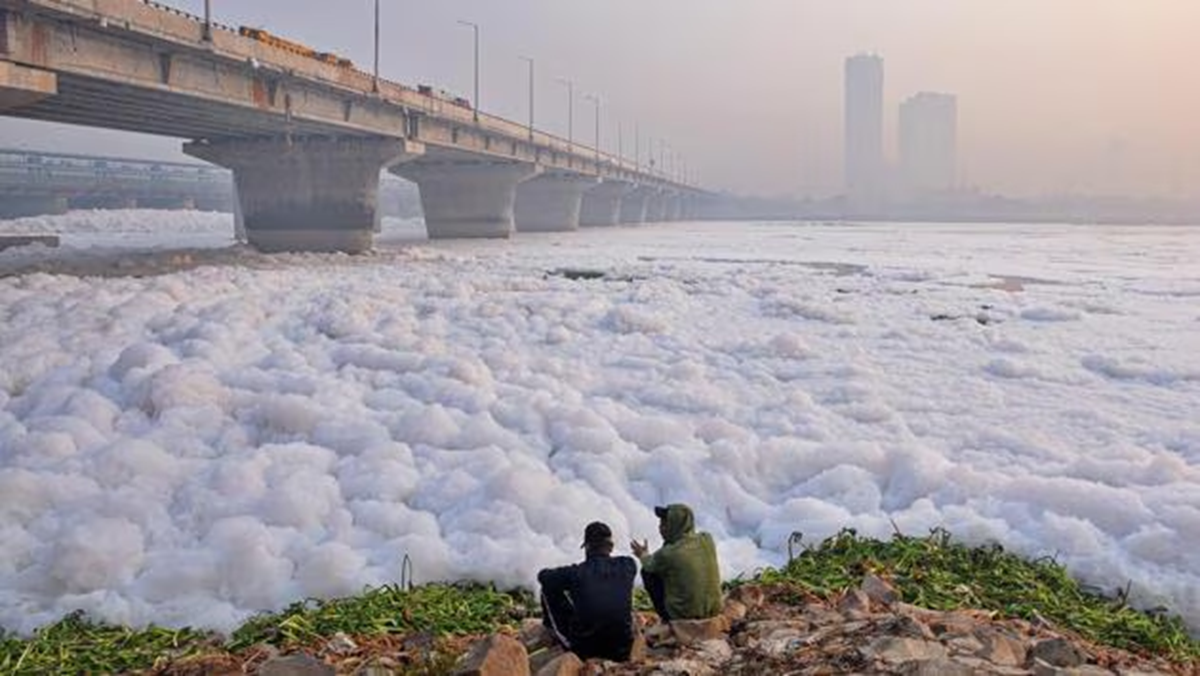
Delhi Yamuna River Pollution: There is always heavy foam in the Yamuna at Kalindi Kunj in Delhi, whereas at many places the Yamuna appears clean due to less pollution, chemical spraying, and barricading at other ghats.
Yamuna River in Delhi filled with foam on Chhath Puja
Delhi Yamuna River Pollution: During the great festival of faith, Chhath, when lakhs of devotees descended on the banks of Yamuna to offer prayers to the Sun God, two completely different and surprising forms of the same river were seen. While on one hand the water of Yamuna at Kalindi Kunj Ghat in New Delhi looked like a white sheet of snow or a mountain of detergent, on the other hand the same river appeared relatively clean at many other ghats of the city. After all, how does the nature of Yamuna, flowing in the same city, change so much at a distance of just a few kilometers? Let us understand the scientific, geographical and administrative reasons behind this.
Why does a thick layer of poisonous foam form on Kalindi Kunj?
The white foam floating on the surface of the Yamuna River around Kalindi Kunj and the Okhla Barrage is not a natural phenomenon, but the result of severe water pollution. According to scientists and environmental experts, three major factors are responsible for this foam:
Detergent and surfactant toxicity: Wastewater from homes, laundries, and dhobi ghats in Delhi and surrounding areas contains high levels of phosphates and surfactants. These chemicals lower the surface tension of the water, causing it to form soapy suds.
Untreated sewage and industrial waste: Untreated sewage from the city's many large drains and chemical waste from illegal factories flow directly into the Yamuna. By the time this water reaches Kalindi Kunj, it has already reached a critical level of pollution.
Winter weather impacts: As temperatures drop in winter , water flow slows and humidity increases. Due to the lower temperatures, chemical bubbles formed on the surface of the water don't burst as quickly and remain as a thick layer for longer.
How does this problem increase the height of Okhla Barrage?
The question often arises as to why Kalindi Kunj has the most foam compared to other parts of Delhi. This is directly related to the geographical features and the Okhla Barrage. Located right next to Kalindi Kunj, the Okhla Barrage, where the river water plunges from a great height, is located.
When this polluted water, laden with phosphates and chemicals, falls from such a height, it undergoes tremendous turbulence and churning. This intense turbulence causes the detergents and chemicals in the water to come into contact with the air, creating a large number of bubbles. This is why a thick layer of foam forms at the Kalindi Kunj Ghat, just below the barrage. Spraying anti-foaming chemicals often proves insufficient to remove it.
Then why does Yamuna appear clean at other ghats?
While images from Kalindi Kunj reveal the severity of the pollution, the Yamuna waters in many other parts of Delhi appear quite different and clear. This is due to both natural and artificial factors:
Yamuna's entry point into Delhi: Around Palla and Wazirabad in North Delhi, where the Yamuna enters the capital, the city's major sewage drains don't flow into the river. Consequently, the Yamuna's water remains naturally clean and pure. However, within the approximately 22-kilometer stretch between Wazirabad and Okhla, Delhi's largest drains flow into it, degrading the river's health.
Spraying anti-foaming chemicals: Before major religious events like Chhath Puja, the administration and the Delhi Jal Board spray anti-foaming chemicals at selected major ghats. This chemical allows the foam on the surface of the water to settle for a few hours, leaving the water visibly clear.
Use of Barricades and Nets: For the convenience of pilgrims, bamboo barricades and special nets are installed underwater at many ghats to prevent floating foam from reaching the banks. Additionally, in many places, motor boats or kayaks are continuously operated to create waves in the water, pushing the foam away from the banks and toward the middle of the river.