NEWS
Car Window Tint Rules 2026: Is Black Sun Film Legal in India? Check Visibility Limits and Traffic Fines
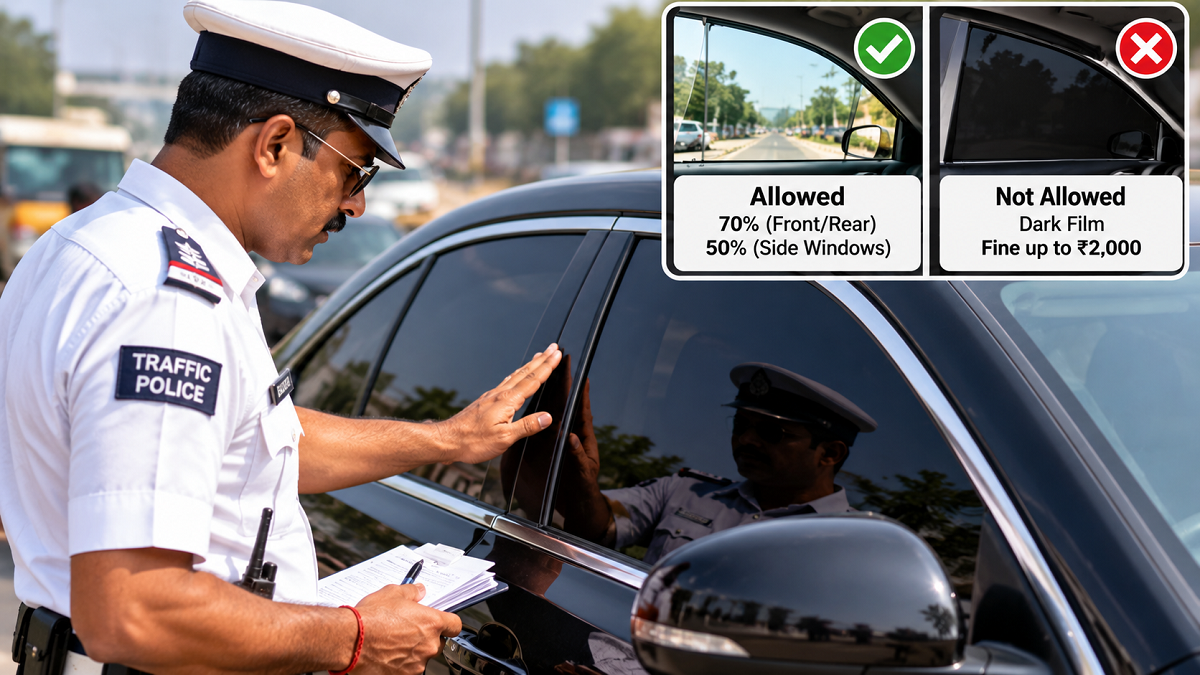
Car Window Tint Rules 2026: Many car owners in India prefer tinted windows to reduce heat, sunlight and glare, especially during the summer months. Dark window films can make a vehicle appear more stylish and may improve comfort inside the cabin. However, installing black sun film on car windows without understanding the legal restrictions could result in a traffic challan.
Indian traffic regulations establish specific visibility standards for vehicle windows, while the Supreme Court has issued important directions concerning the use of aftermarket sun films.
Drivers who violate the applicable rules may face penalties and could be required to remove prohibited films from their vehicles.
An important distinction exists between factory-fitted tinted glass and films applied to car windows after purchase. Understanding this difference can help vehicle owners avoid unnecessary fines.
Here is a detailed explanation of car window tinting rules in India, permitted light transmission levels, possible penalties and alternatives for protection against sunlight.
Are Black Films Allowed on Car Windows in India?
Under the Supreme Court's directions concerning vehicle window films, applying black or other aftermarket films to car safety glass is generally prohibited.
The restrictions are intended to maintain adequate visibility through vehicle windows and support road safety.
Some car owners mistakenly believe that applying a light-coloured or transparent film automatically makes the modification legal.
However, the legal position is more complicated.
The Supreme Court's 2012 directions in Avishek Goenka v. Union of India prohibited the use of films or other materials pasted onto vehicle safety glass, irrespective of their visible light transmission percentage.
Therefore, a film advertised as having high transparency should not automatically be considered permissible.
Vehicle owners should distinguish between the glass installed by the manufacturer and additional materials attached to that glass.
What Are the Legal Visibility Limits for Car Windows?
Indian vehicle regulations specify minimum visible light transmission requirements for safety glass.
Visible Light Transmission (VLT) refers to the percentage of visible light that can pass through a glass surface.
A higher VLT percentage means the glass allows more light to pass through.
The commonly applicable standards are:
| Car Window Type | Minimum Visible Light Transmission |
|---|---|
| Front Windshield | 70% |
| Rear Windshield | 70% |
| Side Windows | 50% |
These standards relate to vehicle safety glass that complies with the applicable requirements.
For example, a front windshield meeting the 70% VLT standard allows at least 70% of visible light to pass through it.
Similarly, side windows must satisfy the prescribed minimum visibility requirement.
Important: These percentages do not mean drivers are automatically permitted to install aftermarket films that meet the same transmission levels.
The Supreme Court's directions concerning pasted window films must also be considered.
Factory-Fitted Tinted Glass vs Aftermarket Sun Film: What Is the Difference?
One of the biggest sources of confusion among vehicle owners is the difference between manufacturer-installed tinted glass and aftermarket window films.
Factory-fitted tinted glass is manufactured with specific properties and may be installed as part of a vehicle's original equipment.
Such glass is not automatically illegal merely because it has a tinted appearance.
However, it must comply with the applicable safety and visibility standards.
Aftermarket sun film, on the other hand, is an additional layer applied to the existing glass after manufacturing.
These films may be marketed as heat-resistant, UV-protective, transparent or dark-tinted products.
Despite these marketing descriptions, an aftermarket film cannot be assumed legal simply because it allows sufficient light transmission.
Drivers should therefore avoid relying solely on assurances from accessory shops or product advertisements.
How Much Is the Fine for Using Black Film on Car Windows?
Motorists found using prohibited window films may receive a traffic challan.
The amount payable depends on the legal provision applied, the nature of the violation and the enforcement rules relevant to the jurisdiction.
Some reports discussing tinted-window violations mention penalties ranging from approximately ₹500 to ₹2,000.
However, this should not be treated as a fixed nationwide penalty applicable to every case.
Actual penalties may differ depending on the circumstances and the statutory provisions used by enforcement authorities.
Traffic police may also require prohibited window films to be removed.
Drivers should check the applicable challan provisions with their local traffic police or through official government traffic enforcement channels.
Can Traffic Police Remove Black Film From a Car?
Traffic enforcement authorities may take action against vehicles found using prohibited window films.
Depending on the circumstances and applicable enforcement procedures, motorists may be directed to remove the film.
In some cases, the vehicle owner may need to have the prohibited material removed before the vehicle complies with the relevant requirements.
Drivers should cooperate with lawful enforcement instructions and obtain proper documentation for any penalty imposed.
Removing an illegal film can also help prevent repeated violations.
Why Are Dark Car Window Films Restricted?
Window tinting restrictions are linked to visibility, enforcement and road safety considerations.
Very dark windows can reduce visibility into and out of a vehicle, particularly under low-light conditions.
This may affect a driver's ability to observe surrounding traffic, pedestrians and road hazards.
Dark films can also make it more difficult for traffic enforcement personnel to see inside a vehicle when necessary.
The Supreme Court's directions were issued in the context of safety and security concerns.
Although some window films are promoted for reducing heat and ultraviolet exposure, those potential benefits do not automatically override applicable legal restrictions.
Are Transparent or Heat-Resistant Films Legal?
Some automobile accessory businesses sell transparent heat-control films and claim that these products comply with visibility standards.
However, customers should exercise caution.
A film that provides 70% or 90% light transmission is not necessarily exempt from the restrictions applicable to aftermarket materials pasted onto vehicle safety glass.
The legal assessment depends on the applicable court directions, vehicle regulations and any subsequent binding clarification.
Before installing any such product, vehicle owners should obtain reliable confirmation that the specific modification is legally permitted.
A seller's verbal assurance should not be considered sufficient evidence of compliance.
How Can Car Owners Reduce Heat Without Breaking Tinting Rules?
Drivers who want to protect themselves from intense sunlight have several alternatives that do not necessarily involve applying films to vehicle windows.
Using the vehicle's air-conditioning system effectively can improve cabin comfort during hot weather.
Parking in shaded areas and using a windshield sunshade while the vehicle is parked can also help reduce interior temperatures.
Car owners may additionally consider manufacturer-approved glazing options that comply with the relevant safety standards.
Any accessories used while driving should not obstruct the driver's view or violate applicable traffic regulations.
Choosing compliant products is generally safer than installing dark aftermarket films that may attract enforcement action.
Does the 70% and 50% Rule Apply to Every Car?
The prescribed visibility standards are relevant to vehicle safety glass, but the exact requirements can depend on the vehicle category and applicable regulatory provisions.
For ordinary passenger cars, the commonly cited minimum standards are 70% VLT for front and rear windshields and 50% for side windows.
However, vehicle owners should not interpret these figures as permission to modify their existing glass with additional films.
The safest approach is to retain compliant original equipment or use only modifications clearly permitted under applicable law.
What Should You Do If Your Car Already Has Black Film?
If your vehicle has aftermarket black film installed, it is advisable to review whether the modification complies with the applicable rules.
If the film is prohibited, arranging for its removal can help avoid traffic penalties.
Vehicle owners should also be cautious when purchasing used cars, as previous owners may have installed tinted films without considering legal restrictions.
Checking window glass during a used-car inspection can help identify potentially non-compliant modifications.
Car Window Film Rules 2026: What Drivers Should Remember
Indian vehicle regulations prescribe minimum visibility standards of 70% for front and rear windshields and 50% for side windows.
However, these figures should not be confused with permission to install aftermarket sun films.
The Supreme Court's directions have generally prohibited additional films pasted onto vehicle safety glass, even where sellers claim that the products meet specified transparency levels.
Factory-fitted tinted glass that complies with the relevant standards is treated differently from aftermarket films.
Car owners who install prohibited window films risk traffic penalties and may be required to remove the material.
Before modifying a vehicle's windows, drivers should confirm the applicable legal requirements and avoid relying on unverified claims made by accessory sellers.
Disclaimer: This article explains the general legal framework governing vehicle window tinting in India. Fine amounts and enforcement procedures may vary depending on the applicable provisions and circumstances. Vehicle owners should verify current requirements with the relevant transport or traffic authorities.