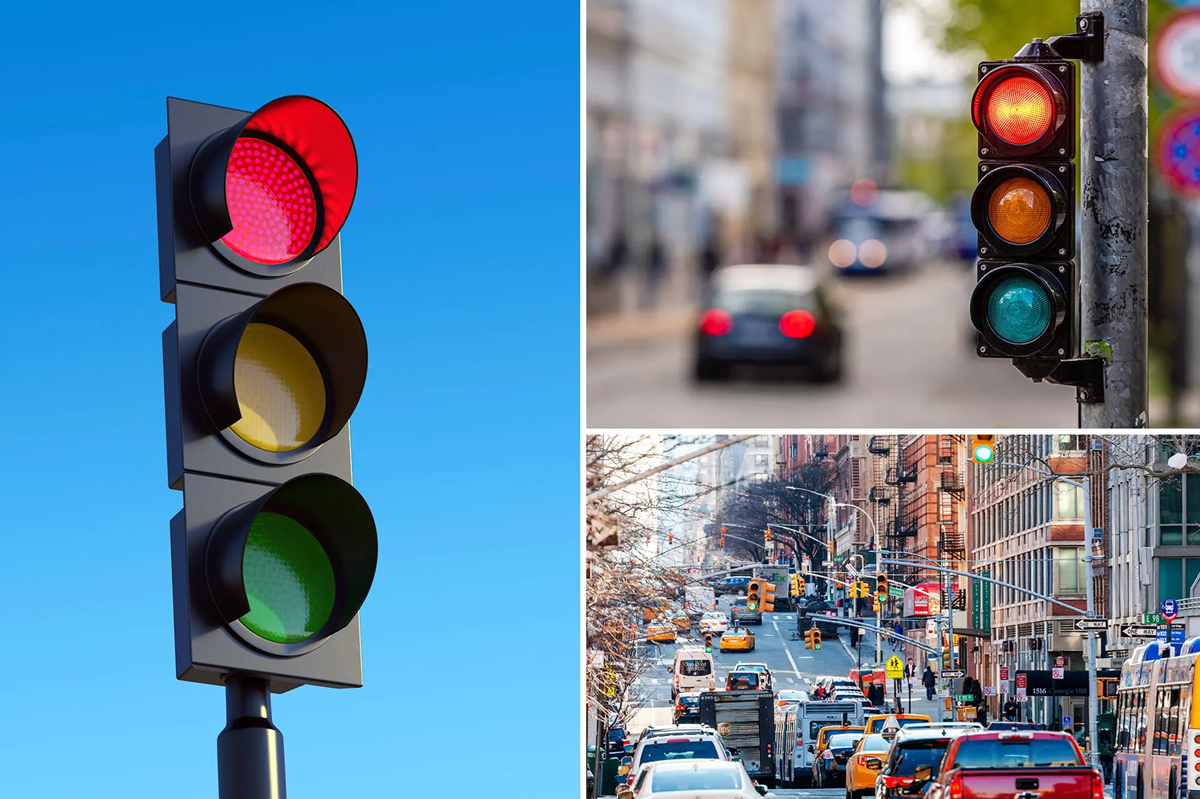
Traffic Signal: Older traffic signals used timers. This meant that after a certain period of time, the red light would turn green and the green light would turn red.
Can traffic signals be hacked?
Traffic Signal: Traffic signals play a crucial role in managing traffic on the roads of major cities. The red, yellow, and green lights on the signals indicate when vehicles coming from a particular direction should stop and when they should proceed. But have you ever considered that these traffic signals can also be hacked? With the advancement of technology, most things today are digitally connected, which has also increased the problem of cyberattacks. Let's find out whether traffic signals can really be hacked or is this a myth.
How does a traffic signal work?
Actually, old traffic signals used to operate on timers. That is, after a certain time, the red light would turn green and the green light would turn red. But now, in this age of technology, the signals installed in major cities have become much more advanced than before.
In many locations, signals are connected to cameras, sensors, traffic control centers, and networks. This allows signal timings to be adjusted based on the number of vehicles on the road. This network connectivity makes cybersecurity essential for these signals.
Can traffic signals be hacked?
For your information, it's possible to hack traffic signals under certain conditions. If a traffic control system's network is not secure, vulnerable software is used, or a cybercriminal gains access to the system, they can control the signals and manipulate them as per their own wishes.
However, this doesn't mean that anyone can easily hack traffic signals using their mobile phone or laptop. Advanced traffic systems incorporate multiple security layers, including network control and surveillance systems.
What dangers can hacking pose?
It's worth noting that a cyberattack on a traffic management system could pose significant risks. For example, traffic signal timing could be incorrect, traffic flow at an intersection could be disrupted, or coordination between multiple signals could be disrupted.
In such a situation, traffic congestion increases, and the risk of accidents also increases. Furthermore, if traffic cameras and sensor systems malfunction, the administration will not be able to obtain accurate real-time traffic information.