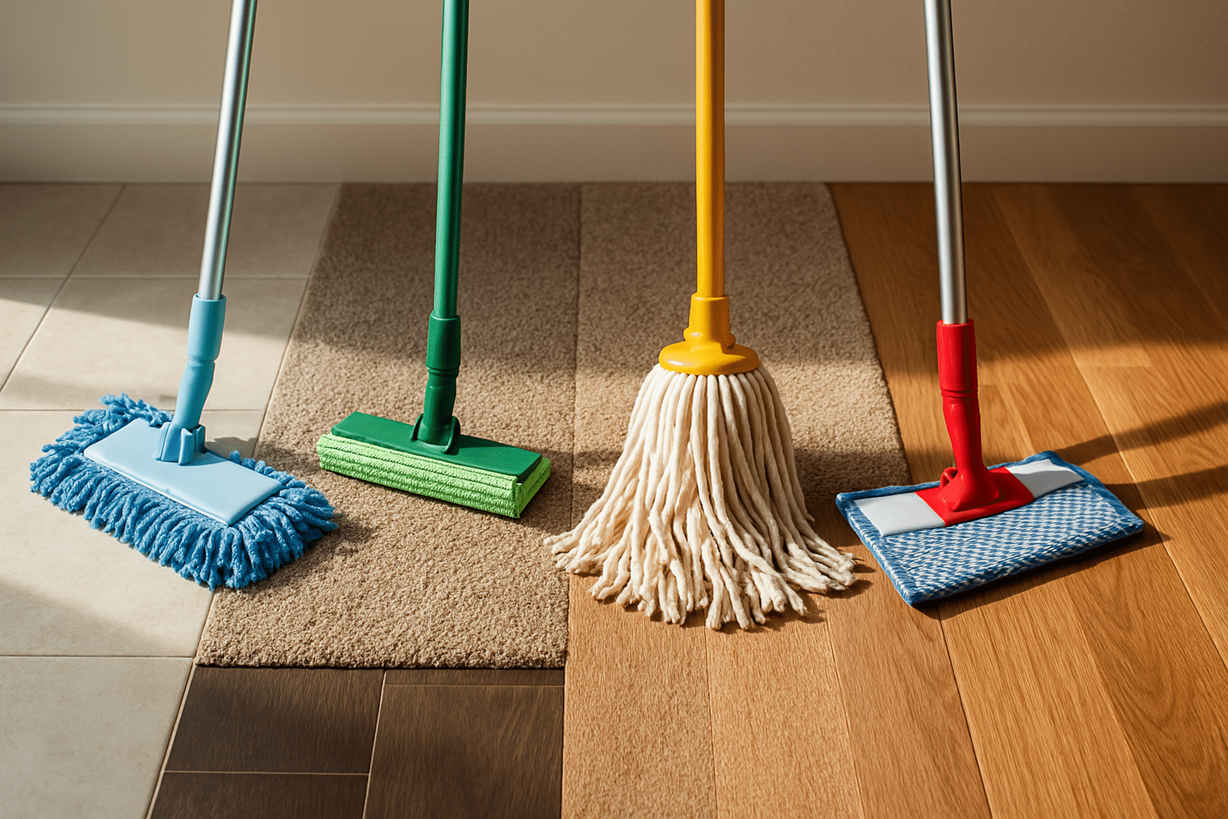
Types of Mops: According to cleaning experts, before purchasing a mop, you should first understand the type of flooring in your home. Choosing a mop based on the floor type results in better cleaning.
How to choose the right mop for your home floor
How To Choose The Right Mop For Floors: Every day, shoes, footprints, pet claw marks, and dirt accumulate on your floors. Therefore, choosing the right mop is crucial to keeping your floors clean. There are many options available on the market, including string mops, flat mops, spray mops, and steam mops. However, not every mop is suitable for every type of floor. Using the wrong mop or excessive water can damage wood, laminate, and other sensitive floors.
According to cleaning experts, before purchasing a mop, you should first understand the type of flooring in your home. Choosing a mop based on your flooring ensures better cleaning and long-term protection. Let's explore which mop is best for each type of floor.
String or flat mop: Good choice for a variety of floor types
The traditional string or flat mop, paired with a bucket, is still considered a great tool for deep cleaning. It uses water and a floor-safe cleaning solution. The mop loosens dirt and then absorbs it, allowing for thorough cleaning. Frequent rinsing and thorough wringing of the mop is essential during cleaning. This mop can be used on tiles, vinyl, linoleum, sealed stone, sealed hardwood, and concrete floors. Its main advantage is that you can control the amount of water and cleaning product used to suit your needs.
When using it on wood or stone floors, wring the mop out well and keep it only slightly damp. Too much water can damage the floor. It can also be helpful for cleaning textured floors and corners.
Its advantages and disadvantages
Traditional mops are economical and easy to replace. They're a good choice for stubborn dirt and deep cleaning. You can also use a ready-made or homemade cleaning solution of your choice. However, this requires more time and effort. Water needs to be changed regularly, as dirty water can re-seal dirt. Furthermore, the floor can take longer to dry. If string mops aren't properly washed and dried after use, they can harbor odors and bacteria.
Spray mop: Great for quick everyday cleaning
If you need a quick daily floor cleaning, a spray mop is a good option. It has a small, refillable reservoir attached to the handle. Pressing the trigger delivers a light spray to the floor as needed, and the microfiber pad provides a quick clean. Spray mops are useful for hardwood, laminate, luxury vinyl plank (LVP), engineered wood, and tiles. They're especially suitable for floors that could be damaged by excessive water.
It eliminates the need for a bucket and dries floors quickly. Using less water, it's convenient for everyday cleaning. However, it's less effective at removing stubborn or heavy dirt. Its small reservoir may require frequent refills in a large home. Models that use disposable pads and cartridges can increase costs and waste.
Steam Mop: For deep cleaning of tiles and sealed surfaces
A steam mop heats water and turns it into steam. This steam travels through a microfiber cloth to the floor, helping to loosen dirt. This usually eliminates the need for buckets and harsh chemicals. Steam mops can be good for cleaning sealed ceramic and porcelain tiles, sealed concrete, sealed stone, some sealed vinyl surfaces, and grout. They're also useful for removing stubborn dirt in areas like kitchens and bathrooms.
However, it's not suitable for all floors. Steam mops can damage hardwood, engineered wood, laminate, and waxed floors. Heat and moisture can cause wood to swell, laminate to warp, and some flooring adhesives to weaken. Therefore, check the floor manufacturer's guidelines before use.
Steam mops use little or no chemicals, and their washable pads reduce waste. However, they can be more expensive than other options, require electricity, and require a wait for heating before use.
Should you keep more than one mop at home?
If you have different floor types in your home, it can be useful to have more than one mop. Use a spray mop for everyday cleaning, a traditional mop for deep cleaning, and a steam mop for properly sealed surfaces.