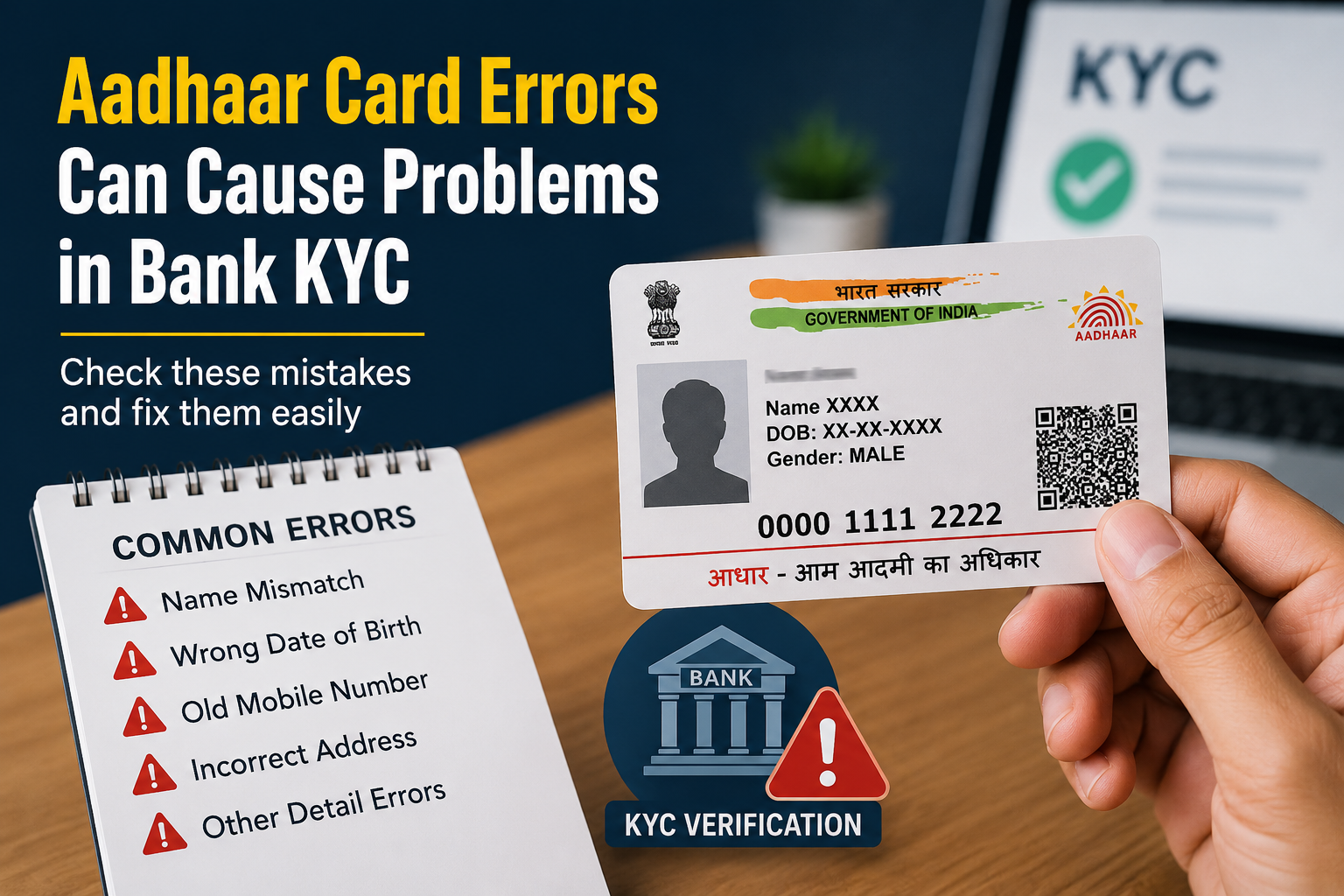
Aadhaar has become one of the most important identity documents for Indian citizens, playing a crucial role in banking, government schemes, investments, and digital verification processes. However, many people continue using their Aadhaar cards for years without checking whether the information printed on them is accurate and up to date.
While minor mistakes may appear harmless, they can create serious complications when banks initiate Know Your Customer (KYC) verification, process loan applications, or conduct identity checks. Experts advise Aadhaar holders to regularly review their details to avoid unnecessary delays and hassles in the future.
Why Aadhaar Accuracy Matters
Most individuals only look at their Aadhaar card when they are required to complete KYC formalities, open a new bank account, update personal records, or apply for government benefits. As a result, small discrepancies often remain unnoticed for a long time.
Problems usually arise when financial institutions compare Aadhaar details with their existing records. Any mismatch can trigger verification issues, leading to delays in account-related services or requests for additional documentation.
Conducting a simple review of your Aadhaar information today could save considerable time and effort later.
Name Differences Are Among the Most Common Issues
One of the biggest reasons for KYC complications is inconsistency in names across documents.
For example, your Aadhaar may display your full name, while your bank account contains only initials. In some cases, spelling variations, omitted middle names, or different surname formats can create discrepancies.
Although these differences may seem minor, banks and financial institutions often verify information digitally. Even a small mismatch can raise red flags during verification processes.
Many customers become aware of such issues only when applying for loans, updating account information, or completing mandatory KYC requirements.
Outdated Mobile Numbers Can Block Important Services
Aadhaar-linked mobile numbers play a critical role in digital authentication. Most online Aadhaar services require One-Time Passwords (OTPs) sent to the registered mobile number.
Whether you need to download your Aadhaar, perform e-KYC, update information, or verify your identity, OTP authentication is often mandatory.
The problem arises when users change their mobile numbers but fail to update Aadhaar records. Everything may seem normal until an important verification request arrives and the OTP is delivered to an inactive number.
This situation can delay financial transactions, service requests, and document updates.
Incorrect Date of Birth and Personal Information Can Cause Verification Delays
Another frequently overlooked issue involves incorrect personal details such as date of birth, gender, or other demographic information.
If your Aadhaar card contains a birth date that differs from the one recorded in your PAN card, bank account, insurance policy, or investment portfolio, verification checks may take longer than expected.
Such discrepancies can become problematic during account updates, financial product applications, and regulatory compliance procedures.
Keeping personal information consistent across all official documents helps ensure smoother verification and approval processes.
Don’t Overlook Address Changes
Address information is another area where many Aadhaar holders fail to make timely updates.
People frequently relocate due to employment, education, rental changes, or property purchases. However, Aadhaar records often continue showing old addresses for several years.
While this may not create immediate difficulties, banks may request updated proof of residence during periodic KYC renewals. An outdated Aadhaar address can complicate the process and require additional documentation.
Updating your current address can help avoid future inconveniences.
Steps to Correct Aadhaar Information
If you identify any errors in your Aadhaar details, the correction process is straightforward.
- Visit the nearest Aadhaar Enrolment or Update Centre.
- Carry valid supporting documents related to the correction.
- Fill out the Aadhaar update request form.
- Complete biometric authentication if required.
- Pay the applicable update fee.
- Collect and preserve the acknowledgement receipt for future tracking.
Aadhaar Details You Should Verify Immediately
Before your next KYC verification, ensure the following information is accurate:
- Name spelling and format
- Date of birth
- Gender details
- Registered mobile number
- Current residential address
- Aadhaar linkage with your bank account
Final Thoughts
Many Aadhaar-related issues remain hidden until a bank requests fresh KYC documentation or a financial transaction requires identity verification. A few minutes spent reviewing your Aadhaar details today can help prevent account-related disruptions, verification delays, and unnecessary paperwork in the future.
As digital authentication becomes increasingly important across banking and government services, maintaining accurate Aadhaar information is no longer optional—it is essential for smooth access to financial and public services.