
TRAVEL
Indian Railways to Upgrade Ticket Booking System: New PRS to Handle 1.5 Lakh Reservations Per Minute
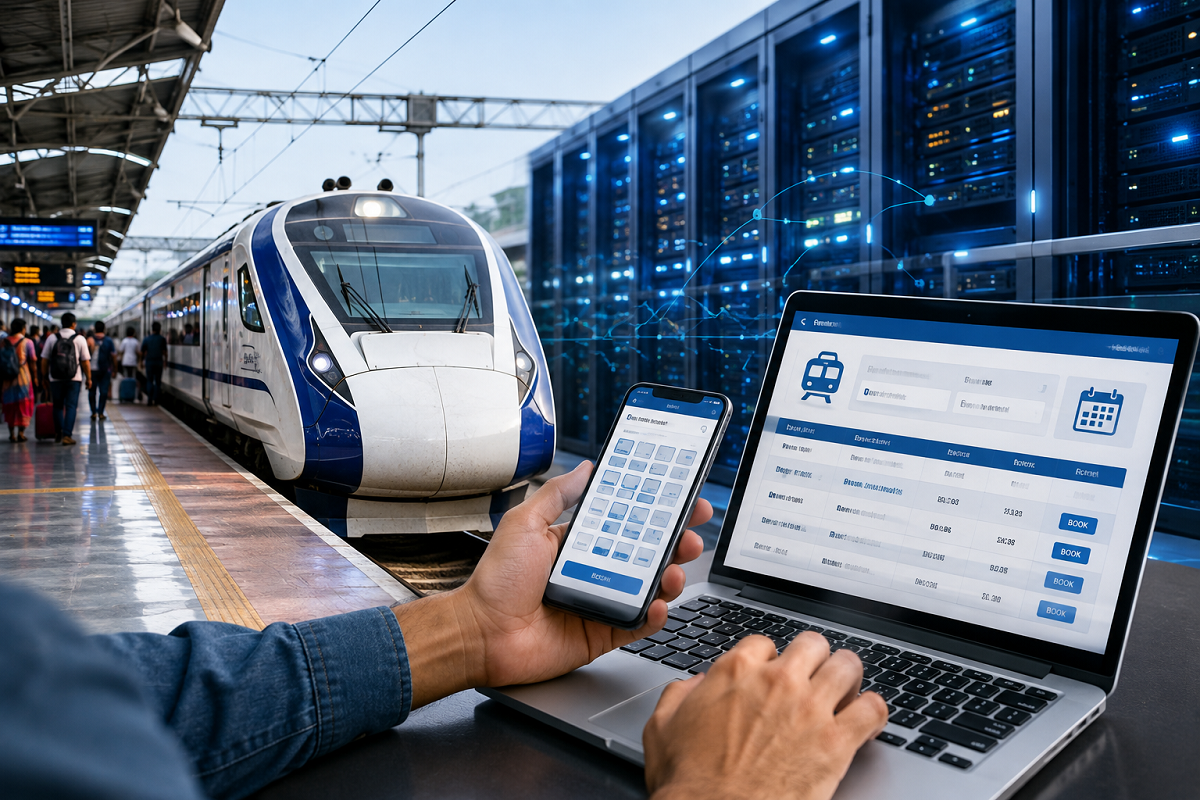
Indian Railways New PRS System: Train ticket booking in India is set for a major technology overhaul as Indian Railways begins upgrading its nearly four-decade-old Passenger Reservation System (PRS). The next-generation platform is being designed to make ticket reservations faster, improve handling of heavy traffic, and provide passengers with a smoother experience while checking seat availability, RAC status, waiting lists and other reservation-related information.
The existing PRS has been at the heart of railway ticket reservations for decades. Introduced in 1986, it replaced the earlier manual booking system and gradually evolved to support online and mobile reservations.
Now, with the overwhelming majority of reserved railway tickets being booked digitally, Indian Railways is moving towards a more powerful system capable of processing significantly higher volumes of bookings and passenger enquiries.
The migration is being carried out in stages rather than through an overnight replacement of the existing system.
New Railway PRS Could Process Over 1.5 Lakh Bookings Every Minute
The biggest improvement expected from the upgraded Passenger Reservation System is its processing capacity.
According to the information shared by the Railways, the existing PRS can handle roughly 32,000 ticket bookings per minute.
The upgraded platform is expected to process more than 1.5 lakh reservations every minute.
That represents a substantial increase and could become particularly useful during periods of exceptionally high demand, including Tatkal ticket opening hours and major festival travel seasons.
Here is a comparison of the planned capacity:
| Service | Existing PRS | New PRS |
|---|---|---|
| Ticket booking capacity | Around 32,000 per minute | More than 1.5 lakh per minute |
| Passenger enquiries | Around 4 lakh per minute | More than 40 lakh per minute |
The sharp jump in enquiry-processing capacity is also important because millions of users simultaneously check train schedules, berth availability, PNR details and reservation status.
Why Indian Railways Is Replacing Its Old Reservation System
The current PRS has served Indian Railways for around 40 years and has undergone multiple upgrades during that period.
However, railway ticketing has changed dramatically since the system was first introduced.
Booking has increasingly shifted from physical railway reservation counters to websites and mobile applications. As a result, the system now has to deal with massive spikes in online traffic that were never envisaged when the original infrastructure was developed.
The new platform is being designed with better scalability, flexibility and reliability so that it can accommodate further growth in digital ticket booking over the coming years.
Tatkal Ticket Booking Could Benefit From Higher Capacity
Tatkal booking is one of the areas where passengers may notice the biggest difference.
When the Tatkal window opens, a very large number of travellers attempt to reserve limited seats at almost the same time. This sudden traffic surge can put substantial pressure on booking systems.
With the new PRS capable of handling considerably more transactions per minute, Indian Railways expects the reservation infrastructure to deal more efficiently with these peak-load situations.
That does not mean every passenger trying for a Tatkal ticket will automatically receive a confirmed seat. Availability will still depend on the number of seats and demand for a particular train.
However, a faster backend system could reduce delays caused purely by technology and processing capacity.
IRCTC Beta Platform Is Part of the Wider Technology Shift
The transition towards the new reservation ecosystem has already begun.
According to railway officials, the recently introduced IRCTC beta platform forms part of the broader modernisation exercise.
Rather than shutting down the existing PRS and moving all users to a new platform at once, Indian Railways plans to test the upgraded architecture under different traffic conditions.
This load-based approach allows the Railways to evaluate how the new technology performs when the number of simultaneous users rises.
Once the upgraded system demonstrates stability at different traffic levels, a larger share of reservation activity can gradually be moved to the new infrastructure.
Booking Speed Has Already Shown Improvement
IRCTC has reported improvement in booking speed following the introduction of its beta website on July 15.
According to the figures cited in the source, comparing different halves of the month showed an increase of more than 5% in Tatkal bookings completed within the first three minutes.
Bookings completed within five minutes reportedly improved by around 3%, while those completed within 30 minutes increased by more than 2%.
These improvements are significant because even small reductions in processing time can matter when thousands of passengers compete for seats in high-demand trains.
What Exactly Does the Passenger Reservation System Do?
PRS is much more than a ticket-booking engine.
It is the central computerised infrastructure used by Indian Railways for handling a wide range of reserved passenger services.
The system supports ticket booking, modification and cancellation. It also manages berth allocation, Reservation Against Cancellation (RAC), waiting lists, reservation charts and passenger enquiries.
Railway reservation counters, online booking platforms and other passenger interfaces rely on this central infrastructure to access and update reservation data.
Any major improvement to PRS therefore affects almost every stage of the reserved train-ticket journey.
How PRS Changed Railway Reservations in India
Before computerisation, railway reservations relied heavily on manual registers and individual booking counters.
The introduction of PRS transformed this process by creating an electronic reservation network.
As computerisation expanded across the railway network, passengers gradually became able to book seats across different regions rather than depending only on local reservation records.
The system later evolved through the CONCERT network—Country-wide Network for Computerised Enhanced Reservation and Ticketing—which helped connect reservation facilities across India.
Over time, internet and smartphone booking became increasingly important.
Today, passengers can reserve tickets through railway counters, the IRCTC website, mobile applications and other authorised railway digital platforms.
Nearly 89% of Reserved Tickets Are Now Booked Online
The scale of India's shift towards digital railway booking can be seen in recent reservation figures.
Between June 2025 and June 2026, passengers booked approximately 65.08 crore reserved tickets through PRS.
Of these, around 57.90 crore tickets were booked online.
That means close to 89% of all reserved tickets during this period were purchased digitally.
The numbers explain why increasing backend capacity has become so important.
When almost nine out of every 10 reserved tickets are booked through online channels, even a short disruption or slowdown can affect an enormous number of passengers.
Seat Availability and Waiting-List Enquiries Could Become Faster
The upgraded PRS is expected to improve not only booking speeds but also the handling of passenger enquiries.
Travellers frequently use railway platforms to check:
- Seat and berth availability
- Waiting-list position
- RAC status
- PNR updates
- Train reservation information
- Reservation charts
- Booking and cancellation details
The new infrastructure is expected to handle more than 40 lakh such enquiries every minute, compared with around four lakh per minute under the existing system.
This could improve responsiveness during periods when millions of passengers are simultaneously checking train and reservation information.
Multilingual and More User-Friendly Interface Planned
Passenger-facing improvements are also expected to form an important part of the next-generation PRS.
Indian Railways plans to provide a more user-friendly interface while expanding support for multiple languages.
A multilingual reservation environment could make online railway services easier to use for passengers who are more comfortable accessing information in regional languages.
The technology is also being developed with greater flexibility so that additional services and future upgrades can be introduced more easily.
Railway's Digital Ecosystem Is Expanding Beyond PRS
The PRS upgrade is part of a wider digital transformation across Indian Railways.
The Centre for Railway Information Systems (CRIS) has developed and supported several passenger-focused digital services covering ticketing, train information, grievances and other railway requirements.
These platforms include services such as UTS, NTES, RailOne, RailMadad and other railway applications.
Better integration between these services and the upgraded reservation infrastructure could improve the overall passenger experience.
Instead of treating each application as an independent platform, Indian Railways is increasingly moving towards a more connected digital ecosystem.
Migration Started in August, But Full Transition Will Be Gradual
Indian Railways had earlier indicated that work on upgrading the four-decade-old PRS would begin in phases from August.
The transition is now moving ahead gradually.
Railway officials have emphasised that the old reservation platform will not simply be switched off in one step.
The new system will first be tested with different levels of passenger traffic. Its performance, stability and ability to handle large booking loads will be monitored before more traffic is transferred from the older architecture.
This phased approach is intended to minimise disruption because railway reservations are a critical national service used around the clock.
What the New PRS Means for Train Passengers
For passengers, the most visible benefits could be faster booking, quicker responses to seat-availability searches and better stability during heavy traffic.
The change may be particularly noticeable during Tatkal hours, festival seasons and other periods when millions of users try to access railway services at once.
However, faster technology does not create additional seats. Confirmation will continue to depend on train capacity and passenger demand.
The new system's main role will be to ensure that the technology itself is better equipped to process the huge volume of booking attempts and enquiries.
From a 40-Year-Old Platform to a Next-Generation Railway Booking System
The original Passenger Reservation System represented a major technological revolution when it replaced manual reservation processes in the 1980s.
Four decades later, Indian Railways is preparing for another major shift.
With the new PRS expected to support more than 1.5 lakh ticket bookings and 40 lakh passenger enquiries every minute, the reservation network is being prepared for an era in which digital booking dominates railway travel.
If the phased migration performs as planned, passengers could see a faster, more stable and easier-to-use ticketing ecosystem across websites, apps and reservation services.
For the millions of people who depend on Indian Railways every day, the biggest change may ultimately be simple: less time waiting for the booking system to respond and a smoother experience when trying to reserve a train ticket.