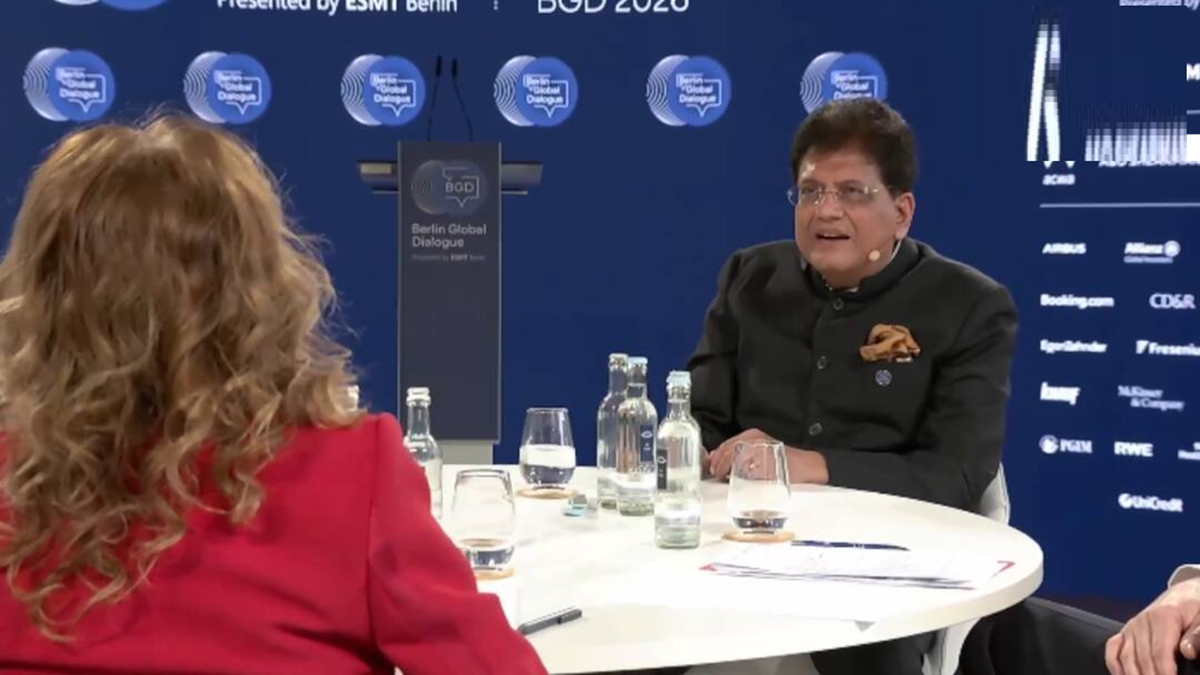
Union Minister Piyush Goyal, while questioning the historical responsibility of developed countries for climate change at the Berlin Global Dialogue, said that developed countries have played a big role in creating the climate crisis.
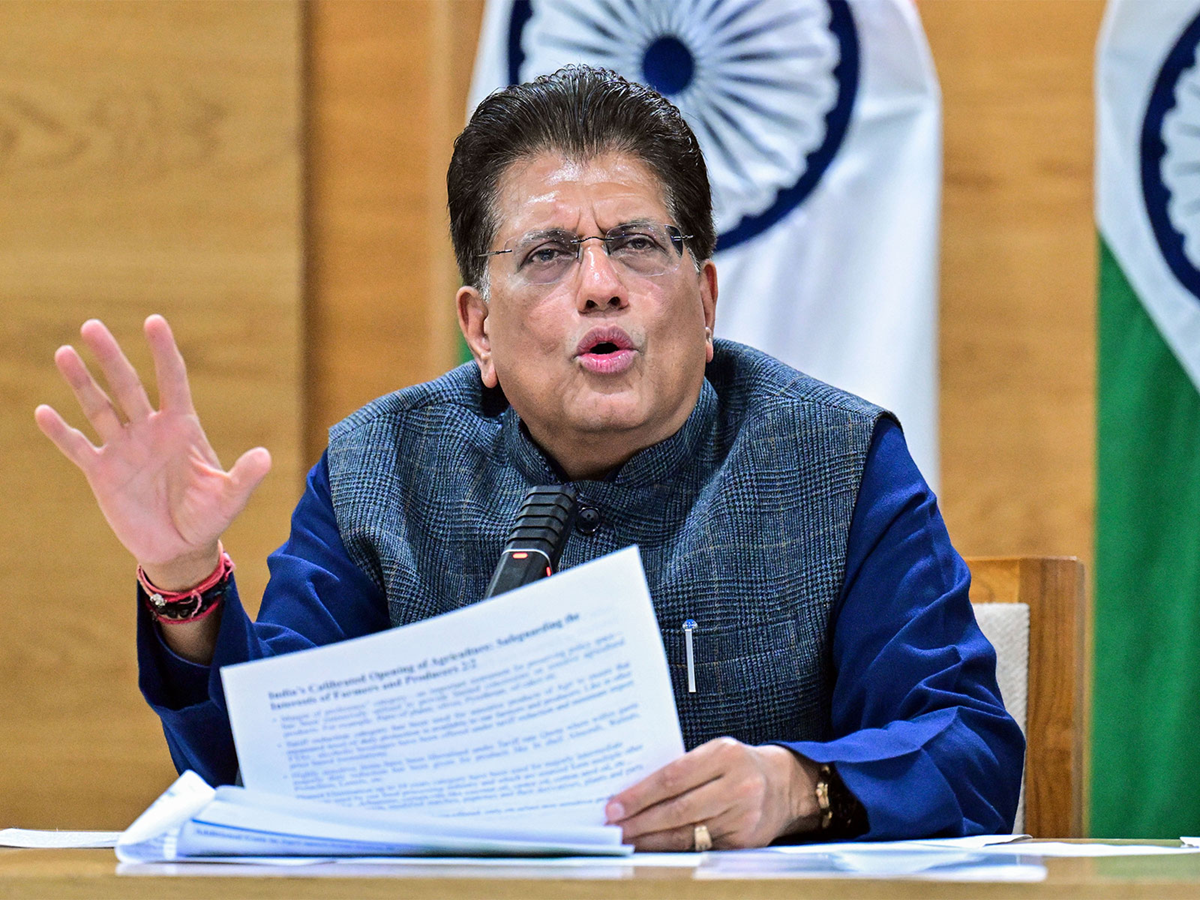
Union Minister Piyush Goyal held a mirror to European countries at the Berlin Global Dialogue.
India's Commerce and Industry Minister Piyush Goyal questioned Europe's double standards on climate change, criticizing developed countries. He said that countries that spent decades pursuing economic development activities that harmed the climate are now burdening developing countries with additional carbon emissions-related costs and trade restrictions.
Goyal asked directly, "Who is primarily responsible for this problem? Where did the ozone layer get damaged? Who released so much carbon into the atmosphere? You created this problem."
Developed countries should accept their historical responsibility.
Speaking at the Berlin Global Dialogue on Thursday, Goyal said that developed countries must accept their historical responsibility for tackling climate change. Promises of financial and technical assistance to developing countries have not been adequately fulfilled. Therefore, imposing additional costs related to carbon emissions on them is unfair. He also questioned the European Union's Carbon Border Adjustment Mechanism (CBAM) and other trade restrictions. He argued that these could increase the cost of production in Europe, increase the cost of living for ordinary people, and weaken its industries' competitiveness in the global market.
$100 billion in aid promised, but needs remain unmet
Goyal raised the issue of developed countries' commitment to provide $100 billion in climate finance annually to developing countries. He said that rich countries have long benefited from climate-damaging economic activities. Therefore, while shouldering their responsibility to address climate change, they should also support developing countries and vulnerable island nations.
Goyal said, "Only $100 billion annually. That was the commitment." Expressing dissatisfaction with this aid, he said, "Even after 11 years, we haven't received a single penny of it. These are all just promises."
The commitment by developed countries to raise $100 billion annually was made at the Copenhagen Climate Conference in 2009. The deadline for this was set for 2020, which was later extended to 2025. He said that developed countries have not been able to meet the needs of less developed countries and provide the required support in their efforts to reduce carbon emissions.
CBAM will only increase the economic burden on Europe
Taking aim at Europe's trade policy, Goyal said that carbon-related tariffs and other restrictions could increase costs for European industries. "You are imposing CBAM on yourselves," he said. "You are imposing a 50 percent import duty on steel brought into your country. You are inviting trouble. This will increase the cost of living in your country."
However, CBAM and the 50 percent steel import duty are different measures. CBAM is not a uniformly applied 50 percent duty. This EU mechanism determines the cost based on the carbon emissions of covered imported products. According to the European Commission, its purpose is to prevent carbon leakage, that is, to prevent production from shifting to countries with less stringent emissions regulations due to stricter climate regulations. The CBAM finalization mechanism came into effect on January 1, 2026.
Goyal said that Europe is constantly adding new regulations, burdening its industries. He said, "We've lost count. You're constantly adding regulations, burdening your industries, and making yourself less competitive."
The impact of costly materials reaching the common people
Goyal warned that rising steel, aluminum, and cement costs will also impact infrastructure projects in Europe. These materials are used in the construction of ports, airports, highways, expressways, power and water pipelines. Their increased prices could increase construction costs, ultimately impacting both individuals and businesses.
He also warned about the potential consequences of imposing unilateral sanctions on trading partners. According to Goyal, if one country restricts another's trade by enacting new regulations, the other country may retaliate by taking steps that harm the first country's businesses. He said that such policies could make it difficult for European companies to compete in the global market. According to him, Europe's automobile industry is already facing challenges.
India's needs and the question of historical responsibility
Goyal said that when determining climate responsibilities, it is important to take into account countries' population, economic prosperity, and historical emissions. India has to meet the energy, food, and security needs of 1.4 billion people. He said, "I have to meet the needs of 1.4 billion people. I have to meet their energy and food needs and also ensure that my country remains safe."
He also mentioned India's clean energy efforts and said, despite all this, our clean energy programme is one of the fastest growing programmes in the world.
Emphasis on fairness in trade agreements
Regarding trade relations, Goyal said India favors agreements that leverage the strengths and competitiveness of both parties. He said, "Our agreements with all the partners we work with are fair, equitable, and balanced."