NEWS
Women Warriors Strike Back: Female Soldiers Take Lead in 'Operation Sindoor' to Avenge Pahalgam
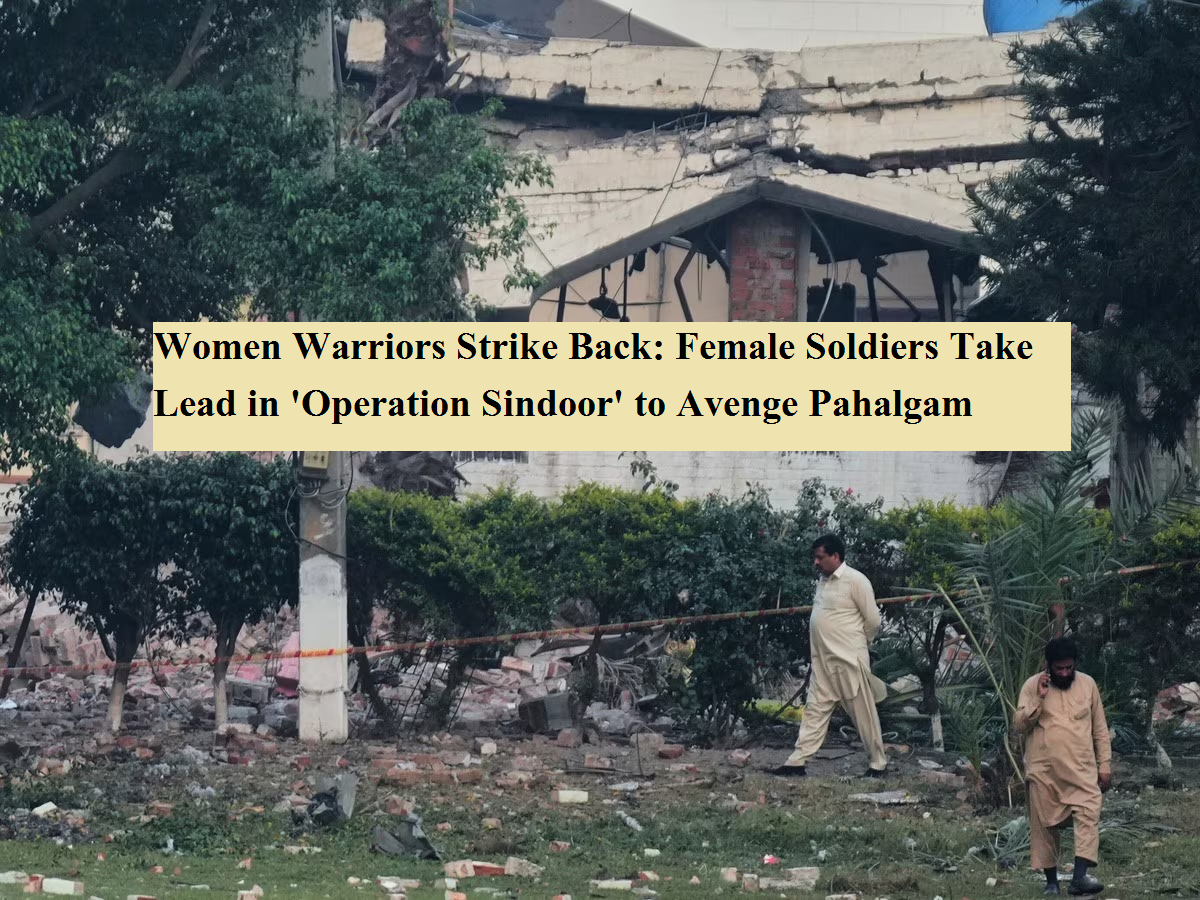
In a powerful display of India’s growing defense might and gender inclusivity, female soldiers of the Indian Armed Forces have played a crucial role in the ongoing ‘Operation Sindoor’, a high-stakes counter-terror offensive that aims to dismantle terror networks across the border. The operation has a special emotional undertone—a silent but resolute tribute to the Pahalgam martyrs, including female personnel who fell victim to cowardly terror attacks.
Nari Shakti Rises: From Mourning to Mission
The brutal terrorist ambush in Pahalgam earlier this year that claimed the lives of several Indian soldiers, including women, sparked national outrage. It also became a turning point. What followed wasn’t just a military retaliation—it was a calculated, well-coordinated, and female-led counterstrike that showed the enemy the real power of Nari Shakti (women power) in uniform.
Sources from military intelligence confirm that several female officers and jawans from specialized units have been deployed in the operational theatre of Jammu & Kashmir and forward posts near the LoC as part of Operation Sindoor. These women are not just playing supportive roles—they are leading, planning, executing, and eliminating.
Inside Operation Sindoor: The Women on the Frontline
Unlike traditional roles where female soldiers often handled logistics, communications, or support duties, Operation Sindoor marks a paradigm shift. This time, women are on the ground, guns blazing, executing high-risk reconnaissance and combat missions.
Major Ananya Singh, one of the lead operatives in the mission, reportedly led a crucial raid that eliminated three high-value terror targets in Kupwara. Another braveheart, Captain Rukhsar Ahmed, known for her linguistic skills and deep cultural understanding of Kashmir, has been vital in intelligence-gathering and civilian coordination.
These soldiers are part of a new wave of inclusion in India’s defense strategy, where talent, not gender, defines the mission role.
Why 'Sindoor'? A Symbol of Resolve and Sacrifice
Operation Sindoor isn’t just a military title. It carries symbolism—'Sindoor' (vermilion) is a sacred emblem of Indian womanhood and resilience. Naming the mission this way reflects both tribute and transformation: a tribute to the women martyred in Pahalgam, and a transformation in how the Indian military now views the role of its female warriors.
More Than a Statement—It’s Strategy
The inclusion of women in critical field roles brings unique strategic advantages. Women officers often blend more easily into civilian populations during covert ops, offer diverse tactical perspectives, and in insurgency-hit areas, earn trust from local women—helping gather intel that male officers often cannot access.
A senior Army official stated, “Our women soldiers have proven time and again that they’re as tough, if not tougher, than their male counterparts. Operation Sindoor is a milestone not just in military success, but in breaking operational stereotypes.”
Public Response and National Pride
News of women soldiers taking lead roles in Operation Sindoor has sparked massive admiration across social media platforms. Hashtags like #NariShakti, #OperationSindoor, and #WomenInUniform are trending as citizens flood timelines with tributes and applause.
Family members of the slain soldiers from Pahalgam have expressed both pride and emotional strength, seeing their daughters’ comrades avenge the blood spilled.
Looking Ahead: More Inclusive Defense Forces
Operation Sindoor has opened the door wider for greater female integration in direct combat roles. With success stories already coming in, the defense ministry is reportedly considering expanding recruitment and specialized training for women commandos, especially in insurgency-prone areas.
As Operation Sindoor marches forward, its impact goes beyond borders and bunkers. It’s rewriting the very definition of combat—where valor knows no gender, and vengeance is not just swift, but symbolic.
India’s message is loud and clear: whether it’s a bullet fired or a mission led, women are as much the face of national defense as any man in uniform. And in Pahalgam’s memory, they’ve ensured justice isn’t just served—it’s led by those once underestimated.