Smartphones have become an essential part of everyday life, making reliable charging more important than ever. Today, users generally have two convenient options—wired charging and wireless charging.
Wireless charging offers the convenience of placing a compatible smartphone on a charging pad without plugging in a cable. Wired charging, on the other hand, is generally associated with faster charging speeds and more direct power transfer.
But if your priority is maintaining your smartphone's battery health over the long term, which charging method should you choose?
The answer is not based on convenience or charging speed alone. According to the supplied information, heat generated during charging is an important factor to consider, regardless of the charging method.
Why Is Wired Charging Popular?
Wired charging transfers power directly from the charger to the smartphone through a cable.
When a good-quality and compatible charger and cable are used, comparatively less energy may be lost during the transfer, allowing the phone to charge efficiently.
Modern smartphones can support impressive charging speeds. Depending on the device, users may find charging systems rated at 67W, 80W, 100W or even higher.
However, higher wattage does not automatically mean better battery health.
Very fast charging can generate heat. If a phone repeatedly remains at an elevated temperature for extended periods, it may affect battery capacity over time.
Modern smartphones also have charging-management systems designed to control the process. For example, a phone may automatically reduce its charging speed if its internal temperature becomes too high.
Using a compatible, good-quality charger and cable is therefore important.
How Does Wireless Charging Work?
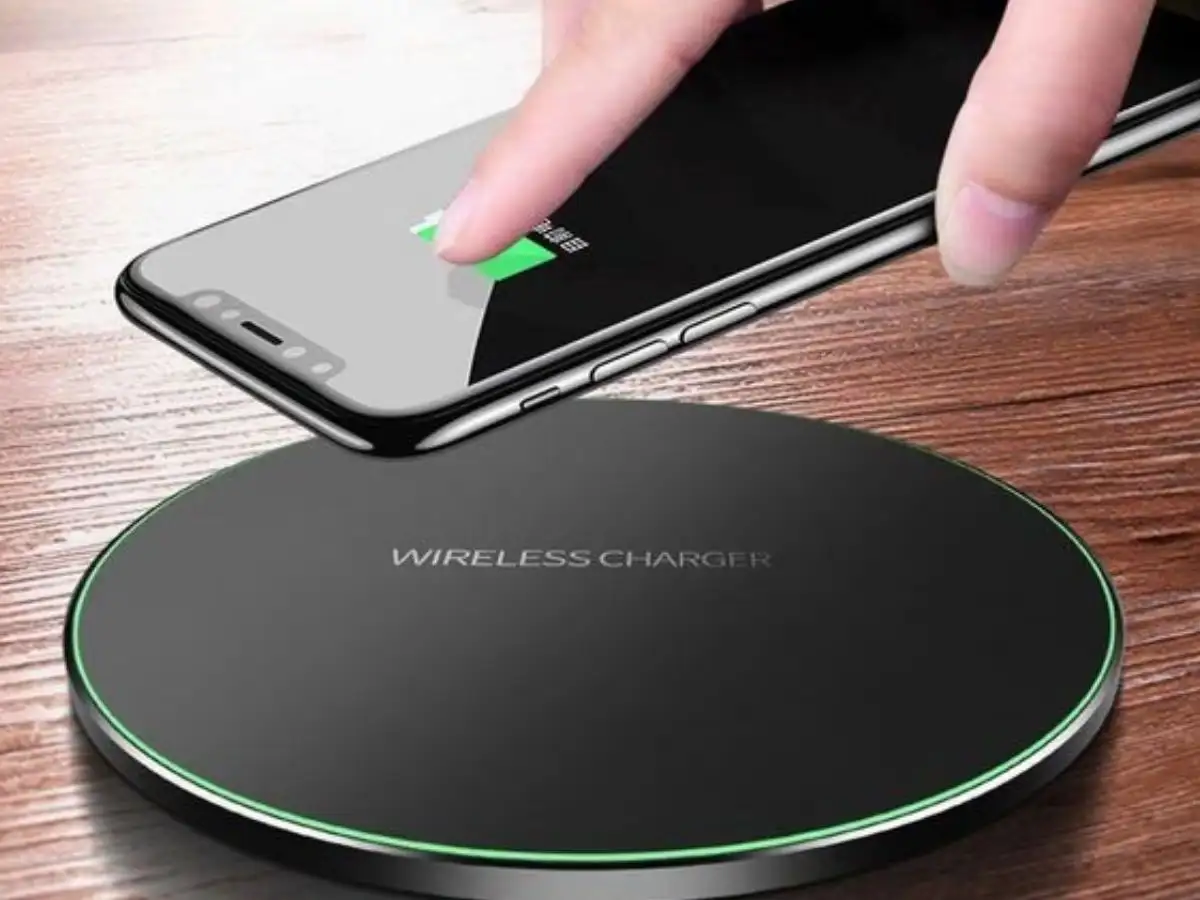
Wireless charging eliminates the need to physically connect a charging cable to the smartphone each time.
The technology described in the source uses electromagnetic induction to transfer power between the charging pad and a compatible smartphone.
Its biggest advantage is convenience. You can simply place the phone on the charging pad when you are sitting at a desk or want to top up the battery for a short period.
However, wireless charging can have an important drawback: heat generation.
Some energy can be converted into heat during the wireless power-transfer process. As a result, the phone and charging pad may become warm during charging.
Incorrect Alignment Can Increase Heat
The positioning of the smartphone on the wireless charging pad also matters.
If the phone and charging pad are not properly aligned, the charging process may become less efficient and additional heat can potentially be generated.
In some circumstances, therefore, a smartphone may become warmer during wireless charging than it does with conventional wired charging.
If you regularly use wireless charging, make sure the phone is correctly positioned on the charging pad and pay attention to excessive or unusual heating.
Why Is Heat Important for Battery Health?
Most modern smartphones use lithium-ion batteries, and prolonged exposure to excessive heat can be harmful to their long-term performance.
Over time, repeated exposure to high temperatures may contribute to a gradual reduction in the battery's usable capacity.
For this reason, users should not focus only on how quickly their smartphone reaches 100%.
It is equally important to consider how hot the device becomes while charging.
If your smartphone repeatedly becomes noticeably hot during wireless charging and remains that way for extended periods every day, the additional heat may affect battery health over time.
The same principle applies to wired charging. Extremely fast charging can also generate heat, which is why the temperature of the device remains an important consideration regardless of the charging method.
Wired vs Wireless: Which Is Better for Battery Health?
According to the supplied information, wired charging at a controlled temperature may generally be the preferable option when long-term battery health is the main priority.
Wired charging provides direct power transfer and can offer faster charging while potentially avoiding some of the additional energy loss associated with wireless charging.
Wireless charging, however, remains a useful option when convenience matters. It can be particularly practical on a desk, bedside table or whenever users want to briefly top up their phone without repeatedly connecting and disconnecting a cable.
This does not mean that wireless charging is automatically bad for a smartphone battery. The main concern highlighted in the source is excessive and repeated heat generation.
The Charger You Use Also Matters
Regardless of whether you choose wired or wireless charging, use equipment that is suitable for your smartphone.
A high-wattage charger does not automatically force every phone to charge at that maximum speed. Charging performance depends on the device's supported charging system and how it manages power and temperature.
For long-term battery care, the practical approach is to use a compatible, good-quality charger, avoid excessive heat and pay attention if the phone regularly becomes unusually hot during charging.
Ultimately, wired charging may have an advantage for users focused on efficient power transfer and battery temperature, while wireless charging wins on convenience. The better choice depends on how you charge your phone and, most importantly, how effectively heat is controlled during the process.