Specific Phobia: Fear is one of the body's fastest responses. When a person sees something their brain perceives as a potential threat, the amygdala can become immediately activated.
Why do we feel scared when we see a lizard?
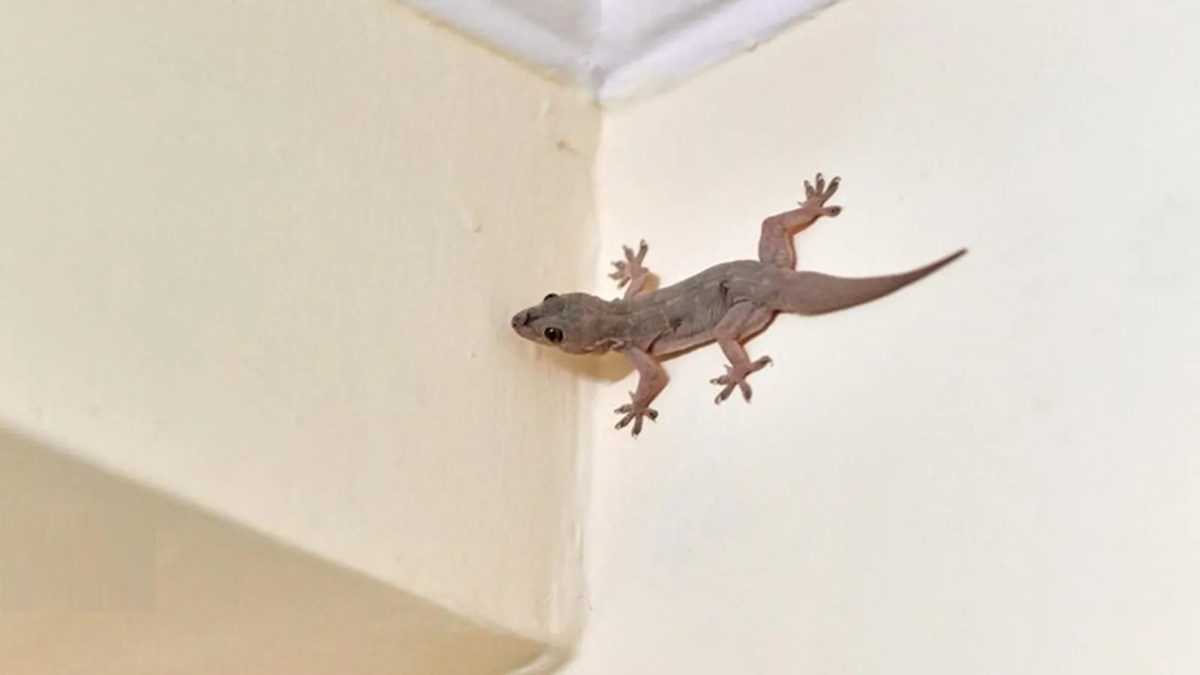
Why Are People Scared Of Lizards: If a lizard is suddenly seen running on the wall of the house, some people just move on, but for many people, their heart starts beating faster, they start sweating, and they feel like running away immediately. This kind of fear regarding lizards is seen in many people. Especially when a lizard suddenly appears in the house, many girls also get scared and start screaming or running away from there. But why does this happen when the lizards seen in ordinary houses do not pose any major threat to most people?
According to psychology, fear of something isn't simply a function of its danger. How our brain perceives a threat also plays a significant role. Fear of lizards may be a similar response.
Why does the body react with fear upon seeing a lizard?
Fear is one of the body's fastest reactions. When a person perceives something that their brain perceives as a potential threat, the amygdala can immediately activate. This is the part of the brain that plays a key role in processing emotions. This can then trigger the body's fight-or-flight response—to either fight or escape the danger.
A similar phenomenon can occur in someone with an intense fear of lizards. Stress hormones like adrenaline are released in the body, which can increase heart rate and breathing rate, and lead to sweating. This is why a person may suddenly feel panicked upon seeing a lizard, even if they know that the lizard in front of them poses no real threat.
In a study titled "Human Attitudes Toward Reptiles: A Relationship Between Fear, Disgust, and Aesthetic Preferences," researchers from the Department of Zoology, Faculty of Science, Charles University, examined human behavior related to fear, disgust, and liking of reptiles. This helps explain why a person's reaction to a reptile isn't solely based on perceived danger; emotions like fear and disgust can also play a role. This means the brain can't always immediately distinguish between perceived danger and actual danger. Once a fear response is formed, the body often reacts before even realizing it.
What is the reason for fear of lizards?
The fear of lizards doesn't arise for the same reason in every person. For some, this fear may be linked to a childhood experience. Others may also learn this fear from the behavior of their family or those around them. If a child sees their parents or family members panicking or running away at the sight of a lizard, they too may develop a fear of that creature.
In psychology, an excessive and persistent fear of a specific object or situation is called a specific phobia. According to the American Psychological Association (APA), the fear in a phobia may be much greater than the actual danger, but for the person experiencing it, it is completely real. Lizard phobia is said to be less common than snake or spider phobia, but the psychological process of its development may be quite similar.
Why does fear increase when we suddenly see a running lizard?
The sudden appearance of a lizard can also increase fear. Research has shown that humans may be more alert to creatures that move suddenly and unexpectedly. A lizard suddenly running up a wall, rapidly changing direction, and appearing without warning can trigger a threat-like response in the brain.
This doesn't mean the lizard is actually as dangerous as the body perceives it to be. Sometimes the brain's threat-sensing system reacts before the actual threat is even present.
Can the fear of lizards be overcome?
If a person is extremely afraid of lizards, this fear can be reduced. "A Study of Treatment of Lizard Phobia Using Visible and Invisible Marker-Based AR Applications" also studied treatment methods for reducing lizard phobia. With repeated safe experiences, the brain can gradually learn that what it perceived as a threat is not actually that dangerous. Relaxation techniques, breathing exercises, and accurate information about animal behavior can also help reduce anxiety.
According to experts, therapy and gradual exposure can be helpful in treating phobias. In this approach, the person is not immediately exposed to a real lizard. They start with something less frightening, such as a picture of a lizard. This is followed by a video, and then, in a controlled manner, they progress to the actual situation. The University of California, Los Angeles (UCLA) also identifies a specific phobia as a condition that persists and is difficult for the person to control. If the fear becomes so severe that it begins to affect daily life, it may be necessary to seek appropriate help rather than simply dismissing it as a weakness.