NEWS
Why are Bapu's great-grandsons against the government's plan to beautify the Sabarmati Ashram? Even the Supreme Court did not hear the petition
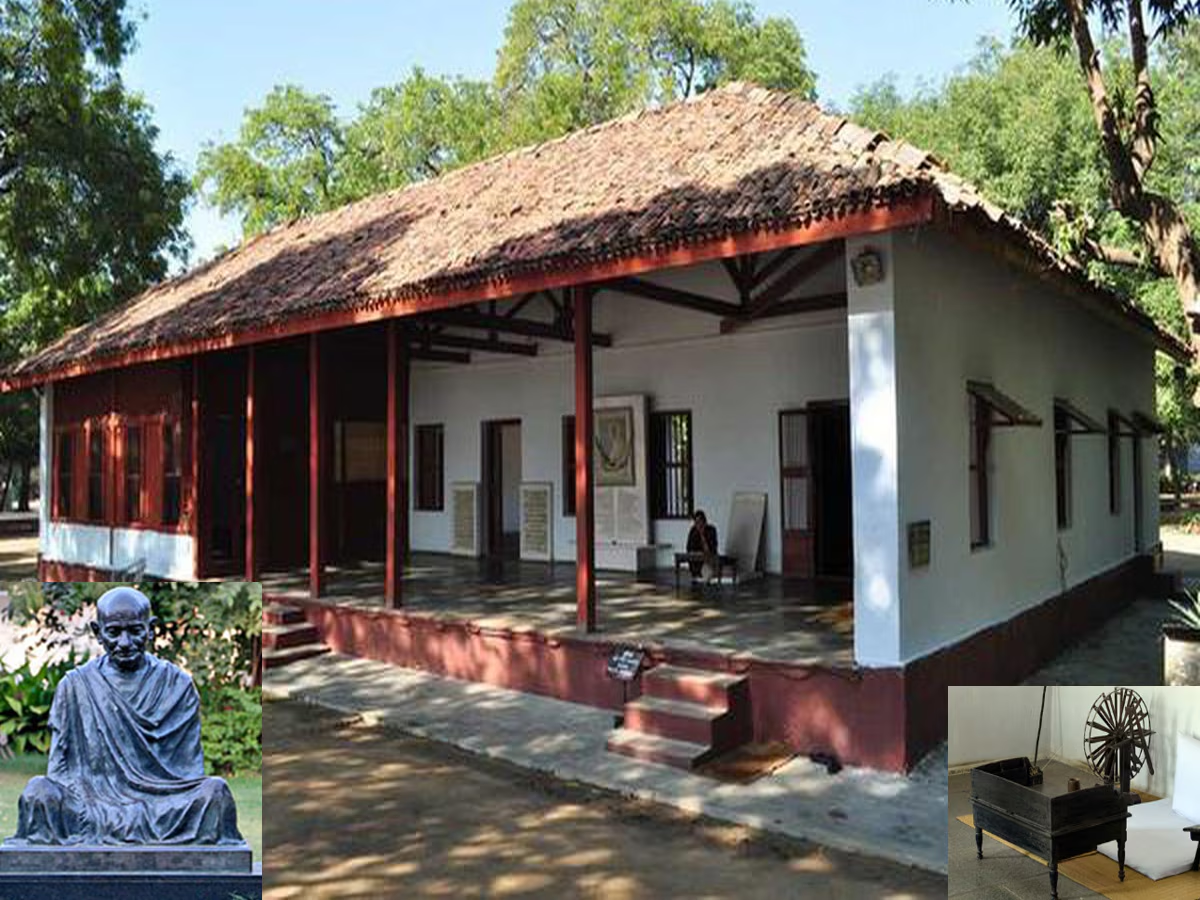
Why are Bapu's great-grandsons against the government's plan to beautify the Sabarmati Ashram? Even the Supreme Court did not hear the petition
Sabarmati Ashram Redevelopment: The petition filed by Tushar Gandhi, the great-grandson of Mahatma Gandhi, against the Sabarmati Ashram Redevelopment Project was dismissed on Tuesday. The bench of Justice MM Sundaresh and Justice Rajesh Bindal, citing the delay of more than two years in filing the petition, said that it did not want to interfere in the petition.
Supreme Court Sabarmati Ashram: The Supreme Court on Tuesday refused to consider the petition of Tushar Gandhi, the great-grandson of Mahatma Gandhi, raising concerns over the acquisition of Sabarmati Ashram by the Gujarat government. A bench of Justices MM Sundresh and Rajesh Bindal dismissed the special leave petition challenging the Gujarat High Court's refusal to quash the resolution passed by the Gujarat government in March 2021 regarding the comprehensive development of the Gandhi Ashram memorial and complex.
The Supreme Court did not even listen
Tushar Gandhi had argued in his petition against the Gujarat High Court that the proposed project would change the topography of the ashram. The petition said, 'The project has reportedly identified more than 40 buildings that will be preserved while the remaining about 200 will be destroyed or rebuilt.'
The Gujarat High Court disposed of Gandhi's petition in 2022 when the government said that the core area of the ashram would not be affected. Sabarmati Ashram is also known as Gandhi Ashram. It was established by Mahatma Gandhi in Ahmedabad in 1917.
The petition said, 'Mahatma Gandhi himself designed the ashram, which reflected simplicity, self-reliance and community living. The ashram exemplifies Gandhian principles of sustainability and harmony with nature. The Sabarmati Ashram is a testimony to Mahatma Gandhi's legacy and his important role in India's freedom struggle.'
The latest special leave petition filed before the Supreme Court said that the Gujarat High Court reconsidered the issue. However, without considering the actual facts and circumstances, the prayers of the petitioner were rejected. Presently the dignity and sanctity of the Ashram, which symbolically embodies the legacy of the Father of our Nation, Mahatma Gandhi, is under direct threat due to an alleged redevelopment project. Misuse of public money in the name of development instead of any other humanitarian purposes is against the principles of Gandhi. The Ashram is a testimony to the symbols of peace, simplicity and stability and the alleged redevelopment threatens to erase the essence of Mahatma Gandhi and the Ashram.'
The petition also states that Mahatma Gandhi established the Sabarmati Ashram in 1917. On February 2, 1926, Mahatma Gandhi and Maganlal Khushalchand formed the Satyagraha Ashram Trust through a trust deed. On September 30, 1933, Gandhi handed over the Satyagraha Ashram to the Harijan Sevak Sangh forever for the service and benefit of Harijans through a letter addressed to Ghanshyamdas Birla.
After this hearing, the Supreme Court on Tuesday dismissed the petition filed by Mahatma Gandhi's great-grandson Tushar Gandhi against the Sabarmati Ashram redevelopment project. The bench of Justices MM Sundaresh and Rajesh Bindal in the Supreme Court said, 'Not inclined to interfere in the petition as there is a delay of more than two years in filing the petition.'