NEWS
WhatsApp Username Feature Faces Government Scrutiny in India: Here's Why and How Meta Responded
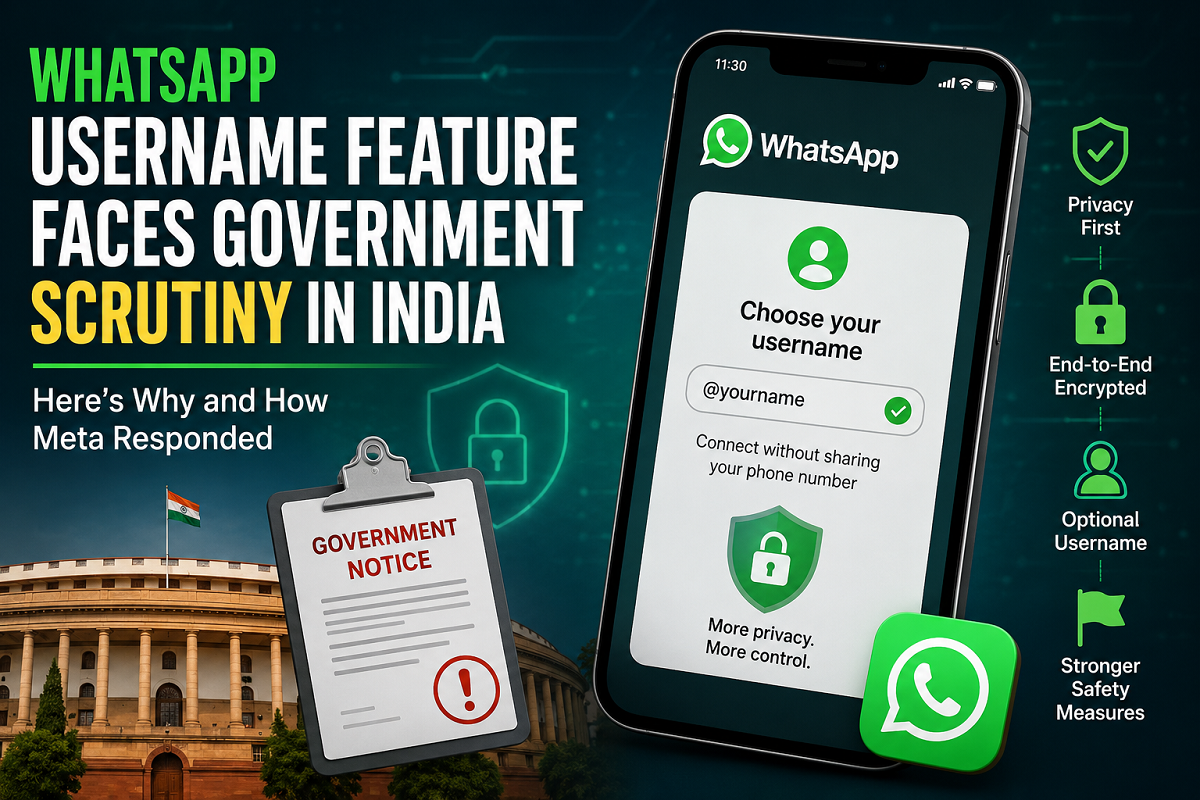
WhatsApp's upcoming username feature has attracted significant attention in India even before its official rollout. The new system is designed to let users connect with others without sharing their mobile numbers, replacing phone-number-based identification with unique usernames. While the feature aims to improve user privacy, it has also raised concerns among Indian authorities over the possibility of misuse.
The Central Government has reportedly asked Meta to explain the security architecture behind the feature and has requested the company to pause its rollout in India until a detailed review is completed. In response, WhatsApp has published a series of explanations outlining how the feature is intended to protect users from fraud and impersonation.
What Is WhatsApp's Username Feature?
The proposed update will allow WhatsApp users to create a unique username that can be shared instead of a personal mobile number.
The idea is to make conversations with new contacts more private. Rather than revealing their phone numbers, users will be able to connect using a username, reducing unnecessary exposure of personal information.
Meta says the feature has been designed to strengthen privacy while maintaining WhatsApp's existing end-to-end encryption.
Why Is the Indian Government Reviewing the Feature?
Government officials are examining whether the username-based system could create opportunities for cybercriminals to exploit the platform.
Authorities are particularly concerned that fraudsters could create usernames resembling those of government departments, banks, businesses, celebrities, or public institutions to deceive users.
The review is focused on assessing risks such as:
- Identity impersonation.
- Online scams and phishing attacks.
- Digital fraud and financial deception.
- Protection of user privacy.
- Overall platform security.
According to reports, Meta has been asked to submit detailed information about the safeguards built into the feature before it is introduced in India.
WhatsApp Explains Its Security Measures
Following the government's concerns, WhatsApp released a detailed set of frequently asked questions (FAQs) explaining how the username system is designed to reduce misuse.
According to the company, the primary purpose of usernames is to improve user privacy—not to make anonymous communication easier for scammers.
WhatsApp says several protections have already been incorporated into the feature.
Key Safety Features Announced by WhatsApp
The company has highlighted several measures intended to reduce impersonation and fraud:
- Usernames are optional. Users can continue using WhatsApp with their phone number if they prefer.
- Reserved usernames. Names associated with public figures, government organizations, celebrities, verified Meta accounts, and other protected entities are reserved to reduce impersonation attempts.
- Username search will not be open. Similar to mobile numbers, usernames cannot simply be searched by anyone to initiate contact.
- Optional security key. Users can enable an additional security key, meaning both the username and the security key would be required before someone can connect with them.
- Warnings for first-time contacts. Messages from unknown users will display information such as the sender's country along with safety warnings to help users identify suspicious conversations.
- Block and report monitoring. WhatsApp says it will continue monitoring reports of abuse and take action against accounts involved in fraud or impersonation.
Frequently Asked Questions About the Feature
Is creating a username mandatory?
No. WhatsApp says using a username will be completely optional.
What if my preferred username is unavailable?
According to the company, a username may already be unavailable because:
- It is already being used by another user.
- It matches a protected name belonging to a government body, celebrity, public figure, or verified Meta account.
- It is already linked to an existing Instagram or Facebook account.
Users may be offered alternative username suggestions if their preferred choice cannot be used.
Can someone impersonate me using a similar username?
WhatsApp says protected public names are reserved, and additional safeguards—including warnings for unknown contacts, account reporting, and enforcement actions—will help reduce impersonation attempts.
Can anyone message me just by knowing my username?
The company says usernames cannot be searched publicly in the same way people may assume. Users can also enable an optional security key, adding another layer of protection before someone can initiate contact.
What is the Username Security Key?
The security key is an optional feature that adds an extra verification layer. If enabled, another user would need both your username and the associated security key before contacting you.
Users can change this security key whenever they choose.
Will I need to link my Instagram or Facebook account?
No. Linking an Instagram or Facebook account is only necessary if a user wants to use the same username across Meta platforms. Users can later unlink their accounts or choose a different WhatsApp username.
Can I change my username later?
Yes. WhatsApp says users will be able to change their username in the future, provided the new username is available.
Rollout in India Depends on Regulatory Review
Although the username feature promises greater privacy by reducing the need to share personal phone numbers, its launch in India will depend on the outcome of the government's ongoing technical and security review.
Until that process is completed, the feature remains under regulatory scrutiny, with Meta expected to provide additional details on how it plans to prevent fraud, impersonation, and misuse while protecting user privacy.