WhatsApp is reportedly preparing to introduce a powerful new privacy-focused messaging feature that could dramatically change how users communicate on the platform. The Meta-owned instant messaging service is currently testing a new disappearing chat option called “After Reading,” a feature designed to automatically erase messages shortly after they are opened by the recipient.
The upcoming update is expected to make conversations feel far more temporary and private, giving users greater control over sensitive chats on both Android and iPhone devices.
According to reports, the feature has already appeared in WhatsApp’s latest beta builds and may soon roll out to a wider audience in the coming months.
WhatsApp Working on a New Privacy-Centric Messaging System
WhatsApp already offers disappearing messages that automatically delete chats after a selected duration such as 24 hours, 7 days, or 90 days. However, the company is now reportedly testing a much more advanced approach to temporary messaging.
Unlike the current system where the countdown begins immediately after a message is sent, the new “After Reading” mode will reportedly activate only when the recipient actually opens and reads the message.
This means a message could remain untouched inside the chat for hours or even days, but the deletion timer would only begin once the other person views it.
The feature is expected to create a more natural and real-life style communication experience where messages disappear after they have been seen instead of expiring at a fixed time regardless of whether anyone read them.
Feature Spotted in WhatsApp Beta for iPhone
Reports suggest the feature was first discovered in WhatsApp beta for iOS version 26.19.10.72 through Apple’s TestFlight platform. At the moment, the feature is reportedly available only to selected beta testers.
However, since WhatsApp frequently tests features publicly before a broader release, there is growing speculation that the company may introduce the feature globally later this year.
The feature has also reportedly appeared in Android beta builds, indicating that WhatsApp is preparing cross-platform support for the privacy tool.
Meta has not officially announced a stable rollout timeline yet.
How WhatsApp’s ‘After Reading’ Messages Could Work
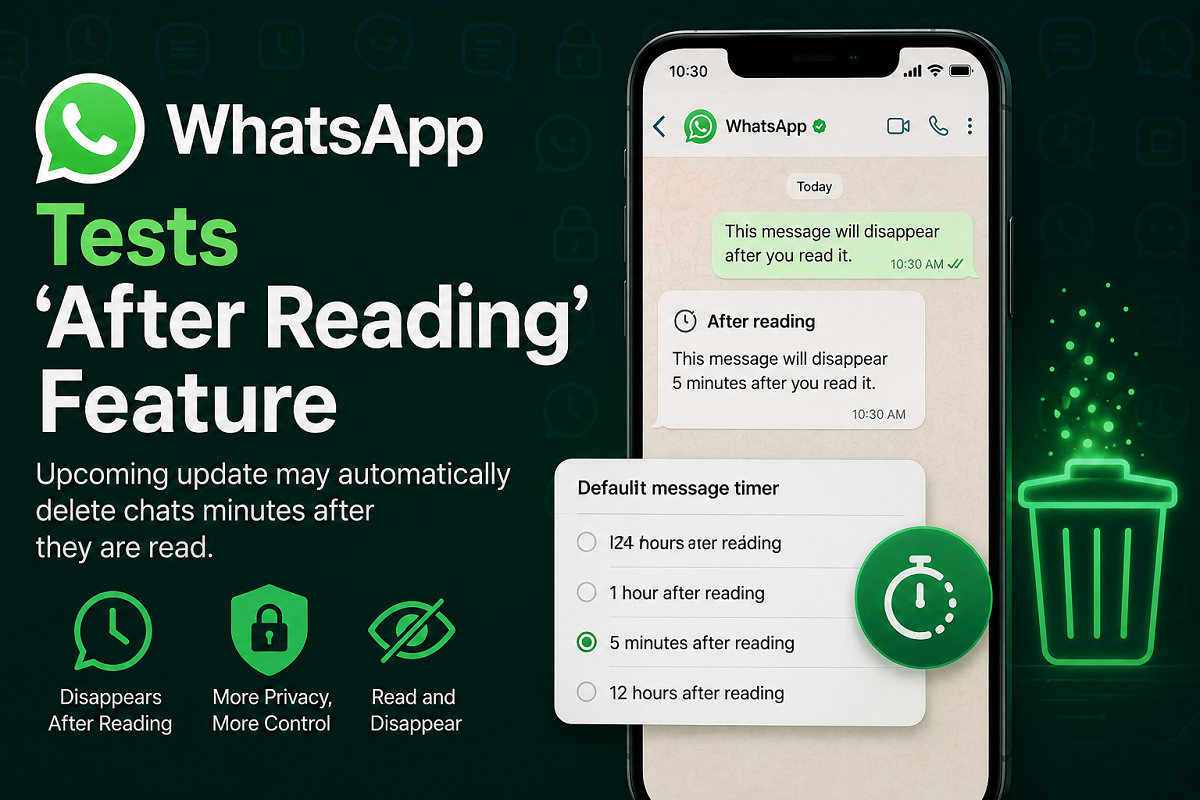
The upcoming feature is expected to provide multiple disappearing timers that users can choose from depending on how private they want their conversations to be.
Current reports suggest the available options may include:
- 5 minutes after reading
- 1 hour after reading
- 12 hours after reading
The functionality reportedly behaves differently for senders and recipients.
For senders, the disappearing timer begins immediately after the message is sent. However, for recipients, the countdown will only start once they actually open and read the message.
For example, if someone sends a message with a five-minute disappearing timer, but the recipient opens it two hours later, the message will still remain visible for five minutes after being read before disappearing permanently.
This creates a more flexible and privacy-oriented messaging experience compared to traditional disappearing chats.
Unread Messages May Automatically Vanish Too
One particularly interesting aspect of the feature is that unread messages may reportedly expire automatically after 24 hours, even if the recipient never opens them.
This could help prevent old sensitive messages from lingering indefinitely inside chats.
The feature appears to be designed specifically for users who want highly private conversations without manually deleting messages afterward.
Industry observers believe this could become one of WhatsApp’s most significant privacy upgrades in recent years.
Users May Be Able to Enable It for Specific Chats
Reports also indicate that the feature will remain optional rather than becoming the default setting across all conversations.
Users may reportedly activate the “After Reading” mode separately for individual chats, allowing them to choose which conversations should have stronger privacy protections.
This flexibility could prove especially useful for business discussions, confidential conversations, personal information sharing, or temporary interactions where users do not want messages stored permanently.
The feature is said to appear within WhatsApp’s existing “Default Message Timer” settings section but will operate independently from the current disappearing message system.
WhatsApp Continues Expanding Privacy Features
Over the past few years, WhatsApp has aggressively focused on introducing privacy-centered tools including chat locks, disappearing messages, encrypted backups, screenshot protections, and advanced spam controls.
The addition of “After Reading” messages would further strengthen the platform’s reputation as a privacy-first messaging app competing with services like Telegram and Signal.
The update also reflects the growing demand among users for more temporary, controlled, and secure communication options in the era of digital privacy concerns.
If officially launched worldwide, the feature could significantly change how millions of users interact on WhatsApp by making conversations feel more spontaneous and less permanent.
Frequently Asked Questions (FAQs)
What is WhatsApp’s “After Reading” feature?
It is an upcoming disappearing message option that may automatically delete chats after the recipient reads them.
Is the feature officially available right now?
No, the feature is currently under beta testing.
What timer options may be offered?
Reports suggest options like 5 minutes, 1 hour, and 12 hours after reading.
What happens if the recipient never opens the message?
Unread messages may reportedly disappear automatically after 24 hours.
Will the feature support Android and iPhone?
Yes, the feature has reportedly been spotted in both Android and iOS beta versions.
Can users enable it only for selected chats?
Yes, the feature is expected to remain optional and chat-specific.
When will WhatsApp release the feature globally?
Meta has not yet confirmed an official rollout date.