WhatsApp is one of the world's most widely used messaging platforms, helping people stay connected through personal chats, voice and video calls, group conversations, photos, videos and documents. But having an account does not mean users can use the platform without restrictions.
WhatsApp has rules intended to prevent spam, harassment, misuse of personal information and other prohibited behaviour. Users who repeatedly violate applicable policies may face restrictions or other action against their accounts.
Some actions that appear harmless—such as repeatedly messaging someone who does not want to be contacted or sending excessive promotional messages—can result in complaints from other users.
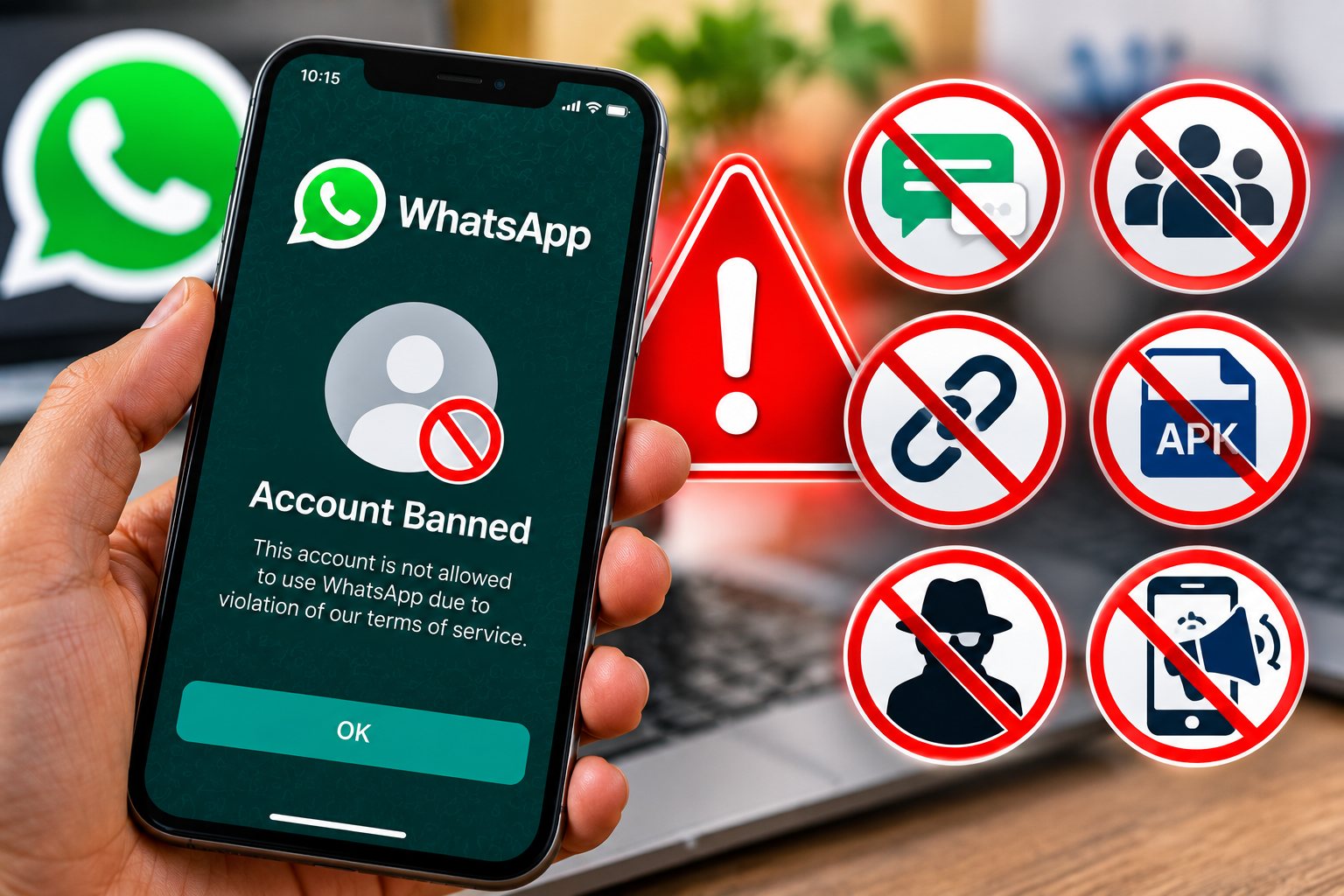
If you rely on WhatsApp every day, understanding these six common mistakes can help reduce the risk of account-related problems.
1. Don't Keep Sending Unwanted Messages
One of the simplest rules to follow is to respect another person's decision not to communicate.
If someone asks you to stop messaging them, repeatedly sending messages can be considered unwanted behaviour. The recipient can block or report the account.
Users should therefore avoid repeatedly contacting people who have shown that they do not want further messages.
This becomes particularly important when WhatsApp is being used for marketing, sales or promotional communication. Businesses and individuals should avoid treating someone's phone number as automatic permission to send repeated messages.
2. Be Careful With Bulk and Automated Messaging
Sending large volumes of unsolicited messages can create problems for an account.
WhatsApp has systems and policies designed to combat spam and abusive automated behaviour. Users should avoid unauthorised tools designed to send messages at scale, automatically contact large numbers of people or imitate the official WhatsApp service.
Using fake accounts, unauthorised automation or unofficial applications that misuse WhatsApp's services can also expose users to account restrictions and security risks.
If you use WhatsApp for business communication, use the platform's authorised tools and follow the applicable messaging rules rather than relying on third-party bulk-messaging software.
3. Don't Misuse Other People's Contact Information
A mobile number is personal information, and users should be careful about how they obtain, store, share and use other people's contact details.
Collecting numbers from unauthorised sources and then sending unsolicited messages can lead to complaints.
Similarly, repeatedly adding people to groups without appropriate consent can create a poor user experience and may lead participants to leave, block or report an account.
Before contacting someone for promotional or business purposes, make sure you have an appropriate basis to communicate with them.
4. Avoid Overusing Broadcast Messages
WhatsApp's broadcast feature allows a user to send the same message to multiple contacts without creating a regular group conversation.
However, this feature should not be treated as an unlimited advertising channel.
If recipients continuously receive messages they did not request, they may block the sender or report the content as unwanted.
Broadcast communication is therefore best reserved for relevant information that recipients reasonably expect to receive.
WhatsApp's broadcast functionality can also depend on how recipients have saved and interacted with the sender's number, so it should not be confused with unrestricted mass messaging.
5. Don't Automatically Collect Users' Personal Data
Trying to automatically extract information about WhatsApp users can also violate platform rules.
This could involve collecting phone numbers, profile pictures, status information or other user-related data at scale without appropriate permission.
Such practices can create both privacy and account-security concerns.
Users should also be cautious about third-party applications or websites claiming they can automatically extract thousands of WhatsApp numbers, profiles or other account details. Apart from possible policy violations, unknown tools may expose your own information or device to security risks.
6. Follow WhatsApp's Terms and Platform Rules
WhatsApp users are expected to comply with the platform's Terms of Service and other applicable policies.
Prohibited or restricted conduct can include illegal activity, threats, harassment and certain forms of hateful or otherwise abusive content. Depending on the circumstances and severity, violations may result in action against an account.
Users should therefore avoid assuming that private or group chats are exempt from platform rules.
Can WhatsApp Permanently Ban an Account?
WhatsApp can take action when it identifies activity that violates its rules. The exact action can depend on the type and severity of the violation.
In some situations, an account may face a temporary restriction, while more serious or repeated violations could lead to stronger enforcement.
Receiving a report does not necessarily mean an account will automatically be permanently banned. Reports and other signals may be considered as part of WhatsApp's enforcement processes.
This is why users should avoid misleading claims such as saying that one report will always result in an immediate permanent ban.
Avoid Unofficial Versions of WhatsApp
Users should also be cautious about modified or unofficial versions of messaging apps that promise additional features unavailable in the official application.
Apart from possible violations of platform rules, unofficial apps can introduce privacy and security risks because users may not know how their messages, login details or other data are being handled.
Using the official WhatsApp application and keeping it updated is the safer approach.
What Should You Do If Your WhatsApp Account Is Restricted?
If you believe your account has been restricted by mistake, follow the review or support options provided within the official WhatsApp application.
Avoid paying unknown individuals or websites claiming they can instantly restore a banned account. Never share your WhatsApp verification code, OTP, PIN or other sensitive account credentials with anyone promising to remove a restriction.
Use WhatsApp Responsibly
Most everyday WhatsApp users are unlikely to encounter account problems simply for chatting, calling or sharing content normally.
The bigger risks arise from patterns such as repeated unwanted messaging, spam, unauthorised bulk automation, misuse of personal information and activities that violate the platform's terms.
Respecting other users' privacy, avoiding unsolicited mass communication and using official WhatsApp services can significantly reduce the chances of running into account restrictions.