Silent Artificial Muscles: A team of researchers has developed artificial muscles that mimic human muscles. These could completely transform the design and operation of robots.
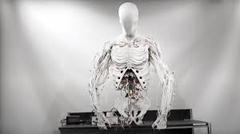
Silent Artificial Muscles: These muscles will change the world of robots
Silent Artificial Muscles: A lot of work has been done in robotics in the last few years, and now we are seeing very advanced robots . Now scientists have made another new discovery, which can completely change the world of robots. This discovery can prove to be revolutionary for both robots and wearable devices . In fact, MIT Media Lab and Italy's Polytechnic University have created a new type of artificial muscles. Apart from being strong and flexible, these work just like human muscles. This will make movement easier for robots.
How can Silent Artificial Muscles prove to be revolutionary?
The new artificial muscles are similar to the fibers found in human muscles. They can be arranged in different ways to suit the robot or device. They are also silent, preventing robotic movements from making noise. They are completely soft and flexible, making them beneficial for devices that require close interaction with humans.
How will Silent Artificial Muscles work?
The researchers have combined two existing concepts for these muscles into a single system. The first, a soft, tube-like artificial muscle called the McKibben actuator, contracts when fluid is pumped into it. The second, a tiny pump based on electro hydro dynamics, moves fluid using electric force. The researchers have integrated this tiny pump into the muscle fibres themselves, eliminating the need for an external pump. Furthermore, like human muscles, the fibers work in pairs. This means that when you bend your arm, one muscle contracts and the other stretches. The researchers have created these artificial muscles using this idea.
How will Silent Artificial Muscles change the world of robots?
These new artificial muscles could transform robot design. Robots typically use electric motors to create rotational motion, which must be converted into straight-line movement. These new artificial muscles eliminate the need for this conversion. Furthermore, they can be integrated into the robot's entire body, making the design more compact and efficient. This could improve robotic systems used in various fields, including healthcare and manufacturing. Artificial muscles could replace the bulky hardware used in current systems.