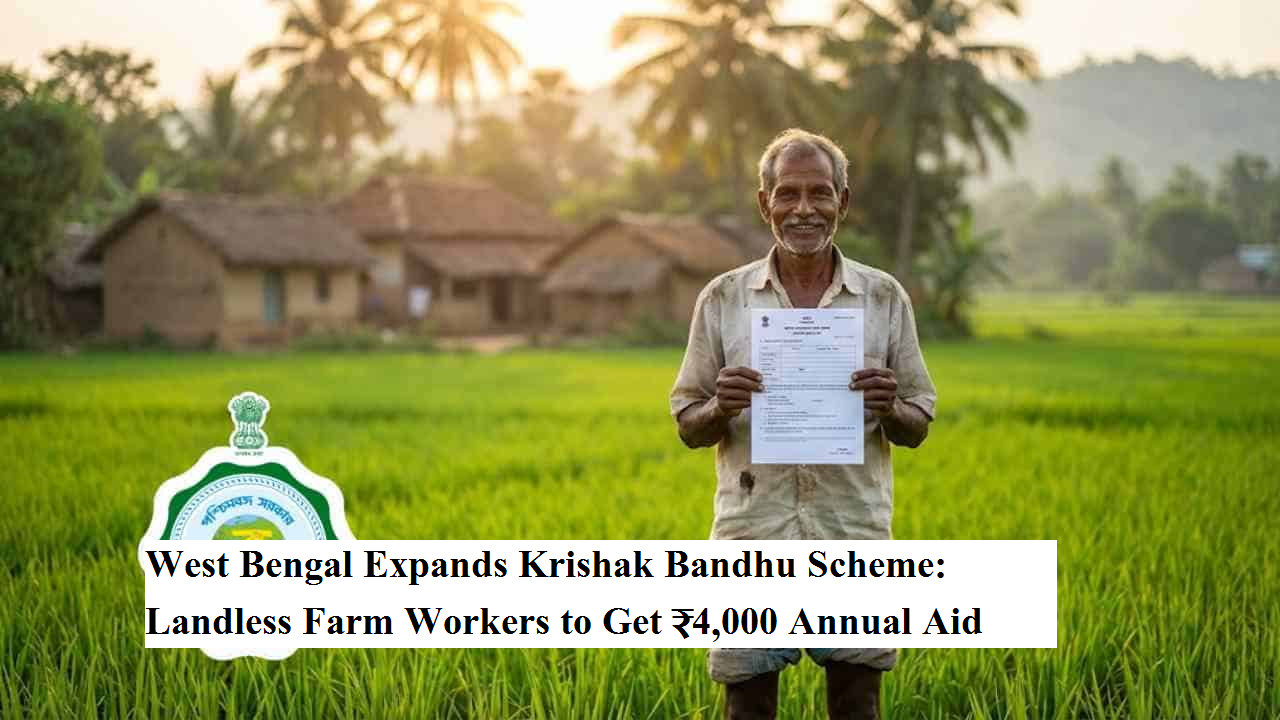
In a major welfare-focused move, the West Bengal Government has announced a significant expansion of its flagship agricultural support program, the Krishak Bandhu Scheme. For the first time since the scheme was launched, landless agricultural labourers—who traditionally remained outside the ambit of farm income support—will now receive direct financial assistance from the state.
This decision was revealed during the latest state budget announcement and has been widely welcomed by rural communities. The move aims to provide economic relief to some of the most vulnerable workers in the agricultural ecosystem, especially those who contribute to farming activities without owning cultivable land.
A Big Relief for Landless Agricultural Workers
Until now, the Krishak Bandhu Scheme primarily benefitted land-owning farmers and registered sharecroppers. However, the revised guidelines mark a policy shift by bringing landless farm labourers under its coverage. Eligible beneficiaries will receive ₹4,000 per year, helping them manage seasonal expenses and reduce financial stress.
The annual assistance will be credited in two equal installments of ₹2,000 each. One installment will be released during the Kharif season, while the second will be disbursed in the Rabi season. According to the government, the new benefit structure will come into effect from April 2026, ensuring timely support aligned with agricultural cycles.
Who Is Eligible Under the New Rules?
To ensure that the assistance reaches the intended beneficiaries, the state has laid down clear eligibility criteria. Applicants must meet the following conditions:
- The applicant must be a permanent resident of West Bengal.
- Only landless agricultural labourers are eligible under the new provision.
- Individuals should not own any cultivable agricultural land.
- The applicant must not be registered as a sharecropper under any existing government records.
These guidelines aim to include workers who play a crucial role in agriculture but have historically lacked access to direct income support.
How to Apply for the Scheme
Unlike many digital-only welfare programs, applications for the expanded Krishak Bandhu Scheme will be accepted offline to ensure accessibility for rural workers. The state government is organizing special outreach programs through Duare Sarkar and Atmanirbhar Bangla camps across districts.
Applications will be processed under the supervision of agricultural department officials, who will also verify submitted documents on-site. Once the verification process is completed successfully, the approved amount will be transferred directly to the beneficiary’s bank account through the Direct Benefit Transfer (DBT) system.
Documents Required for Application
Applicants are advised to keep the following documents ready while visiting the enrollment camps:
- Aadhaar Card as proof of identity
- Voter ID Card
- Photocopy of the first page of the bank passbook
- Mobile number linked with Aadhaar and bank account
- Recent passport-size color photograph and signature
- Self-declaration stating agricultural labour status
- Consent form for sharing Aadhaar-related information
Having all documents in place will help ensure a smooth and faster application process.
Strengthening Rural Welfare
The expansion of the Krishak Bandhu Scheme reflects the state’s continued focus on strengthening rural welfare and agricultural livelihoods. By extending financial support to landless workers, the government acknowledges their contribution to food production and rural economies.
Experts believe that this step could help improve income stability for farm labourers, reduce migration pressure, and promote inclusive growth in the agricultural sector. As implementation begins in April, lakhs of families across West Bengal are expected to benefit from this policy change.
With clear guidelines, structured disbursement, and on-ground enrollment camps, the revamped Krishak Bandhu Scheme is set to become a more inclusive support system for the state’s farming community.