WB Election
West Bengal Elections 2026 Countdown Begins: When Model Code of Conduct Will Kick In and What It Means
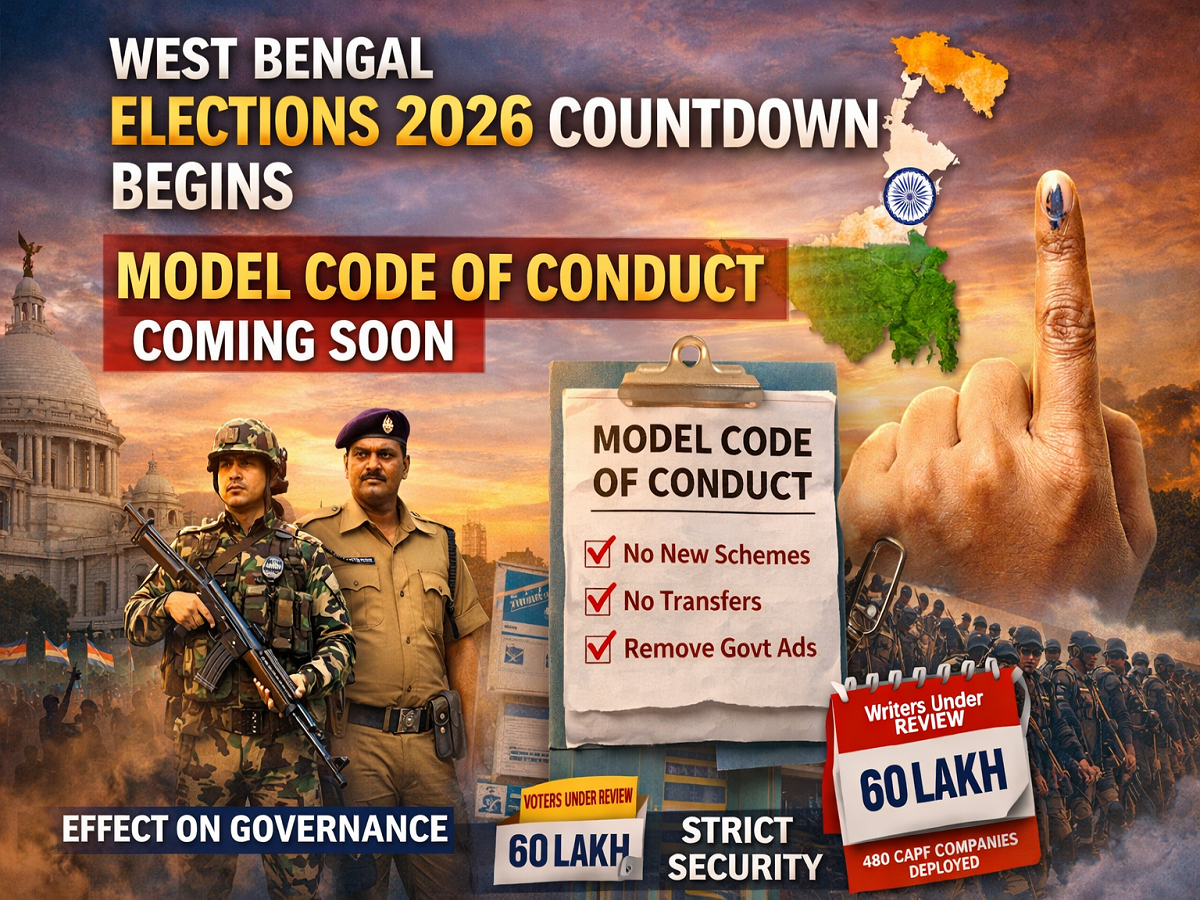
As West Bengal moves closer to the 2026 Assembly elections, political activity across the state is intensifying. With the current Assembly’s term set to end on May 7, 2026, the announcement of election dates is expected anytime soon. Along with this announcement, one key development that will immediately come into effect is the Model Code of Conduct (MCC), which plays a crucial role in ensuring free and fair elections.
Here’s a detailed explanation of when the Model Code of Conduct will be enforced and how it will impact governance, administration, and political activities across the state.
When Will the Model Code of Conduct Be Implemented?
The Model Code of Conduct comes into force the moment the Election Commission announces the election schedule. It is not tied to the start of voting but begins immediately after the official declaration of election dates.
Given that the West Bengal Assembly’s tenure ends on May 7, the election schedule is likely to be announced well in advance, which means the MCC could come into effect anytime in the coming days.
Why the Model Code of Conduct Is Important
The MCC is designed to ensure a level playing field for all political parties. It prevents the ruling government from using its position to gain an unfair advantage during elections.
Once implemented, the Election Commission of India takes direct control over administrative machinery, ensuring neutrality and transparency throughout the election process.
Major Changes After MCC Comes Into Effect
1. Ban on New Government Announcements
After the MCC is enforced:
- No new government schemes can be launched
- No financial benefits or policy announcements can be made
- Inaugurations and foundation stone ceremonies are prohibited
This ensures that voters are not influenced by last-minute incentives.
2. Administrative Control Shifts to Election Commission
Once the code is active:
- State officials, including police and administrative officers, come under the Election Commission’s authority
- Transfers and postings are regulated by the Commission
- Officials are expected to maintain strict neutrality
3. Removal of Government Advertisements
All government-funded advertisements, hoardings, and promotional campaigns must be taken down immediately. This prevents the misuse of public funds for political promotion.
Tight Security Measures Already in Place
To ensure peaceful elections, the Election Commission has already begun preparations:
- Around 480 companies of central armed police forces (CAPF) have been deployed
- Security personnel have conducted route marches in sensitive districts
- Areas like North 24 Parganas, South 24 Parganas, and Murshidabad are under special focus
Officials have emphasized that law and order will be strictly maintained, with zero tolerance for violence or intimidation.
Uncertainty Over 60 Lakh Voters
A major concern ahead of the elections is the status of nearly 60 lakh voters whose names are under review following the Special Intensive Revision (SIR) of electoral rolls.
Authorities have clarified that:
- No eligible voter will be removed unfairly
- A supplementary voter list will be released after verification
- The process is being monitored to ensure transparency
Key Election Facts at a Glance
- Total Assembly Seats: 294
- Majority Mark: 148
- Expected Voting Period: April–May 2026
- Security Measures: Extensive deployment of central forces
What This Means for Voters and Political Parties
For voters, the MCC ensures a fair environment where decisions are not influenced by government incentives or biased administration. It also signals the final phase before elections, making it crucial for citizens to verify their voter details and stay informed.
For political parties, it marks the beginning of strict regulations. Campaigning must follow guidelines, and any violation can lead to serious action by the Election Commission.
Conclusion
With the countdown to the West Bengal Assembly Elections 2026 underway, the implementation of the Model Code of Conduct will be a turning point. It ensures that the electoral process remains transparent, fair, and free from undue influence.
As the state prepares for a high-stakes political battle, both voters and political players must stay alert and adhere to the rules that safeguard democracy.